The SAVE Act Showdown: Schumer’s Pledge and the Battle Over Who Votes
The Promise: “As Long As It Takes”
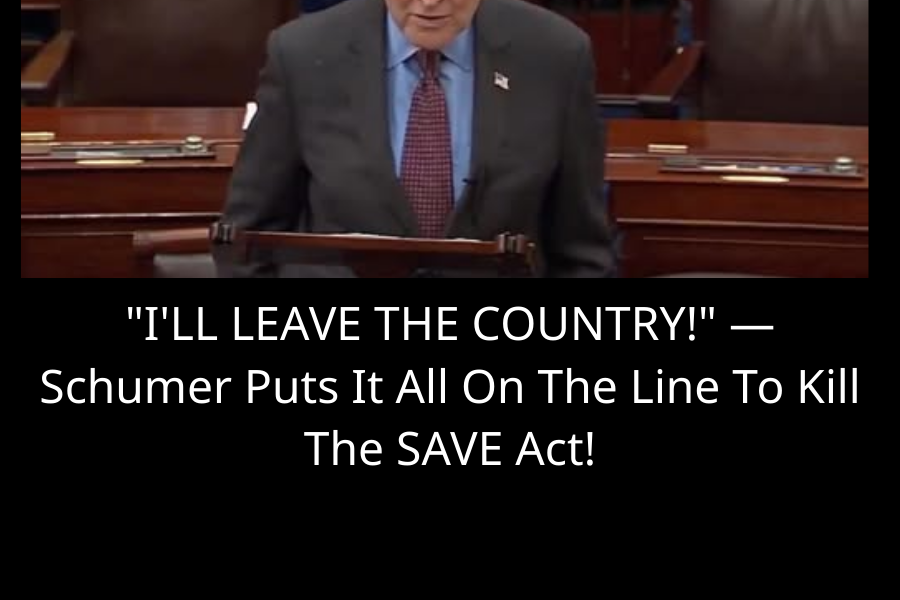
Let’s start with Chuck Schumer’s words, because they are not the language of compromise.
“We will do everything we can to stop this bill. We will oppose it for as long as it takes.”
The Senate Majority Leader—or Minority Leader, depending on the math in 2026—is drawing a line in the sand. The SAVE Act, which would require proof of U.S. citizenship to register to vote in federal elections, is not just another piece of legislation. It is, in Schumer’s framing, an existential threat to democracy itself. And he is pledging an unlimited war against it.
“For as long as it takes” is not a legislative strategy. It’s a declaration of permanent opposition. It means filibusters. It means procedural delays. It means using every tool at Democrats’ disposal to ensure this bill never becomes law.
The question is whether that resolve will be enough.
The Bill: What the SAVE Act Actually Does
Before we analyze the politics, we need to understand the policy.
The SAVE Act (Safeguard American Voter Eligibility) would:
-
Require proof of citizenship when registering to vote in federal elections. Acceptable documents would include a passport, birth certificate, or other official government ID showing U.S. citizenship.
-
Create a verification system for states to check citizenship status against federal databases.
-
Remove non-citizens from voter rolls if they are found to be registered.
To its supporters, this is common sense. You need a photo ID to board a plane, buy alcohol, or open a bank account. Why should the most fundamental act of citizenship—voting—require less verification?
To its opponents, this is a solution in search of a problem. Non-citizen voting is already illegal, and instances of it are vanishingly rare. The real effect, they argue, would be to disenfranchise millions of eligible Americans—particularly the poor, the elderly, and minorities—who lack the required documentation.
The Democratic Case: Suppression by Another Name
Schumer’s opposition rests on a straightforward argument: this bill is voter suppression disguised as election integrity.
The numbers back him up, at least in part. According to the Brennan Center, millions of eligible American citizens do not have easy access to birth certificates or passports. The poor, the elderly, the disabled, and people of color are disproportionately affected. Requiring documentary proof of citizenship would, in practice, mean that many of them simply cannot vote.
Democrats also point to the lack of evidence. Multiple studies have shown that non-citizen voting is virtually non-existent. The Heritage Foundation, which tracks election fraud cases, has found only a handful of instances over decades. The problem the SAVE Act claims to solve is, at most, a rounding error.
The real motive, Democrats argue, is partisan. The groups most likely to lack proof of citizenship—poor and minority voters—tend to vote Democratic. Making it harder for them to vote is a feature, not a bug.
The Republican Case: One Person, One Vote
Republicans see it very differently. For them, the SAVE Act is about the most basic principle of democracy: only citizens should vote.
They point to the vulnerability of the current system. In many states, registering to vote requires only a signature under penalty of perjury. There is no verification. A non-citizen could register and vote, and unless they were caught in the act, no one would ever know.
The fact that few have been caught, they argue, proves nothing. It could mean that the system is secure, or it could mean that the system is blind. Given the stakes—control of the country—erring on the side of verification is common sense.
They also point to the broader context. The 2020 election produced widespread skepticism about election integrity, fueled by everything from mail-in voting to Dominion conspiracy theories. Whether those concerns are justified is almost beside the point; they exist. Restoring public confidence requires visible, verifiable safeguards. The SAVE Act provides them.
The Political Math: Can Democrats Stop It?
Schumer’s pledge is bold, but the question is whether he has the votes to back it up.
If Republicans control both chambers, the SAVE Act will pass. The only question is whether Democrats can filibuster it in the Senate, requiring 60 votes to overcome. If Republicans have 60 seats, the filibuster is meaningless. If they have fewer, Democrats can block it—at least for now.
But “for as long as it takes” implies a long game. Even if the bill passes, Democrats could challenge it in court. They could campaign against it in 2026 and 2028. They could make its repeal a central promise of a future Democratic majority.
The battle over the SAVE Act is not a single fight. It’s a permanent war over the nature of American democracy.
The Deeper Debate: Who Gets to Be American?
Beneath the policy and the politics lies a deeper question: What does it mean to be American, and who gets to decide?
For Republicans, citizenship is a legal status with clear boundaries. You’re either a citizen or you’re not. If you’re not, you don’t vote. The SAVE Act simply makes that boundary visible and enforceable.
For Democrats, citizenship is more complicated. Many non-citizens pay taxes, serve in the military, and contribute to their communities. They are Americans in every sense except the legal one. Requiring proof of citizenship sends a message that they are not fully part of the nation—a message that Democrats find cruel and divisive.
The SAVE Act forces Americans to choose between these visions. Between a nation of clear boundaries and a nation of open doors. Between trust in the system and fear of its failure.
The Verdict: A Fight Without End
Chuck Schumer says Democrats will fight the SAVE Act “for as long as it takes.” Republicans say they will fight for it just as long.
Neither side is bluffing. This is not a disagreement that can be resolved by compromise. It is a fundamental conflict over the nature of democracy itself.
The bill may pass. It may be blocked. It may be litigated for years. But whatever happens, the fight will continue. Because the question at its heart—who gets to vote?—is the question that defines every democracy.
And until America answers it, there will be no peace. Only the endless war between those who believe in open doors and those who believe in closed borders. Between those who trust the people and those who fear them. Between those who see voting as a right and those who see it as a privilege.
Schumer has drawn his line. The other side has drawn theirs. And the rest of us are caught in the middle, waiting to see which vision prevails.