The Shot Heard Round the Tarmac: When the Secret Service Shoots Itself
Let’s start with the headline, because the headline is doing a lot of work here.
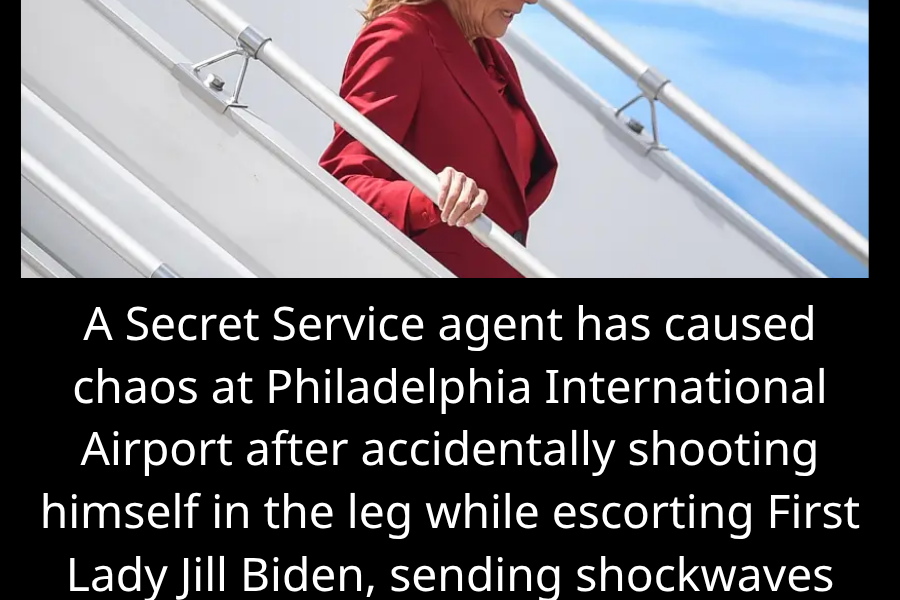
“Secret Service agent shoots himself in leg while escorting Jill Biden at Philadelphia International Airport.”
Read it again. Let it land. A Secret Service agent. The people who are supposed to be the best of the best. The ones who guard presidents, who take bullets, who train for years to do a job that requires absolute precision and total control. That agent. That job. That situation.
Shot himself. In the leg. While escorting the former first lady.
There’s no way to say that without it sounding like a punchline. There’s no way to write that without people reading it twice, then a third time, then checking the date to make sure it’s not April 1st. This is not the kind of thing that happens to an agency that wants to be taken seriously. This is the kind of thing that happens to an agency that has lost control of the basics.
The agent is fine. Non-life-threatening injury. Stable condition. He’ll probably be back to work in a few weeks, maybe with a new nickname that he will never, ever find funny. The former first lady was not present. No one else was hurt. The protectee’s movement was not impacted.
All of that is good news. It’s the kind of news that lets the Secret Service say “no harm, no foul” and hope everyone moves on.
But here’s the problem: The Secret Service has been hoping everyone moves on for a while now. And the pile of incidents is getting too big to ignore.
The Negligent Discharge Problem
Let’s talk about what a “negligent discharge” actually is.
The Secret Service calls it that because they have to call it something. They can’t call it what it is: an accident that never should have happened. A gun that went off because someone was handling it wrong. A weapon that fired because the person holding it made a mistake. A mistake that, in a different context, could have killed someone.
The Secret Service trains for this. They train constantly. They train so that handling a weapon becomes automatic, instinctual, something that happens without thought because thought takes too long in the moments that matter. They train so that negligent discharges do not happen. They train so that when the gun comes out, it comes out for a reason, and when it goes back in, it goes back in safely.
And yet, here we are. Another negligent discharge. Another incident that makes the agency look like it can’t handle the basics. Another moment that makes you wonder: If they’re making mistakes like this during a routine escort, what happens when something actually goes wrong?
The Pattern You’re Not Supposed to Notice
This is not an isolated incident. It’s a pattern. And the pattern is getting harder to ignore.
Just last month, a Secret Service agent assigned to protect Vice President JD Vance was placed on leave after he divulged sensitive details of his job to a woman who was secretly recording him. That’s not a gun going off. That’s a different kind of failure. A failure of judgment. A failure of discretion. A failure of the most basic expectation of anyone in the Secret Service: that they keep their mouths shut about what they do.
Before that, there was the Butler farm show. The gunman on the roof. The cascade of failures that allowed a shooter to get within inches of killing a former president. The “inexcusable negligence” that a bipartisan Senate report documented in excruciating detail. The local police who saw the shooter and didn’t stop him. The Secret Service agents who didn’t secure the building. The communications breakdowns. The planning failures. The whole ugly mess that nearly ended a presidential campaign and a life.
That was the moment that should have been the wake-up call. The moment that should have triggered a total overhaul of the agency. The moment that should have made every Secret Service agent, from the director to the newest recruit, understand that the old ways weren’t working and that everything had to change.
And now this. A negligent discharge. In Philadelphia. While escorting Jill Biden. The gun goes off. The agent shoots himself. And the country is left to wonder: What the hell is going on with the Secret Service?
The Escort That Wasn’t
Here’s the detail that might be the most damning of all: The agent shot himself while handling his service weapon. Not while engaging a threat. Not while drawing his weapon in response to danger. While handling it. While doing the kind of routine weapons manipulation that he has done thousands of times before. The kind of thing that should be muscle memory. The kind of thing that you do without thinking because thinking gets you killed.
Except this time, thinking might have been the problem. Or not thinking enough. Or the wrong kind of thought at the wrong moment. Whatever it was, the result was the same: a gun went off when it wasn’t supposed to. A bullet went somewhere it wasn’t supposed to go. And a Secret Service agent, one of the best-trained shooters in the federal government, shot himself in the leg.
The former first lady was not present. That’s the line they’re using. That’s the detail they want you to focus on. The protectee was safe. The protectee’s movement was not impacted. The protectee was somewhere else when the gun went off.
But that’s not the point. The point is that it happened at all. The point is that an agent who was supposed to be protecting someone else shot himself while on duty. The point is that the agency that is supposed to be the gold standard for protective operations is making the kind of mistakes that community college security guards don’t make.
The Office of Professional Responsibility
The Secret Service’s Office of Professional Responsibility will be reviewing the incident. That’s what the spokesperson said. They’ll review the facts and circumstances. They’ll figure out what happened. They’ll make recommendations. They’ll do what they always do when something like this happens.
And then, probably, nothing will change. Because that’s the pattern. That’s what happens after every incident. The review. The report. The recommendations. The press release that says “we take this seriously” and “we are implementing new procedures” and “the agent has been placed on administrative leave pending the outcome of the investigation.”
And then the next incident happens. And the cycle repeats.
The Senate report on the Butler shooting was damning. It called out “inexcusable negligence.” It documented a “cascade of preventable failures.” It made clear that the Secret Service had been warned, had been given opportunities to fix the problems, and had failed to do so. And then, after all that, after the report, after the hearings, after the promises to do better—an agent shoots himself in the leg while escorting the former first lady.
What is the Office of Professional Responsibility supposed to say this time? What new procedures are going to fix an agency that can’t handle the basics? What recommendations are going to make the Secret Service the agency it used to be?
The Culture Question
The Secret Service has a culture problem. That’s the thing no one wants to say out loud, but it’s the thing that everyone who watches this agency knows is true.
It’s a culture that has become complacent. A culture that has lost the edge that made it the best in the world. A culture that has been stretched thin by expanded responsibilities, by political demands, by the sheer volume of protectees and events and threats that have multiplied over the years. A culture that has been asked to do more with less, to cover more ground with the same number of people, to be everywhere at once and never make a mistake.
And when you ask people to do that, mistakes happen. Guns go off. Agents talk to women who are recording them. Gunmen get onto roofs. The basics get missed. Because the basics require attention, and attention is a finite resource, and when you spread it too thin, things fall through the cracks.
The Butler shooting was the biggest crack. The Vance agent was another crack. The Philadelphia negligent discharge is the latest crack. And unless something changes, there will be more. Because the culture isn’t fixing itself. The agency isn’t fixing itself. And the people who are supposed to be holding it accountable are doing the same thing they always do: reviewing, recommending, and moving on.
The Philadelphia Scene
Picture the scene at Philadelphia International Airport on Friday morning.
The former first lady is arriving. The Secret Service is there, as always. The agents are in position. The vehicles are staged. The operation is running. This is what they do. This is what they train for. This is routine. Boring. The kind of day where nothing happens and everyone goes home and that’s the definition of a successful mission.
Then the gun goes off. The agent is down. He’s shot himself in the leg. There’s blood. There’s chaos. There are questions. What happened? How did this happen? Is anyone else hurt? Where is the protectee?
The protectee is fine. She’s not there. She’s somewhere else. The incident is contained. The agent is treated. The scene is secured. The operation continues. By the time the story hits the news, the whole thing is over. A few hours of embarrassment. A press release. A review. And then, probably, nothing.
But for the people who were there, for the agents who watched one of their own shoot himself, for the command staff who had to explain what happened, for the protectee who learned that her detail had an accidental discharge while she was in the building—that moment doesn’t go away. That moment becomes part of the agency’s story. Another incident. Another failure. Another piece of evidence that something is wrong.
The Trust Deficit
The Secret Service asks the country to trust it with the lives of the people we elect to lead us. That’s the job. That’s the mission. That’s the thing that makes the agency different from every other law enforcement organization in the country. They don’t just enforce laws. They protect lives. They stand between danger and the most important people in the world. They take bullets. They give their lives. That’s what they signed up for.
But trust is a fragile thing. It’s built on reliability. On consistency. On the knowledge that when something goes wrong, it’s the exception, not the rule. On the confidence that the people doing the protecting are the best in the world at what they do.
Every negligent discharge chips away at that trust. Every incident like the one in Philadelphia makes people wonder: If they can’t handle a gun safely on a routine escort, how are they going to handle a real threat? If they can’t keep their mouths shut about their work, how are they going to keep secrets that could save lives? If they can’t secure a building with a roof, how are they going to secure anything?
The Butler shooting should have been the moment that trust was rebuilt. The moment that the agency looked at itself, saw what was wrong, and fixed it. Instead, it was the moment that exposed just how broken the agency had become. And now, in Philadelphia, the agency has shown that it’s still broken.
The Final Question
The agent will recover. He’ll probably be back at work. The Office of Professional Responsibility will do its review. The press release will be issued. The story will fade. The next incident will come. The cycle will continue.
Unless something changes. Unless someone in a position of authority decides that the pattern is unacceptable. Unless the Secret Service finally gets the overhaul it has needed for years. Unless the country starts treating the protection of its leaders with the seriousness it deserves.
The Secret Service has a choice. It can keep doing what it’s been doing. It can keep having incidents. It can keep issuing press releases. It can keep hoping that the next one isn’t the one that really matters. Or it can change. It can take the Butler report seriously. It can fix the culture. It can make sure that the next negligent discharge never happens. That the next agent who thinks about talking out of school thinks again. That the next gunman who tries to get on a roof finds that the roof is secure.
The choice is theirs. But the consequences are ours. Because the people they protect are the people we elect. And if the Secret Service can’t protect them, then nothing else matters.
The shot in Philadelphia was a warning. A warning that the agency is still broken. A warning that the problems that nearly killed a president are still there. A warning that the next time, it might not be a leg. It might not be a negligent discharge. It might be the shot that no one can undo.
The agent is stable. The former first lady is safe. The incident is over.
But the Secret Service is not stable. And until it is, no one is safe.