The SAVE Act Showdown: Can America Balance Security and Access?
The Debate That Won’t Go Away
Let’s state the question at the heart of the SAVE Act debate: Should Americans have to prove they’re citizens before they vote in American elections?
It seems like a simple question. The answer, you might think, would be obvious. Of course only citizens should vote in citizen elections. Of course we should verify that before people cast ballots.
And yet here we are, months into a national debate that shows no signs of resolution. The SAVE Act has become a Rorschach test for how Americans view their democracy—and each other.
The Case for the SAVE Act: Common Sense or Common Burden?
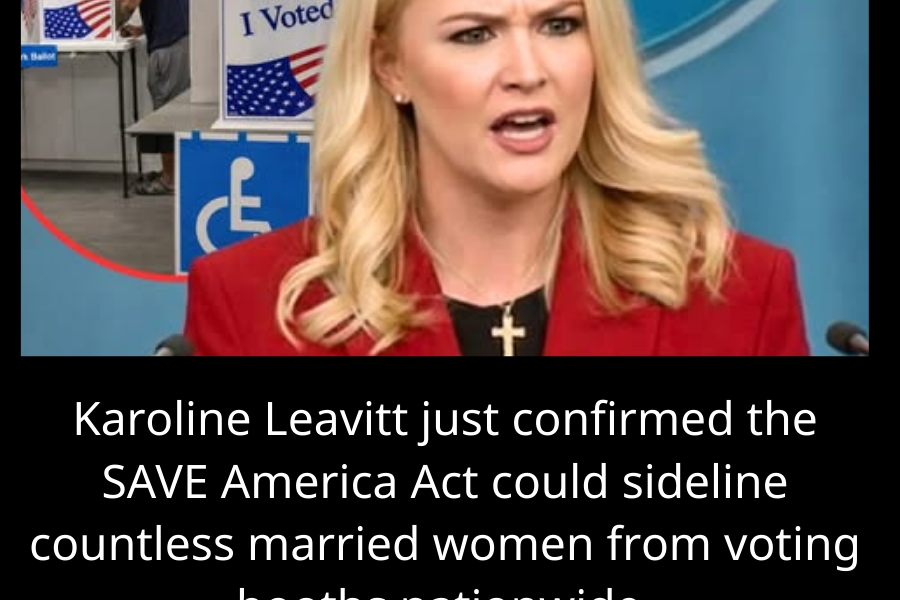
Supporters like Karoline Leavitt make an argument that resonates with millions of Americans:
1. Citizenship should matter. The most fundamental act of self-governance—choosing who represents you—should be reserved for members of the polity. Non-citizens, whatever their status, are not part of that polity. Verifying citizenship is not discrimination; it’s definition.
2. The current system relies on trust. Voter registration forms ask registrants to check a box affirming they’re citizens. There’s no verification. In an era of widespread distrust, trust-based systems are failing. Verification restores confidence.
3. The documentation exists. Every citizen either has a birth certificate, a passport, or naturalization papers. These are not exotic documents. They’re standard. Requiring them is not an unreasonable burden.
4. Other democracies do it. Many countries require voter ID or citizenship verification. The United States is an outlier in its lax approach. The SAVE Act would bring us in line with international norms.
5. Confidence matters. Millions of Americans don’t trust election outcomes. Whether that distrust is justified or not, it’s real. Clear, verifiable rules can restore that trust.
The Case Against: Unnecessary or Unfair?
Critics see the same bill and draw completely different conclusions:
1. The problem doesn’t exist. Non-citizen voting is vanishingly rare. Multiple studies have shown it’s not a significant factor in any election. The SAVE Act solves a problem that isn’t real.
2. Documentation is a barrier. Millions of Americans don’t have easy access to birth certificates or passports. The poor, the elderly, the homeless, disaster survivors—all may struggle to produce the required documents. The result will be fewer registrations, lower turnout, and a less representative democracy.
3. It’s a solution in search of a problem. Federal law already prohibits non-citizen voting. The enforcement mechanisms exist. The issue is enforcement, not additional laws.
4. The real goal is suppression. Critics argue that the SAVE Act’s true purpose is not election integrity but partisan advantage. The groups most affected by documentation requirements—minorities, the poor, the young—tend to vote Democratic. Making it harder for them to vote helps Republicans.
5. It creates a federal registry. Requiring proof of citizenship for voter registration would effectively create a national database of citizens eligible to vote. That database could be misused, hacked, or weaponized.
The Numbers: Who Would Be Affected?
The Brennan Center for Justice estimates that 21 million Americans lack government-issued photo ID. That’s 11% of eligible voters. Among African Americans, the number is 25%. Among Hispanics, 27%. Among voters over 65, 18%.
The proof-of-citizenship requirement would add another layer. Millions more lack easy access to birth certificates or passports. The combined effect would be a significant reduction in voter registration and turnout.
Supporters dispute these numbers, arguing that most Americans have or can easily obtain the required documents. But even if the numbers are half what critics claim, the impact would be substantial.
The Philosophical Divide: Two Views of Democracy
At its core, the SAVE Act debate is about two competing visions of democracy.
Vision One: Democracy is about participation. The more people vote, the better. Barriers should be minimized. Trust should be assumed. The goal is maximum turnout, even if that means some risk of fraud.
Vision Two: Democracy is about consent. Only citizens should consent to being governed. Verification is essential. Fraud, even rare, undermines the entire system. The goal is maximum integrity, even if that means some inconvenience.
Both visions have merit. Both have costs. The question is which one Americans prefer—and whether they trust the other side to implement it fairly.
The Political Calculus: Winners and Losers
The politics of the SAVE Act are straightforward: Republicans support it; Democrats oppose it.
Republicans believe it will help them by reducing turnout among Democratic-leaning groups. Democrats believe it will hurt them for the same reason. Both sides are acting on their perceived self-interest.
But there’s a deeper dynamic at play. The SAVE Act is also about legitimacy. If Republicans can convince voters that elections are insecure without the bill, then any Democratic victory becomes suspect. If Democrats can convince voters that the bill is suppression, then any Republican victory becomes illegitimate.
The battle over election integrity is ultimately a battle over who gets to claim the mantle of democracy. Both sides believe they’re defending it. Both sides see the other as a threat.
The Path Forward: Compromise or Confrontation?
Is there a middle ground? Possibly.
-
Automatic voter registration tied to citizenship verification through existing databases (DMV, Social Security) could reduce the burden on individuals.
-
Free IDs provided to any citizen who needs one could address cost concerns.
-
Same-day registration with provisional ballots could allow voters to cast ballots while their citizenship is verified.
-
Targeted enforcement focused on actual fraud rather than universal verification could address concerns without creating barriers.
But compromise requires trust, and trust is in short supply. Both sides believe the other is acting in bad faith. Both sides see any concession as surrender.
The Verdict: A Fight That Defines the Era
The SAVE Act is not just another bill. It’s a proxy war for the soul of American democracy.
On one side: those who believe that election integrity requires verification, that citizenship should matter, that confidence in outcomes depends on clear rules.
On the other side: those who believe that voting is a fundamental right, that barriers are inherently suspect, that the goal should be maximum participation even at some risk.
Neither side is entirely wrong. Neither side is entirely right. And neither side is going away.
The SAVE Act will pass or fail based on the votes in Congress. But the debate it has unleashed will continue long after the bill is decided. Because the questions at its heart—who should vote, how should we verify, what do we owe each other—are the questions that define democracy itself.
And in a country as divided as America, those questions have no easy answers.