The Snatching Narrative: Kathy Hochul’s Emotional Plea and the Facts It Leaves Out
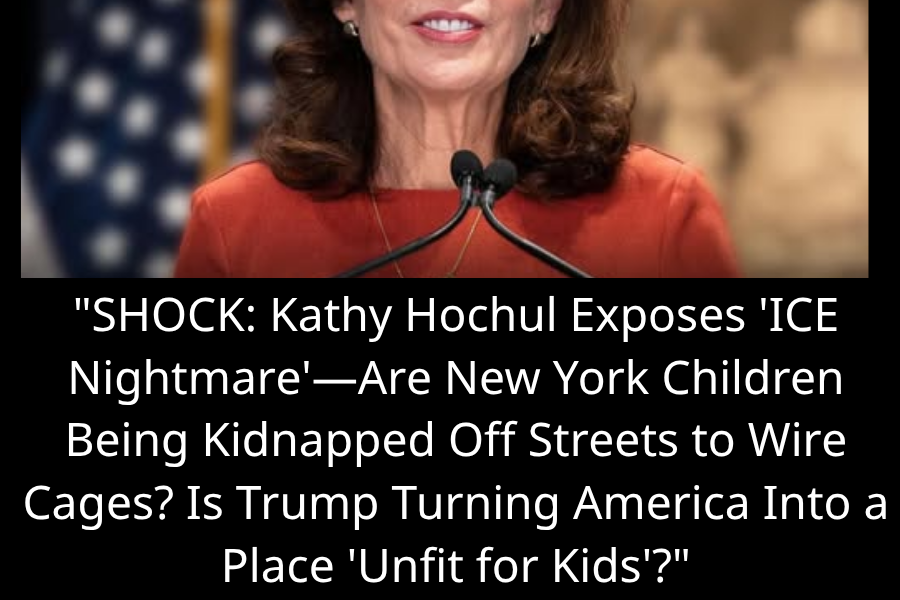
Let’s start with the image. Because the image is doing all the work.
“ICE is snatching children off our streets and putting them behind barbed wire.”
A mother’s voice. A governor’s platform. A phrase designed to bypass the brain and go straight to the gut. You see it. You feel it. A child, playing on a sidewalk, suddenly grabbed by federal agents, torn from their family, locked behind fences. It is the kind of image that makes you angry, that makes you sad, that makes you want to do something.
Kathy Hochul knows this. She is a mom. She is speaking as a mom. She is not giving a policy speech. She is not citing statutes. She is not explaining the legal framework of immigration enforcement. She is telling a story. A story about children. A story about snatching. A story about barbed wire. A story designed to provoke an emotional response.
“What parent in America thinks this is OK?”
The question is rhetorical. The answer is supposed to be no one. No parent thinks it is OK to snatch children off the streets. No parent thinks it is OK to put kids behind barbed wire. No parent thinks it is OK to do the things that Hochul is describing.
But here is the question that Hochul did not ask. Here is the question that her emotional plea is designed to make you forget. Here is the question that the parents of America might actually want answered before they decide whether they think this is OK:
Who are the children? And why is ICE arresting them?
Because the answer to that question changes everything. And Hochul knows it.
The Missing Context
Let’s fill in the context that Hochul left out.
ICE does not snatch children off the streets for fun. ICE does not snatch children off the streets for no reason. ICE does not snatch children off the streets because they are children. ICE arrests people who are in the country illegally. Sometimes those people are parents. Sometimes those parents have children with them. When a parent is arrested, the child may be taken into custody temporarily, until a relative or guardian can be located.
That is not snatching. That is the consequence of a parent being in the country illegally. The child is not being arrested. The child is not being deported. The child is being detained temporarily because the parent who was supposed to be caring for them is in custody. It is sad. It is difficult. It is not the same as the image that Hochul is painting.
Hochul knows this. She knows that ICE is not roaming the streets grabbing random children. She knows that the children who end up in ICE custody are there because their parents were arrested for violating immigration laws. She knows that the “snatching” she is describing is actually the enforcement of laws that Congress passed and that she, as governor, has sworn to uphold.
But she does not say that. She does not say that the children are not the targets. She does not say that the parents are the ones who broke the law. She does not say that the barbed wire she is invoking is actually a temporary holding facility for families who entered the country illegally. She says none of that. She says “snatching children off our streets.” She says “putting them behind barbed wire.” She says “this is not the country we want our kids to grow up in.”
She is counting on you not to ask the follow-up questions. She is counting on you to react emotionally. She is counting on you to see the image she is painting and not the reality she is hiding.
The Parent Question
“What parent in America thinks this is OK?”
Let’s answer that question honestly. Parents who believe in the rule of law think it is OK. Parents who believe that countries have the right to control their borders think it is OK. Parents who believe that entering a country illegally has consequences think it is OK. Parents who believe that the laws should be enforced, even when the enforcement is uncomfortable, think it is OK.
Hochul is assuming that all parents see the world the way she does. She is assuming that all parents prioritize the feelings of the moment over the long-term consequences of lawlessness. She is assuming that all parents would rather have open borders than enforce the laws that keep the country safe. She is assuming that all parents agree with her that ICE is the villain and the people who broke the law are the victims.
They do not. Millions of parents in America look at the situation at the border and see something very different from what Hochul sees. They see a system that has been overwhelmed by people who are entering the country illegally. They see a federal government that has been unable or unwilling to enforce the laws. They see children being used as shields by adults who know that the emotional appeal of a child will make it harder for ICE to do its job. They see the consequences of lawlessness and they want it to stop.
Hochul is speaking to the parents who already agree with her. She is not speaking to the parents who see the world differently. She is not trying to convince anyone. She is trying to rally her base. She is using the language of motherhood to make a political point. And that is her right. But it is not honest. And it is not persuasive to anyone who is not already convinced.
The Country We Want
“This is not the country we want our kids to grow up in.”
What country do we want our kids to grow up in? Hochul has an answer, but she does not state it directly. She implies that the country she wants is one where immigration laws are not enforced. Where ICE does not arrest people who are in the country illegally. Where children are never separated from their parents, even when their parents have broken the law. Where the border is open and anyone can come.
That is a vision. It is a vision that some Americans share. It is a vision that is honest, even if Hochul is not being honest about what she is asking for. She wants a country without immigration enforcement. She wants a country where the laws on the books are not the laws that are enforced. She wants a country where the emotional appeal of a child trumps the rule of law.
Other Americans want a different country. They want a country where the laws are enforced. Where the border is secure. Where people who enter illegally are detained and deported. Where children are not used as shields by adults who know that the system will prioritize the child’s welfare over the parent’s lawbreaking. They want a country where the rule of law means something.
Hochul says that her vision is the country we want our kids to grow up in. She is wrong. It is the country that some of us want. It is not the country that all of us want. And the parents who disagree with her are not monsters. They are not cruel. They are not heartless. They simply believe that a country without borders is not a country at all, and that enforcing the laws is not the same as snatching children off the streets.
The Emotional Manipulation
Hochul is a skilled politician. She knows that the way to win an argument is not to engage with the facts but to appeal to the emotions. She knows that a picture of a child in a detention facility is worth a thousand policy papers. She knows that the word “snatching” evokes violence and cruelty, even when the reality is much more mundane. She knows that “barbed wire” sounds like a concentration camp, even when the reality is a temporary holding facility with basic amenities.
She is manipulating you. She is using the language of motherhood to make you feel something. She is counting on you to react emotionally rather than think critically. She is hoping that you will not ask the questions that would reveal the truth behind her rhetoric.
The truth is that ICE is not snatching children off the streets. The truth is that children are being detained because their parents were arrested for violating immigration laws. The truth is that the barbed wire Hochul mentions is part of a facility that is designed to hold people temporarily while their immigration cases are processed. The truth is that the situation is complicated, that there are no easy answers, that the emotional appeal of a child should not be the only factor in deciding how to enforce the laws.
Hochul does not want you to know the truth. She wants you to feel. And if you feel what she wants you to feel, you will agree with her. You will not ask questions. You will not seek context. You will not wonder whether there is another side to the story. You will just feel, and then you will act, and then you will vote.
That is the politics of emotional manipulation. That is what Hochul is doing. And that is why her statement is so dangerous. Not because she is wrong about everything—she is not—but because she is using the trust that people place in a mother’s voice to advance a political agenda that she is not being honest about.
The America That Is Better
“America is better than this.”
What is America better than? Hochul does not say. She implies that America is better than enforcing its immigration laws. She implies that America is better than detaining people who enter the country illegally. She implies that America is better than the rule of law.
But America is not better than the rule of law. America is the rule of law. America was founded on the idea that laws apply to everyone, that they are not optional, that they are not suspended when enforcement becomes uncomfortable. America is a nation of laws, not a nation of feelings. America is better than the chaos that would result if everyone decided that the laws did not apply to them. America is better than the lawlessness that Hochul is implicitly endorsing.
Hochul says America is better than this. She is right. America is better than the emotional manipulation she is practicing. America is better than the dishonest framing she is using. America is better than the politics of fear and outrage that she is deploying.
America is better than that. And the parents who disagree with her are not the problem. The problem is the governor who would rather manipulate your emotions than engage with the facts. The problem is the politician who would rather paint a false picture than tell the truth. The problem is the leader who would rather divide than unite.
America is better than that. And it is time for our leaders to start acting like it.
The Last Word
Kathy Hochul spoke as a mom. She spoke about children. She spoke about snatching. She spoke about barbed wire. She spoke about the country we want our kids to grow up in. She said America is better than this.
She is right about one thing. America is better than the picture she painted. America is better than the emotional manipulation she practiced. America is better than the dishonest framing she used. America is better than a governor who would rather make you feel than make you think.
The children who are in ICE custody are not there because ICE is evil. They are there because their parents broke the law. That is sad. That is difficult. That is not the same as snatching. Hochul knows this. She knows that the word “snatching” is a lie. She knows that the image she is painting is false. She knows that the emotional response she is seeking is based on a distortion of the truth.
She does it anyway. Because it works. Because the parents who hear her will not ask the follow-up questions. Because the media will not challenge her framing. Because the outrage machine will amplify her message without checking the facts.
She is a mom. She is a governor. She is a politician. And she is using the trust that comes with those roles to manipulate you.
America is better than that. But only if we demand better. Only if we ask the questions. Only if we seek the context. Only if we refuse to be manipulated by emotional appeals that are designed to bypass our critical thinking.
Hochul spoke. Now it is our turn to think. To question. To wonder whether the children she is talking about are really being snatched, or whether there is more to the story.
There is always more to the story. And the parents who want their children to grow up in a country where the rule of law means something deserve to hear it.