The Crockett Security Scandal: How a Wanted Fugitive Ended Up Protecting a Congresswoman
The Story That Raises Every Possible Question
Let’s lay out the facts as we know them, because this story has more layers than a political thriller.
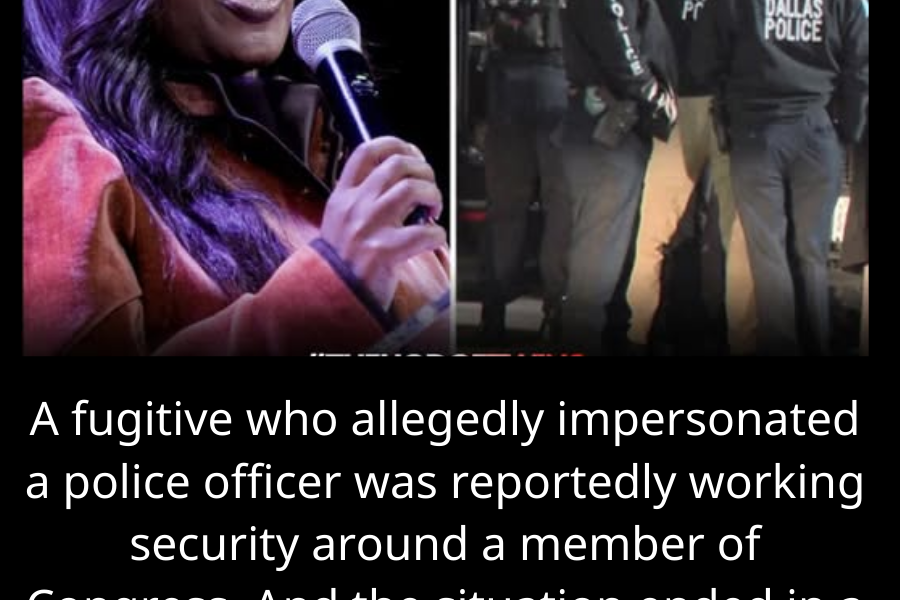
Mike King was a wanted fugitive. He had a criminal history. He was impersonating a police officer—driving a fake undercover vehicle with stolen plates, using aliases, running a business that placed off-duty cops in security jobs.
He was also part of Rep. Jasmine Crockett’s security detail. He was seen right next to the Texas Democrat at events and on the campaign trail. He got paid for “security services” as recently as last year.
This week, King ended up in a standoff with Dallas SWAT—barricaded in a hospital parking garage, tear-gassed, then pulling a gun on officers before being fatally shot.
Crockett’s office? No comment. Dallas PD? No comment.
The questions write themselves:
-
How does a wanted fugitive get close to a sitting member of Congress?
-
Who vetted this man?
-
What did Crockett or her staff know, and when did they know it?
-
How many other events did he work? How many other politicians did he “protect”?
-
And most importantly: What does this say about the security protocols protecting our elected officials?
The King Profile: A Man of Many Identities
From the reports emerging, Mike King was not a low-level grifter. He ran a business that placed off-duty police officers in security jobs—a legitimate business on its face, but one that allowed him to operate in the shadows.
He used aliases. He drove vehicles designed to look like undercover police cars. He had stolen plates. He had outstanding warrants. And yet he was able to walk into events, stand next to a congresswoman, and collect payments for “security services.”
The image is almost too perfect: a wanted man, hiding in plain sight, paid to protect someone who votes on laws that affect millions.
The fact that he was fatally shot after pulling a gun on SWAT officers adds a tragic coda to an already disturbing story. Whatever else King was, he was willing to die rather than be taken into custody.
The Vetting Question: How Did This Happen?
The most immediate question is also the most damning: Who was responsible for vetting this man?
If Crockett’s campaign or office hired King directly, the failure is theirs. They should have run background checks, verified his identity, and ensured that anyone with access to the congresswoman was legitimate.
If King was hired through a subcontractor—a security firm that placed him without proper vetting—then the failure is the firm’s. But Crockett’s office still bears responsibility for ensuring that the people protecting her are who they say they are.
If King inserted himself into the security detail without official hiring—by showing up, acting like he belonged, and never being questioned—then the failure is in the security protocols themselves. How hard is it to get close to a member of Congress? Apparently, not very.
The silence from Crockett’s office is deafening. “No comment” is not an answer. It’s an admission that they don’t want to talk about what happened—and that itself is suspicious.
The Security Implications: A Wake-Up Call
This incident should terrify every member of Congress and every American who cares about their safety.
If a wanted fugitive with a fake police car and stolen plates can get close to a sitting congresswoman, what else is possible? What if King had been not just a fugitive but an assassin? What if his intentions had been violent?
The security apparatus around members of Congress is supposed to prevent exactly this kind of breach. Capitol Police, local law enforcement, private security firms—all are meant to work together to ensure that the people who govern us are protected from those who would do them harm.
This incident suggests that system is broken. And the fact that it took King’s death to expose the failure means other members may be vulnerable right now, protected by people they’ve never properly vetted.
The Political Angle: Why This Matters Beyond Security
Jasmine Crockett is a rising star in the Democratic Party. A freshman from Texas, she’s been vocal on progressive issues and has drawn both praise and criticism for her outspoken style.
This scandal will follow her. Republicans will use it to question her judgment, her staff’s competence, and her commitment to security. Democrats will quietly hope it fades from the news cycle. But it won’t—not until the questions are answered.
The fact that King was paid for “security services” as recently as last year means this is not a distant problem. It’s current. It’s ongoing. And it raises questions about whether any member of Congress can trust the people around them.
The Silence: What “No Comment” Really Means
Both Crockett’s office and Dallas PD have declined to comment. This is standard practice during ongoing investigations, but it also creates a vacuum that will be filled by speculation.
Why no comment? Are they hiding something? Are they protecting someone? Are they hoping the story will die if they just ignore it?
It won’t. The combination of a wanted fugitive, a congresswoman, a fake police car, and a fatal SWAT standoff is too dramatic to ignore. The media will keep digging. The public will keep asking. And eventually, someone will have to answer.
The Broader Pattern: Security Failures in Washington
This is not the first security breach involving a member of Congress, and it won’t be the last.
In recent years, we’ve seen:
-
The January 6 attack on the Capitol, which exposed massive failures in physical security.
-
Multiple members threatened, stalked, and attacked by individuals who slipped through security.
-
Concerns about foreign agents infiltrating congressional offices.
-
Ongoing questions about the vetting of staff, interns, and contractors.
The Crockett incident adds to this pattern. It suggests that the people tasked with protecting our elected officials may not be who they claim to be—and that the systems designed to catch impostors are not working.
The Verdict: Questions That Demand Answers
Mike King is dead. He pulled a gun on police, and officers did what officers do. That part of the story is over.
But the questions remain:
-
How did a wanted fugitive get close to a sitting member of Congress?
-
Who hired him? Who vetted him? Who paid him?
-
What did Crockett or her staff know?
-
How many other events did he work?
-
How many other members are protected by people who haven’t been properly vetted?
-
What is being done to ensure this never happens again?
Until these questions are answered, every member of Congress should be asking their own security teams: Who are the people protecting me? And how do I know they’re real?
The silence from Crockett’s office is not acceptable. The silence from Dallas PD is not acceptable. The American people deserve to know how a wanted fugitive ended up protecting one of their representatives—and what’s being done to make sure it never happens again.
Jasmine Crockett owes her constituents that much. And if she won’t provide answers, the press will keep asking until someone does.