The Escrow Rebellion: Why John Kennedy Just Made Every Senator’s Stomach Drop
The bill passed unanimously.
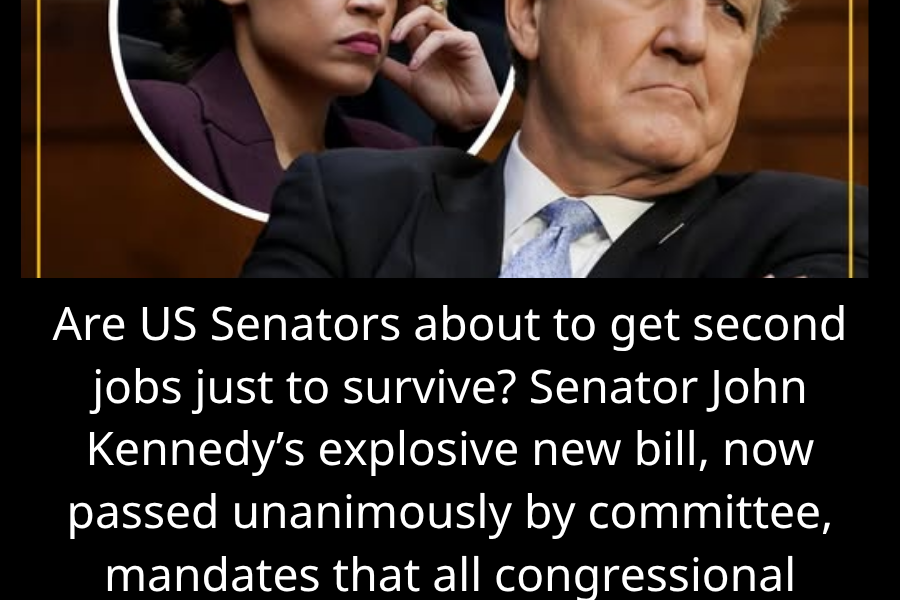
Read that again. The Senate Rules Committee. Every member. Republican. Democrat. The ones who usually can’t agree on what day it is. All of them looked at Senator John Kennedy’s proposal—the one that says senators don’t get paid during government shutdowns—and voted yes.
Unanimous. Bipartisan. No dissent.
And then they sent it to the full Senate. Where it will sit. And wait. And probably never see the light of day again.
Because here’s the thing about that unanimous vote: It was easy. It cost nothing. The Rules Committee could vote yes all day long because they knew, they absolutely knew, that the bill would never get a floor vote. They could look good. They could sound tough. They could say “of course senators shouldn’t get paid when they’re not doing their jobs.”
And then they could go back to their offices and collect their paychecks while federal workers lined up at food banks.
Kennedy knows this. He’s been in the Senate long enough to know how the game is played. That’s why he keeps talking about it. That’s why he keeps reminding people that his bill exists. That’s why he’s making sure that when the next shutdown comes—and there will be a next shutdown, there are always next shutdowns—everyone remembers that there was a simple, obvious, common-sense solution sitting on the floor of the Senate, waiting for a vote that never came.
No work, no pay.
It’s not complicated. It’s not controversial. It’s not a partisan issue. It’s the rule that applies to every other American who shows up to a job they can’t perform because the people in charge couldn’t figure out how to keep the lights on.
Except the people in charge. They keep getting paid.
The 43 Days
Let’s talk about what a 43-day shutdown looks like.
Not the headline. Not the cable news coverage. Not the politicians standing at podiums saying “this is the other side’s fault.” The actual, human experience of 43 days without a paycheck.
You’re a TSA agent at LAX. You wake up every morning, put on your uniform, drive to the airport, spend eight hours patting down strangers and scanning carry-ons. You do the job. You do it well. You do it knowing that every day you’re not getting paid. That your mortgage is coming due. That your car payment is coming due. That your kid’s school lunch account is running low.
You do it because you’re a federal employee. Because you serve your country. Because you took an oath. Because you believe in the work.
And every day, you look at the news and you see senators—the people who caused this, the people who could end it tomorrow if they could just agree on something, anything—going about their lives. Collecting their paychecks. Flying home for the weekend. Showing up on cable news to explain why it’s the other side’s fault.
One bank. One bank in the Washington area issued over $365 million in emergency loans to keep federal workers afloat. Three hundred and sixty-five million dollars. To people who work for the government. Who should be getting paid by the government. Who are not getting paid by the government because the government cannot agree on how to keep the government running.
That’s not a budget fight. That’s a hostage crisis. And the hostages are the people who show up to work anyway, because they know that if they don’t, the country stops working.
Senator Kennedy looked at that. He looked at the TSA agents. He looked at the border patrol officers. He looked at the air traffic controllers. He looked at the soldiers who were told to keep reporting for duty without knowing when their next paycheck would come. And he thought: This is insane. If we can’t do our jobs, why are we getting paid?
The bill he wrote is the answer to that question. It’s simple. It’s brutal. It’s exactly what every federal worker was thinking during those 43 days.
The Unanimous Vote That Meant Nothing
The Rules Committee vote was 9-0. Every senator in the room raised their hand. Republicans. Democrats. The ones who usually vote no on everything the other side proposes. All of them said yes.
Why wouldn’t they? It costs nothing to vote yes on a bill that will never become law. It makes you look like a reformer. It makes you look like someone who cares about accountability. It gives you a talking point when you go back home and someone asks you why senators kept getting paid while federal workers went hungry.
But here’s what that unanimous vote didn’t do: It didn’t schedule a floor vote. It didn’t put the bill in front of the full Senate. It didn’t force anyone to actually put their paycheck where their mouth is.
Because that’s the real test. Not the committee vote. Not the press release. Not the speech about fiscal responsibility. The floor vote. The moment when every senator has to look at the camera and explain why they’re voting against a bill that says “if you don’t work, you don’t get paid.”
And that vote will never come. Because too many senators, on both sides of the aisle, have gotten very comfortable with the arrangement. They get paid no matter what. They get paid when the government is open. They get paid when the government is closed. They get paid when they’re working. They get paid when they’re not working. They get paid when they’re flying home for the weekend. They get paid when they’re sitting on a beach in August.
It’s the one thing in Washington that works exactly as designed: the system that protects the people who run the system.
Kennedy wants to break that system. He wants to make the people who cause shutdowns feel the pain they’re inflicting on everyone else. He wants to introduce a little consequence into a process that currently has none for the people who control it.
And that’s why the bill will never get a floor vote. Because the people who control the floor are the people who would have to give up their paychecks. And no one—not Republican, not Democrat, not conservative, not progressive—wants to be the one to say “yes, let’s take money out of my own pocket.”
The Escrow Mechanism
The bill is clever. It doesn’t just stop pay. It puts it in escrow. The money sits there. It accumulates. And when the shutdown ends, the senator gets it all back.
That’s the part that makes it politically survivable. Kennedy isn’t trying to punish senators. He’s not trying to take money away from them permanently. He’s just saying: If you’re the reason the government isn’t working, you don’t get to collect your paycheck while everyone else is suffering. You can have it when the government reopens. Not before.
It’s the same deal that applies to federal workers. They get back pay when the shutdown ends. They don’t get paid during. The bill simply extends that same logic to the people who caused the shutdown in the first place.
And yet, it’s too much. The mere suggestion that senators should be treated like the people they employ—that they should share the pain they inflict—is considered radical. Extreme. Beyond the pale.
Think about that. In what other industry would it be considered extreme to say that the people who shut down the company shouldn’t get paid while everyone else is working for free? In what other profession would that be controversial?
Only in Washington. Only in a system that has spent decades insulating itself from the consequences of its own failures. Only in a city where the people who make the rules have carefully arranged things so that the rules never apply to them.
The $15 Billion Question
The Congressional Budget Office estimated that the 43-day shutdown cost the economy $15 billion per week. Fifteen billion. With a B. Every seven days. In lost GDP. In lost productivity. In loans that had to be made to people who shouldn’t have needed loans. In savings drained from people who had spent years building them.
Fifteen billion dollars a week. And during that time, every senator collected their full salary. Every senator had their health insurance. Every senator had their staff. Every senator had their travel budget. Every senator had their office. Every senator had everything they needed to continue living exactly as they had been living before they decided to shut down the government.
The disconnect is staggering. It’s the kind of thing that, if you think about it too long, makes you want to throw something at the television. These people—the ones who are supposed to represent us, supposed to serve us, supposed to work for us—shut down the government and then just… went on with their lives. Collected their checks. Flew home for the weekend. Showed up on Sunday shows to explain why it wasn’t their fault.
And then, when it was over, they gave themselves a raise. Because that’s what they do. Because the system is designed to take care of them, no matter what they do to anyone else.
Kennedy’s bill doesn’t fix that system. It doesn’t change the fundamental dynamic that allows shutdowns to happen in the first place. But it does something smaller and maybe more important: It says that the people who break the system should feel the break.
The Thune Question
Majority Leader John Thune has not scheduled a floor vote. He’s not saying he won’t. He’s not saying he will. He’s doing what Majority Leaders do when they don’t want to talk about something: He’s saying nothing.
But the question is out there now. It’s been asked. It’s been reported. It’s been circulated. And eventually, someone is going to put a microphone in front of Thune and ask: “Why haven’t you brought Senator Kennedy’s bill to the floor? It passed the committee unanimously. It has bipartisan support. Why isn’t it getting a vote?”
The answer, when it comes, will be revealing. Maybe it will be about “process.” Maybe it will be about “scheduling.” Maybe it will be about “other priorities.” But what it will really mean is: The people who would have to vote on this don’t want to vote on this. Because voting on this would put them on the record. And being on the record about whether senators should get paid during shutdowns is the last thing anyone in this building wants.
Because the vote would pass. It would pass overwhelmingly. No senator wants to be the one who votes against “no work, no pay.” The optics are impossible. The attack ads write themselves. So the vote would pass. The bill would become law. And then every future shutdown would be a little harder, a little more painful, for the people who cause them.
And that’s why the bill will never get a floor vote. Because the people who control the floor don’t want future shutdowns to be harder. They don’t want the pain to touch them. They want to keep the game exactly as it is: a game where the only people who suffer are the people who don’t get to make the rules.
The Simple Idea
Kennedy calls it a “simple idea.” That’s his word. Simple.
No work, no pay. If you can’t do your job—if you actively, deliberately, publicly prevent the government from doing its job—you don’t get paid while you’re preventing it. You get paid when you stop preventing it. When you let the people who work for you go back to work. When you let the country go back to work.
It’s so simple that it’s almost stupid. It’s the kind of thing you’d explain to a child: “If you don’t do your chores, you don’t get your allowance.” The child would understand. The child would nod. The child would think that’s fair.
But in Washington, it’s radical. In Washington, it’s controversial. In Washington, a bill that says “senators don’t get paid during shutdowns” passes a committee unanimously and then gets buried because the people who would have to vote on it don’t want to be the ones to say yes.
That’s not a simple idea. That’s an indictment. That’s a picture of a system so broken, so corrupt, so disconnected from the people it’s supposed to serve that the most obvious, most basic, most common-sense reform imaginable is considered too dangerous to bring to a vote.
The Day the Bill Died
It will die quietly. That’s how things die in Washington. Not with a vote. Not with a debate. Not with a moment of drama that everyone remembers. Just… silence. The bill will sit. The session will end. The new session will begin. The bill will be reintroduced. It will pass the committee again. It will sit again. It will die again.
And the next shutdown will come. And the TSA agents will work without pay. And the border patrol will work without pay. And the air traffic controllers will work without pay. And the soldiers will work without pay. And the senators will collect their paychecks. And John Kennedy will stand up and say, again, that this is insane. And the bill will be introduced again. And the cycle will continue.
Because that’s how the system is designed. To protect itself. To protect the people who run it. To make sure that no matter what happens, no matter how much damage they do, no matter how many people they hurt, the people in charge never feel the pain.
Kennedy is trying to change that. He’s trying to introduce a little pain into the system. A little consequence. A little accountability. He’s trying to make the people who cause shutdowns feel what it’s like to have their paycheck held hostage by people who can’t agree on anything.
It’s not a big change. It’s not a revolution. It’s a simple idea. A stupid idea, maybe. An idea so obvious that it shouldn’t need to be a bill. An idea that any reasonable person would look at and say: “Of course. Obviously. Why wasn’t that already the rule?”
But in Washington, the obvious is radical. The simple is impossible. And the idea that senators should be treated like the people they represent is the most radical idea of all.
So the bill will sit. And the next shutdown will come. And the senators will get paid. And the rest of the country will watch. And somewhere in Louisiana, John Kennedy will be thinking about the 43 days. The TSA agents. The air traffic controllers. The soldiers. The $15 billion a week. The $365 million in emergency loans.
And he’ll be wondering: What does it take? What does it take to make this system care about the people it’s supposed to serve? What does it take to make the people who break things feel the break?
He thought the answer was simple. No work, no pay.
He was wrong. It’s not simple. It’s impossible. Because the people who would have to vote yes are the people who would have to give up their paychecks. And no one in Washington is willing to do that.
Not even for a simple idea. Not even for the TSA agents. Not even for the soldiers. Not even for the country they’re supposed to serve.
The bill will sit. The shutdowns will come. The senators will get paid.
And John Kennedy will keep asking the question that no one in Washington wants to answer:
If you can’t do your job, why should we pay you?