The Loyalty Test: Rand Paul Defends Massie as Trump Demands Fealty
The Fracture That Was Always Coming
Let’s state the dynamic plainly: Donald Trump demands absolute loyalty. Rand Paul believes in principle over party. Something had to give.
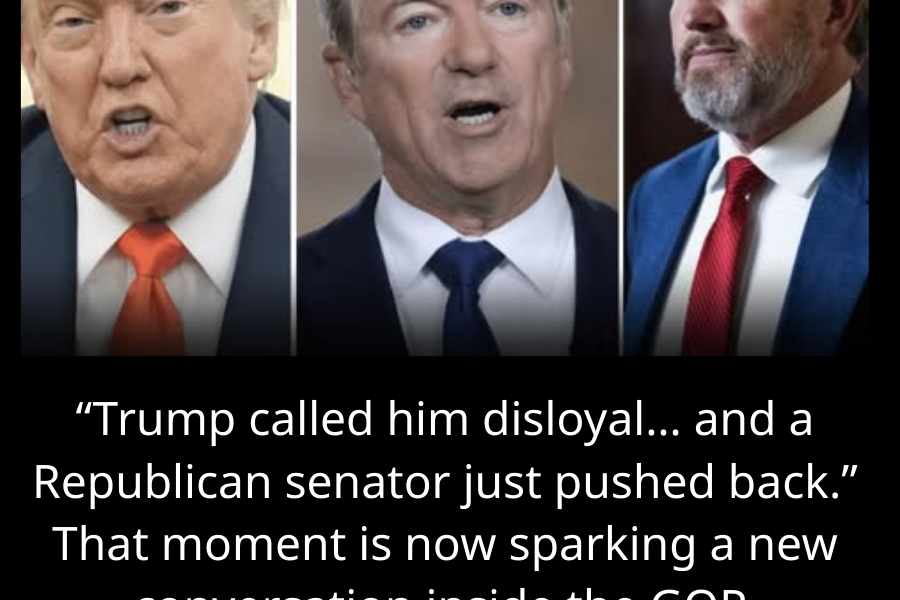
The latest rupture came when Trump turned his fire on Rep. Thomas Massie, the Kentucky libertarian-conservative who has spent his career voting against spending bills, opposing debt ceiling increases, and generally making life difficult for leadership in both parties. Trump’s critique was characteristically blunt: Massie is “disloyal.”
Enter Rand Paul, the Senate’s other Kentucky libertarian-conservative, the man who once held a 13-hour filibuster over drone strikes and who has built a career on being the conscience of the party, not its foot soldier.
Paul’s defense of Massie is remarkable not for its substance—both men have long records of fiscal conservatism—but for its timing and its target. This is not a policy disagreement. This is a declaration of independence from a president who tolerates no independence.
The Paul Doctrine: Principle Over Personality
Paul’s comments to the media and his subsequent X post lay out a clear philosophy:
“I think Thomas Massie is the most fiscally conservative and the best defender of the Constitution, and I think that’s what’s most important.”
“Both of us support the President 90% of the time, but he and I will stand up against things like runaway spending, no matter which party proposes it.”
This is the Paul brand in a nutshell: principles first, party second, personality nowhere. It’s the same philosophy that led his father, Ron Paul, to oppose Republican spending under Bush and Obama alike. It’s the philosophy that makes Rand Paul a hero to libertarians and a headache to leadership.
But it’s also a philosophy that puts him directly at odds with Trump’s vision of the Republican Party—a party built around loyalty to the leader, not fidelity to ideas. For Trump, the worst sin is disloyalty. For Paul, the worst sin is abandoning your principles.
The Massie Problem: Why Trump Is Angry
Thomas Massie has a long history of frustrating Republican leadership. In 2020, he was the only House member to oppose a massive COVID relief bill, earning Trump’s ire even then. He’s voted against farm bills, defense authorization acts, and countless spending packages that most Republicans supported.
His latest transgression? Opposing a spending deal that Trump supported—a deal that increased the debt ceiling without corresponding spending cuts. For Massie, this was a betrayal of fiscal conservatism. For Trump, it was a betrayal of him.
The irony is that Massie is one of the most conservative members of the House by any objective measure. His voting record earns him near-perfect scores from conservative rating groups. He’s not a RINO; he’s the opposite. But in Trump’s Republican Party, ideological purity matters less than personal loyalty. Massie’s sin isn’t insufficient conservatism—it’s insufficient fealty.
The 90% Problem: When Agreement Isn’t Enough
Paul’s invocation of the “90%” statistic is revealing. Both he and Massie support Trump most of the time. They vote for his nominees. They back his policies. They defend him against Democratic attacks.
But for Trump, 90% isn’t enough. The 10% where they dissent—where they vote their conscience instead of following the leader—is what he notices. It’s what he remembers. It’s what he punishes.
This is the logic of authoritarian movements: loyalty must be total. Any deviation is betrayal. Any criticism is disloyalty. Any independent thought is insubordination.
Paul is pushing back against this logic. He’s saying, implicitly, that 90% is pretty good. That occasional disagreement is normal in a coalition. That demanding 100% allegiance is unreasonable and ultimately destructive.
The Constitutional Argument: What Paul Is Really Defending
Paul’s defense of Massie goes beyond policy. It’s rooted in a particular vision of what the Republican Party—and the country—should be.
“The best defender of the Constitution.”
That phrase is doing a lot of work. It’s a reminder that for Paul, the ultimate allegiance isn’t to any person or party. It’s to the document itself—to the separation of powers, to limited government, to the rights retained by the people.
In this framework, voting against a spending bill isn’t disloyalty to Trump. It’s fidelity to the Constitution. It’s doing the job you were elected to do: check executive power, control the purse strings, defend the taxpayer.
Trump’s demand for loyalty, by contrast, treats the Constitution as an obstacle—something to be worked around, not upheld. The tension between these views is irreconcilable.
The Republican Response: Silence or Support?
The reaction from other Republicans has been muted, which is itself revealing.
Some are privately cheering Paul’s defense of Massie. They’re tired of Trump’s loyalty tests and appreciate someone willing to push back.
Others are staying silent, hoping the controversy blows over. They don’t want to cross Trump, but they also don’t want to attack Paul. They’re caught between their fear of the president and their respect for a colleague.
A few—the most Trump-loyal—are attacking Paul for defending Massie. They’re echoing Trump’s language, calling Massie “disloyal” and questioning Paul’s commitment to the movement.
The division within the party is real, and it’s growing. Every time Trump demands total loyalty, he forces Republicans to choose: stand with him or stand with their principles. Some choose principles. Most choose him. But each choice leaves scars.
The 2026 Context: Why This Matters Now
This fight isn’t happening in a vacuum. It’s happening against the backdrop of the 2026 midterms, with control of Congress hanging in the balance.
Trump needs unified Republican support to pass his agenda, confirm his nominees, and defend against Democratic investigations. Every defection weakens him. Every public criticism gives Democrats ammunition.
But the demand for unity cuts both ways. If Trump alienates principled conservatives like Massie and Paul, he risks losing their supporters—libertarians, deficit hawks, constitutionalists—who may stay home or vote third party.
The math is simple: in a close election, every vote counts. And every faction matters. Trump can afford to lose some libertarians if he gains more populists. But at what point does the coalition fracture entirely?
The Verdict: A Fight That Defines the Future
Rand Paul’s defense of Thomas Massie is more than a spat between Kentucky Republicans. It’s a proxy war for the soul of the party.
On one side: the Trump model, where loyalty to the leader is the highest virtue, where dissent is disloyalty, where the party exists to serve the man.
On the other side: the Paul model, where principle is paramount, where the Constitution comes before any person, where the party exists to advance ideas.
Most Republicans will try to straddle the line—supporting Trump while quietly appreciating Paul. But eventually, a choice will have to be made. The party cannot serve two masters forever.
Paul has made his choice. Massie has made his. The question now is whether the rest of the party will follow them—or follow Trump into a future where loyalty is the only virtue that matters.