The Pritzker Prediction: Fearmongering or Fair Warning?
The Interview That Lit the Fuse
Let’s start with what Illinois Governor JB Pritzker actually said, because context matters.
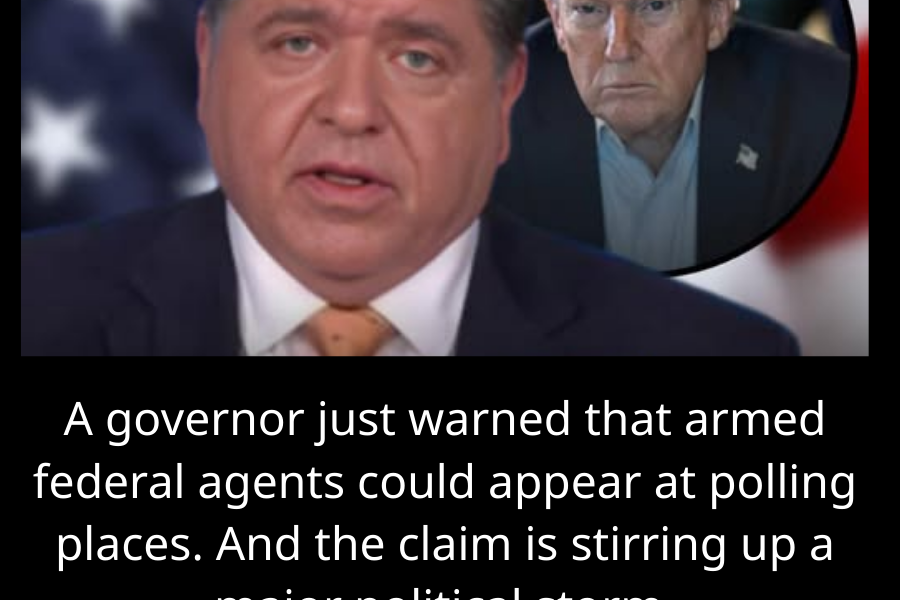
In an interview with Brian Tyler Cohen News, the Democratic governor made a series of claims about the Trump administration’s plans for the 2026 midterm elections:
“It is clear that he is going to use either ICE or Customs and Border Patrol—with their uniforms and automatic weapons—or he’ll try to use the National Guard to protect the polling places. And I have no doubt that part of that plan is potentially to seize ballot boxes in order to count the votes himself.”
The reaction was immediate and predictable. Trump supporters called it hysterical fearmongering. Democrats called it a necessary warning. The rest of us are left wondering: Is Pritzker describing a real threat, or is he projecting his own fears onto a president he despises?
The Critique: Why Pritzker’s Claims Ring Hollow
The counter-argument to Pritzker is straightforward and, in many ways, compelling.
1. Who fears ICE and Border Patrol? The question writes itself. If you’re a lawful citizen, going about your business, why would you be afraid of federal law enforcement? The only people who should fear ICE are those who are here illegally. Pritzker’s framing assumes that the presence of armed agents near polling places would intimidate voters—but that assumes voters have something to hide.
2. “Potentially” is doing a lot of work. Pritzker admits he’s speculating. He has no evidence, no leaked memos, no whistleblower testimony. He has a hunch, a fear, a “no doubt” based on… what? The word “potentially” is the tell. It’s the language of someone who knows they’re on thin ice.
3. The National Guard protects, not seizes. The National Guard has been used in elections before—to provide security, manage crowds, and assist with logistics. There’s no precedent for them “seizing ballot boxes” or “counting votes themselves.” The leap from security to theft is massive and unsupported.
4. This is a pattern. Pritzker is following a well-worn Democratic playbook: paint Trump as an authoritarian threat to democracy itself. Every election since 2016 has been framed as the “last election” if Republicans win. The rhetoric escalates, but the predicted catastrophe never arrives. After enough false alarms, people stop listening.
The Defense: Why Pritzker’s Warning Matters
But before dismissing Pritzker entirely, consider the perspective of those who take his warning seriously.
1. Trump has talked about this. The president has repeatedly suggested that the military or law enforcement should be used on Election Day to prevent fraud. He’s floated the idea of deploying troops to polling places. He’s questioned the legitimacy of mail-in voting. The words are on the record.
2. The precedent exists. In 2020, Trump considered using federal law enforcement to seize voting machines. The idea was reportedly discussed in the White House. It didn’t happen, but the fact that it was considered is itself alarming.
3. The “uniforms and weapons” matter. The presence of armed federal agents at polling places is inherently intimidating, regardless of intent. Voters shouldn’t have to walk past automatic weapons to cast a ballot. The psychological impact is real, even if no one is actually arrested.
4. “Potentially” is honest. Pritzker isn’t claiming to have proof. He’s saying, based on everything we know about this president and his past behavior, this is a plausible scenario. That’s not fearmongering—that’s pattern recognition.
The Deeper Divide: Two Visions of Election Integrity
This dispute isn’t really about Pritzker’s words. It’s about two fundamentally different understandings of what threatens American democracy.
For Trump supporters: The threat is fraud. Illegal voting, noncitizen voting, ballot harvesting, dead people voting—these are the real dangers. Armed agents at polling places? That’s a solution, not a problem. If you’re a legal voter, what do you have to fear from people enforcing the law?
For Pritzker and Democrats: The threat is suppression. Voter ID laws, purged rolls, reduced polling places, armed agents—all of these are designed to make it harder for certain people to vote. The goal is not security; it’s advantage. And when you add Trump’s history of refusing to accept election results, the concern becomes existential.
Both sides believe they’re defending democracy. Both sides see the other as the enemy of democracy. And neither side can convince the other, because they start from irreconcilable premises.
The Role of Language: “Clear” vs. “Potential”
Pritzker’s critics have seized on the tension between “it is clear” and “potentially.” If something is clear, why qualify it with potential? If it’s potential, how can it be clear?
This is the kind of linguistic contradiction that drives political debates. Pritzker wants to sound certain—to convey urgency and conviction. But he also wants to avoid being pinned down if his predictions don’t materialize. The result is a statement that tries to have it both ways and ends up satisfying no one.
His supporters will say he’s being prudent—acknowledging uncertainty while still sounding the alarm. His critics will say he’s hedging his bets, preparing to claim victory if he’s right and deny responsibility if he’s wrong.
The Historical Context: Crying Wolf
The problem for Democrats is that they’ve cried wolf too many times.
-
2016: Trump will end democracy if elected. He didn’t.
-
2020: Trump will refuse to leave office. He left.
-
2022: The “red wave” will bring authoritarian rule. It didn’t.
-
2024: Trump’s second term will be the end of elections. It wasn’t.
Each time, the apocalyptic predictions failed to materialize. Each time, life went on, democracy survived, and the people who made the predictions moved on to the next crisis.
This doesn’t mean the next warning is false. It means the messengers have lost credibility. When you predict the end of the world every four years, people stop buying tickets.
The Verdict: A Warning That Will Be Ignored
JB Pritzker’s interview will be shared widely among Democrats, dismissed by Republicans, and forgotten by everyone else within a week. It’s the latest entry in a long series of “Trump will end democracy” warnings that have become background noise in American politics.
But here’s the uncomfortable truth: Pritzker could be right. Trump has talked about using federal agents at polling places. He has discussed seizing voting machines. He has refused to commit to accepting election results. The concerns are not irrational.
The problem is that the language of crisis has been so overused that even legitimate warnings are dismissed as partisan hysteria. When everything is framed as the end of democracy, nothing is. And when the real threat finally arrives, no one will believe it.
Pritzker’s words will be forgotten. But the question he raised—about what happens when a president refuses to accept election results and uses federal power to intervene—will not. That question is coming, whether we’re ready or not.