“I Don’t Give a Rip”: Tuberville’s Unfiltered Truth About Radical Islam
The Statement That Broke the Silence
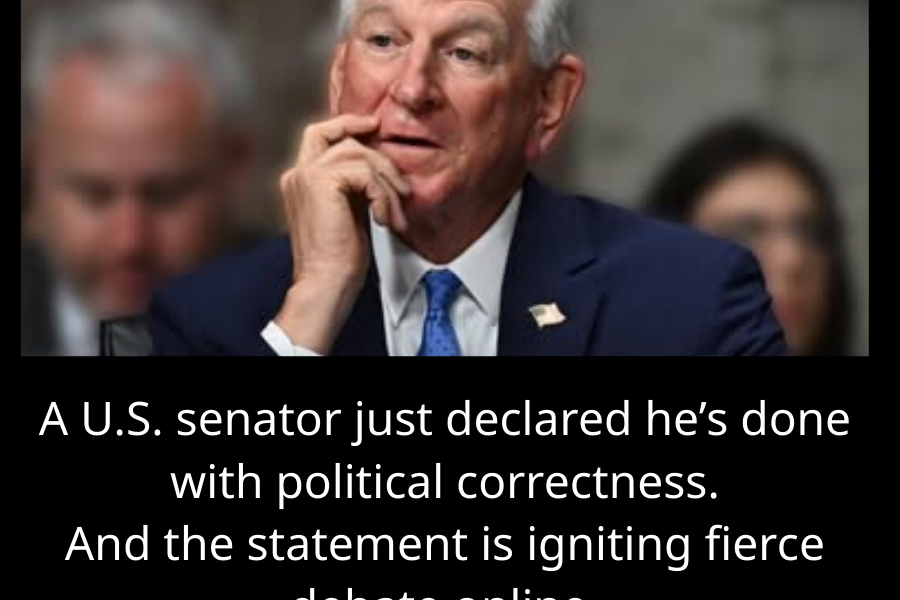
Let’s start with what Senator Tommy Tuberville actually said, because in an era of carefully crafted press releases and focus-grouped talking points, his words land like a sledgehammer:
“I don’t give a rip about being politically correct. Innocent Americans are being gunned down in the streets almost daily by Radical Islamists whose ‘religion’ teaches them it’s righteous to kill Christians. I won’t be silenced about this.”
Three sentences. No caveats. No qualifications. No apologies.
The reaction was instant and predictable. Supporters cheered someone finally saying what everyone is thinking. Critics accused him of bigotry, Islamophobia, and inciting hatred. The media, as always, scrambled to frame the story.
But beneath the predictable outrage, Tuberville touched something real: a growing frustration among Americans who feel they’re being gaslit about the nature of the attacks happening in their country.
The Pattern Tuberville Is Naming
The senator’s reference to Americans being “gunned down in the streets almost daily” is not hyperbole. It’s a description of a pattern that has become impossible to ignore.
Austin. New York. Nashville. Minneapolis. San Bernardino. Orlando. Fort Hood. The list goes on—attacks by individuals who claim allegiance to an ideology that explicitly targets non-believers, especially Christians and Jews.
The response from media and political leaders has been consistent: downplay the ideology, emphasize mental health, avoid connecting the dots. Each attack is treated as an isolated incident, the work of a “lone wolf” or a “troubled individual.” The word “Islamist” is avoided. The religious motivation is minimized. The pattern is denied.
Tuberville is saying what millions of Americans have noticed: these aren’t random. They’re connected by ideology, by motivation, by the words shouted as the violence begins. And refusing to name that ideology doesn’t make it go away—it makes it stronger.
The “Political Correctness” Trap
Tuberville’s dismissal of political correctness is central to his message. He’s signaling that he won’t play the language game—that he won’t let accusations of “Islamophobia” or “bigotry” silence him.
This resonates because many Americans feel exactly the same way. They’ve watched for years as the left has expanded the definition of “hate speech” to include any criticism of Islam. They’ve seen journalists and politicians bend over backward to avoid stating the obvious about the ideology motivating attacks. They’ve been told that noticing a pattern makes them bigots.
Tuberville is saying: enough. I don’t care if you call me names. I’m going to tell the truth as I see it.
Whether you agree with him or not, that stance has a certain courage. In a political environment where one wrong word can end a career, refusing to be silenced is itself a statement.
The Religion Question: Is It Really About Faith?
The most contentious part of Tuberville’s statement is his characterization of Islam as a religion that “teaches it’s righteous to kill Christians.”
Critics will point out, correctly, that most Muslims do not interpret their faith this way. They’ll cite Quranic verses about peace, coexistence, and respect for “People of the Book” (Jews and Christians). They’ll argue that Tuberville is conflating a tiny minority of extremists with 1.8 billion people.
This is true—as far as it goes.
But it’s also true that the extremists do interpret their faith this way. They do cite religious texts to justify violence. They do believe they’re following God’s command when they kill infidels. And they do find willing recruits precisely because their interpretation has traction in the broader Islamic world.
The question is whether a religion can be judged by its most violent adherents. Tuberville’s answer is implicitly yes—at least, when those adherents are numerous enough, violent enough, and consistent enough to constitute a global movement.
The Silence of Muslim Leaders
Tuberville’s critics demand that he condemn all Muslims. But a more productive question is rarely asked: Where is the condemnation from Muslim leaders of the violence committed in their name?
After every attack, American Muslim organizations issue statements condemning violence in general—but rarely do they specifically condemn the Islamist ideology that motivated the attacker. Rarely do they acknowledge that the attacker cited their faith. Rarely do they grapple with the texts and traditions that extremists use to justify murder.
This silence is deafening. And it fuels the very perception Tuberville is expressing: that the Muslim community is not willing to confront the extremism within its own ranks.
Imagine if Christian leaders refused to condemn the Ku Klux Klan’s use of Christian imagery. Imagine if Jewish leaders stayed silent when synagogues were attacked. The outrage would be immediate and universal. Yet Muslim leaders are given a pass.
The Double Standard in Media Coverage
Tuberville’s frustration is also rooted in media coverage that treats Islamist attacks differently from other forms of terrorism.
When a white supremacist attacks a synagogue, the media spends weeks exploring his ideology, his influences, his online activity. When a Islamist attacks a church, the coverage focuses on mental health, workplace disputes, or “personal problems.” The ideology is minimized or ignored entirely.
This double standard is not lost on the American people. They see it. They notice it. And they resent being told they’re imagining things.
Tuberville is giving voice to that resentment. He’s saying what millions think but are afraid to say: the media is protecting one ideology while demonizing another.
The Verdict: A Necessary Conversation, However Uncomfortable
Tommy Tuberville’s words will be dissected, criticized, and weaponized. He’ll be called a bigot, a racist, an Islamophobe. His opponents will use his statement to raise money and mobilize their base.
But beneath the noise, he’s raised a question that won’t go away: Why is it unacceptable to name the ideology behind a pattern of attacks?
If the attacks were being committed by white nationalists, we’d name white nationalism. If they were being committed by communists, we’d name communism. But when they’re committed by Islamists, we’re told that naming the ideology is itself the problem.
This double standard cannot hold forever. Eventually, the American people will demand honesty about the threats they face. Eventually, political correctness will give way to reality.
Tuberville may not be the perfect messenger. His language may be blunt, his analysis incomplete. But he’s started a conversation that needs to happen. And for millions of Americans, that’s enough.
“I won’t be silenced about this.” Whether you cheer him or cringe, those words matter. They represent a refusal to pretend, a rejection of the idea that some truths are too dangerous to speak.
In a country that prizes free speech above almost everything else, that refusal is itself a kind of patriotism.