The Cusack Critique: When Hollywood Takes On Washington
The Actor as Oracle
Let’s start with the obvious question: Why does anyone care what John Cusack thinks about foreign policy?
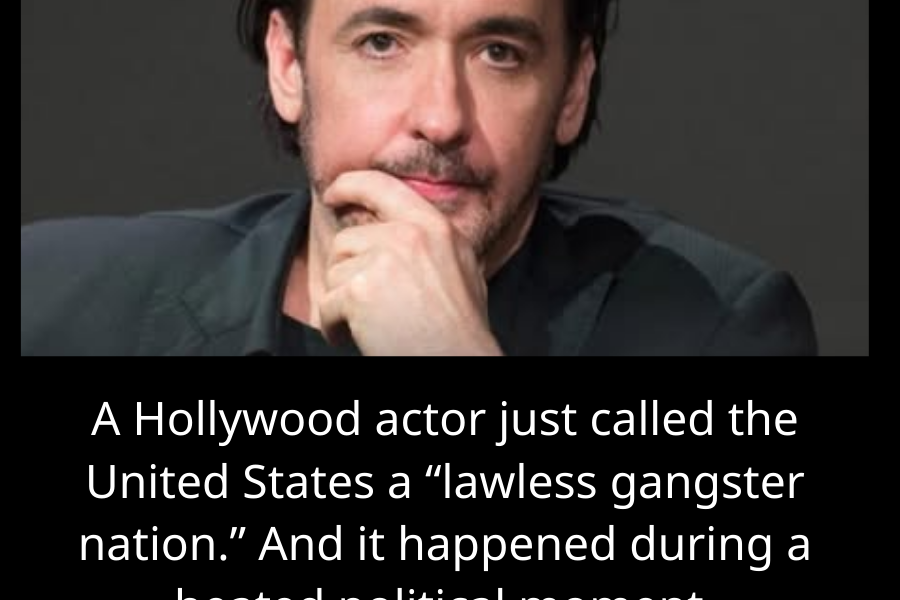
The actor, best known for 1980s classics like Say Anything and Better Off Dead, has spent the last decade reinvented as a progressive political commentator—using his platform to blast everything from corporate greed to American imperialism. His fans love it. His critics roll their eyes. But when he posts, people pay attention.
This time, the target is Donald Trump’s explanation for escalating tensions with Iran. The president claimed he was warned of a possible Iranian strike by close associates—including real estate developer Steve Witkoff and his son-in-law Jared Kushner. Cusack’s response was nuclear:
“The US is a lawless gangster nation run by criminal idiots of world historic proportions literally clowns from hell. Trump’s pronouncement that Steve Witkoff a real estate grifter lackey & his idiotic son in law told him Iran was going to attack the US is the dumbest reason in earth’s history for starting a world war.”
It’s visceral. It’s profane. It’s exactly the kind of post that goes viral, sparks outrage, and gets shared millions of times before anyone bothers to fact-check it.
The Substance: What Cusack Actually Got Right
Before dismissing Cusack as just another celebrity with an opinion, let’s examine the substance of his critique.
1. The source of intelligence matters. If Trump truly based a major escalation on advice from Witkoff and Kushner—neither of whom has intelligence credentials—that’s a legitimate concern. National security decisions should be based on analysis from professionals, not casual conversations with friends and family.
2. The stakes are existential. We’re talking about a potential war with Iran—a conflict that could draw in the entire Middle East, disrupt global oil supplies, and cost thousands of lives. The justification for such a war should be airtight. It should be based on evidence, not instinct.
3. The pattern is troubling. Trump has a history of relying on informal advisors and family members for critical decisions. Kushner’s role in Middle East peace negotiations was widely criticized. Witkoff’s involvement in sensitive national security matters raises similar concerns.
Cusack’s language is inflammatory, but his underlying point—that major decisions shouldn’t be made on the basis of casual conversations with unqualified associates—is hard to dispute.
The Hyperbole: When “Clowns From Hell” Undermines the Argument
But Cusack doesn’t stop at legitimate critique. He descends into the kind of hyperbolic name-calling that defines our era of political discourse.
“Criminal idiots of world historic proportions.”
“Clowns from hell.”
“Lawless gangster nation.”
This is not analysis. This is performance. It’s designed to generate clicks, provoke outrage, and signal tribal allegiance. It’s the political equivalent of a professional wrestling promo—entertaining, but not exactly informative.
The problem is that hyperbole undermines credibility. When you call every president a “criminal idiot,” the term loses meaning. When you describe every policy as “literally clowns from hell,” you rob yourself of the ability to make distinctions. Not every bad decision is apocalyptic. Not every official is incompetent. By treating everything as equally catastrophic, Cusack ensures that nothing he says can be taken seriously.
The Celebrity Problem: Why Actors’ Opinions Matter
There’s a long-running debate about whether celebrities should weigh in on politics. The standard arguments:
For: Celebrities have platforms. They reach millions of people. Using that platform to advocate for causes they believe in is not just their right—it’s their responsibility. If you have the ability to influence public discourse, you should use it.
Against: Celebrities are not experts. Their opinions are no more valuable than anyone else’s, but they’re amplified by fame. This distorts public discourse, elevating entertainment over expertise and emotion over evidence.
Both arguments have merit. The truth is that celebrities will weigh in, whether we like it or not. The question is how we evaluate their contributions.
Cusack, to his credit, has been consistent. He’s been criticizing American foreign policy for years, long before it was fashionable. He’s read the history, studied the conflicts, and formed genuine opinions. He’s not just reading talking points—he has a worldview.
But that worldview is also deeply ideological. It frames every American action as imperialist, every president as criminal, every war as unjustified. It lacks nuance, context, and the ability to distinguish between degrees of evil. In Cusack’s world, there are no shades of gray—only black and white, good and evil, America and everyone else.
The Timing: Why This Matters Now
Cusack’s post came on March 12, 2026—the same day Reuters and AP reported major escalations in the U.S.-Iran conflict. Mojtaba Khamenei, the new Supreme Leader, had just threatened to keep the Strait of Hormuz closed. Tankers were burning in the Gulf. Oil prices were spiking. The world was teetering on the edge of a wider war.
In that context, criticizing the administration’s decision-making is not just fair—it’s necessary. The American people deserve to know why we’re moving toward war, who’s making the decisions, and what evidence supports them.
Cusack’s intervention, however clumsily delivered, speaks to a genuine concern shared by millions: Is this war really necessary? Is it really justified? Or are we being led into conflict by people who don’t know what they’re doing?
The Double Standard: When Hollywood Criticizes Republicans
It’s worth noting the predictable response to Cusack’s post.
Conservatives will use it to dismiss all criticism of Trump as celebrity posturing. “Look at these Hollywood elites, calling America a ‘gangster nation.’ They hate this country.” The fact that Cusack’s critique might have merit is irrelevant—his tone, his language, his identity as an actor all become weapons to discredit him.
Liberals will celebrate Cusack for “speaking truth to power” while ignoring the hyperbolic excess. “Finally, someone saying what we’re all thinking!” The fact that his language alienates potential allies and simplifies complex issues is irrelevant—he’s on the right side, so he must be right about everything.
This is the trap of our polarized discourse. We evaluate statements based on who said them, not what they said. We embrace allies uncritically and dismiss opponents reflexively. We’ve lost the ability to separate messenger from message.
The Verdict: A Symptom, Not a Solution
John Cusack’s post is not going to change anyone’s mind. It’s not going to influence policy or shift the debate. It’s going to be shared by people who already agree with him, mocked by people who already disagree, and forgotten by everyone else by next week.
But it’s also a symptom of something deeper: the complete breakdown of trust between millions of Americans and their government. When an actor can call the United States a “lawless gangster nation” and get hundreds of thousands of likes, it’s not because people think Cusack is a foreign policy expert. It’s because they’ve lost faith in the institutions that are supposed to keep us safe.
They don’t trust the intelligence community. They don’t trust the military. They don’t trust Congress. They don’t trust the president. And when trust collapses, every decision becomes suspect, every explanation becomes a lie, every war becomes an unjustified adventure.
Cusack’s post is vulgar, hyperbolic, and often unfair. But it’s also a reflection of a country that no longer believes its leaders. And that, more than any single policy, is the crisis we face.
The question is whether anyone in Washington is listening.