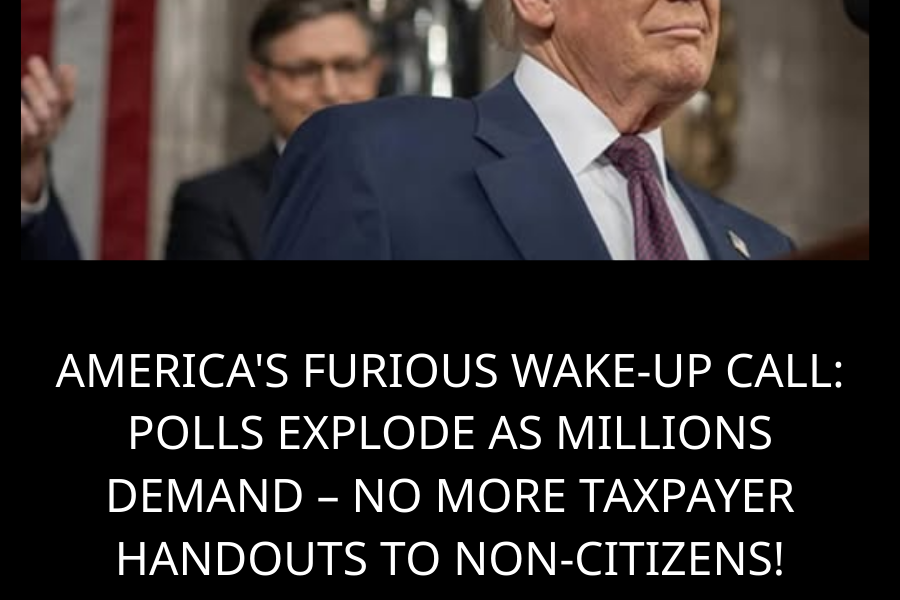
The Citizens First Doctrine: Why Non-Citizen Benefits Are the Next Battlefront
The Premise: Your Money, Their Benefits
Let’s start with a question that answers itself: Why should someone who isn’t a citizen get benefits paid for by citizens?
The welfare state was designed as a social contract among Americans. We pay taxes; in return, we get a safety net when we fall. It’s a system of mutual obligation between people who share citizenship, who vote, who serve on juries, who have a permanent stake in the country’s future.
But that system has been stretched—some say broken—by extending benefits to people who aren’t citizens. Non-citizens, including illegal immigrants and temporary legal residents, can access a range of taxpayer-funded programs: welfare, food stamps (SNAP), housing assistance, Medicaid, and more. The rationale was humanitarian: we shouldn’t let people starve or go without medical care just because their paperwork isn’t complete.
But humanitarianism has a price. And that price is paid by American citizens who see their taxes funding benefits for people who haven’t earned them—while they themselves struggle with inflation, stagnant wages, and a cost of living that keeps rising.
The Scope: How Much Are We Talking?
The numbers are staggering. Depending on the study, non-citizens (including both legal residents and illegal immigrants) consume billions in federal and state benefits annually. Some estimates put the figure as high as $100 billion per year across all programs.
That’s not pocket change. That’s real money—money that could fund veterans’ healthcare, shore up Social Security, fix crumbling infrastructure, or simply be left in the pockets of the taxpayers who earned it.
And the problem is growing. As the border remains porous and enforcement remains lax, more people enter the country with the expectation of accessing benefits. The incentive structure is perverse: if you can get healthcare, housing assistance, and food aid just by showing up, why wouldn’t you? The magnet is real, and it’s powered by American tax dollars.
The Human Argument: Veterans vs. Non-Citizens
The most devastating argument for ending non-citizen benefits is the comparison that writes itself: veterans sleeping on streets while non-citizens receive housing assistance.
However oversimplified, the image captures a moral truth. American citizens who served their country, who risked their lives, who swore an oath—they struggle to find shelter, food, medical care. Meanwhile, people who entered the country illegally or overstayed their visas can access benefits that citizens in need are denied.
This isn’t about cruelty to immigrants. It’s about prioritizing citizens. Any government’s first duty is to its own people. If we have limited resources—and we always do—those resources should go first to the people who have the strongest claim on them: citizens.
The Policy: What Trump Started and Congress Could Finish
President Trump’s administration made significant progress on this front. His 2019 “public charge” rule made it harder for immigrants who use public benefits to get green cards. His enforcement policies reduced the incentive to come here illegally. His fraud investigations uncovered billions in stolen benefits.
But the job isn’t done. The next step is a comprehensive ban on non-citizen access to all taxpayer-funded programs. Not just some programs. Not just for some categories of non-citizens. All programs, for all non-citizens, with very limited exceptions (like emergency medical care).
Such a ban would:
-
Save billions annually, reducing the deficit or freeing funds for citizen priorities.
-
Remove the incentive for illegal entry and visa overstay.
-
Simplify the system by creating a clear rule: benefits are for citizens.
-
Restore fairness by ending the absurdity of non-citizens receiving benefits that citizens are denied.
The Opposition: What They’ll Say and Why It’s Wrong
The arguments against this policy are predictable—and predictable arguments are usually weak arguments.
“It’s cruel to deny help to people in need.”
The cruelty is in the system that prioritizes non-citizens over citizens. We have limited resources. Choosing to give them to non-citizens means choosing not to give them to citizens. That’s the real cruelty.
“Many non-citizens pay taxes.”
Some do. Many don’t. And even those who pay taxes are not citizens—they don’t have the full set of obligations and rights that citizenship entails. Tax payment doesn’t automatically entitle you to the full social safety net.
“This will hurt children who are citizens but have non-citizen parents.”
This is the most emotionally manipulative argument. Yes, some citizen children live in households with non-citizen parents. But the solution isn’t to give benefits to the parents; it’s to ensure that the children receive what they need directly. The parents’ status should not be a backdoor to benefits.
“It’s politically motivated.”
Of course it’s politically motivated. Politics is about priorities. This policy prioritizes citizens. That’s exactly what politics should do.
The Public Mood: Why This Is the Moment
The post is right about one thing: the tide is turning. Polls consistently show strong public support for ending non-citizen benefits. People are tired of watching their tax dollars fund a system that doesn’t prioritize them.
The reasons are obvious:
-
Inflation has made every dollar count. People feel the pinch and resent sending money to Washington only to have it sent elsewhere.
-
The border crisis has made immigration a top issue. People see the connection between lax enforcement and benefit costs.
-
Frustration with government is at an all-time high. People don’t trust that their money is being spent wisely.
-
Common sense says that citizens should come first. It’s not complicated.
The Verdict: A Fight Worth Having
Ending non-citizen access to taxpayer-funded benefits is not radical. It’s not extreme. It’s common sense. It’s what every other country does. It’s what America used to do. It’s what the people want.
The only question is whether Congress has the courage to act. The political pressure is building. The arguments are on our side. The public is ready.
Now it’s up to lawmakers to listen—and to finally put citizens first.
No more free rides. No more welfare for non-citizens. No more prioritizing everyone except the people who actually belong here.
America first means citizens first. It’s time to make it law.