The Gates Blueprint: When Your ID Becomes Your Leash
Let’s start with the vision. Because the vision is grand. It is sweeping. It is the kind of thing that sounds reasonable when you hear it for the first time. A digital ID. Tied to your bank account. Linked to your payment systems. Connected to your health records. Integrated with agricultural data. Used to manage climate policy.
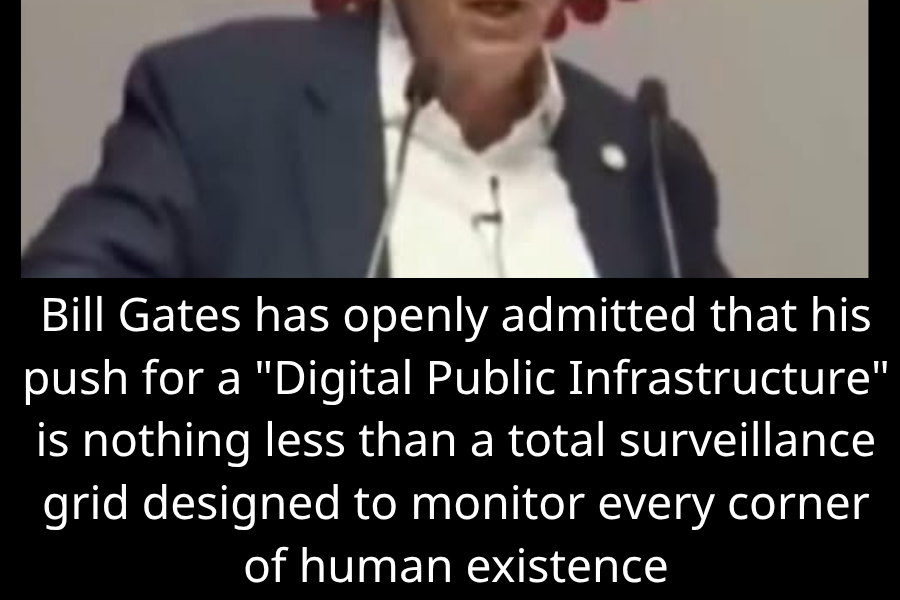
Bill Gates says this is “foundational.” He says it starts with identity and bank accounts and payments. Then it builds out to agriculture, with profiles of farmers. Then it builds out to health records. Then it becomes the digital public infrastructure that will help solve climate problems.
It sounds efficient. It sounds modern. It sounds like the kind of thing that a well-run country should have. A single system. A single ID. A single source of truth that connects everything about you. Your identity. Your money. Your health. Your land. Your carbon footprint. All in one place. All accessible to the government. All part of the infrastructure that will save the planet.
But here is the question that Gates does not answer. Who controls the system? Who decides what data is collected? Who decides how it is used? Who decides who has access? Who decides what happens to people who refuse to participate? Who decides what happens to people who are deemed to be a problem?
The vision is not new. It is the same vision that has been promoted by technocrats for decades. A single system. A single ID. A single source of truth. It is the dream of every bureaucrat who has ever wished that the messy, chaotic, unpredictable reality of human life could be reduced to data points on a screen.
Gates is not the first to propose it. He will not be the last. But he is the most prominent. He is the most trusted. He is the one who has the money and the influence to make it happen. And he is the one who is now telling the world that this is the future.
The Identity Question
Let’s start with the ID. Because the ID is the foundation. Gates says it starts with identity. A biometric digital ID. Fingerprints. Iris scans. Facial recognition. The kind of ID that cannot be faked, cannot be shared, cannot be escaped. The kind of ID that follows you everywhere, from birth to death, from the bank to the doctor to the voting booth.
The proponents say this is about convenience. No more passwords. No more lost cards. No more proving who you are. The system knows. The system recognizes you. The system gives you access to everything you need with a glance, a touch, a scan.
The critics say this is about control. A biometric ID that is tied to your bank account is not just an ID. It is a leash. It is a way for the government to track everything you do, everywhere you go, every dollar you spend. It is a way to ensure that you cannot participate in the economy unless you submit to the system. It is a way to make sure that you cannot opt out.
Gates says this is foundational. He is right. It is foundational. It is the foundation of a system that gives the government unprecedented power over the lives of its citizens. It is the foundation of a system that makes it impossible to live outside the grid. It is the foundation of a system that leaves no room for privacy, no room for anonymity, no room for dissent.
The question is whether that is a foundation we want to build on.
The Bank Account Connection
Then there is the bank account. Gates says the digital ID should be tied directly to your bank account and payment systems. That means every transaction you make, every dollar you spend, every purchase you complete is connected to your ID. The government can see it all. The government can track it all. The government can analyze it all.
The proponents say this is about security. No more fraud. No more identity theft. No more anonymous transactions that make it easy for criminals to operate. The system knows who you are. The system knows what you are doing. The system can flag suspicious activity and stop it before it happens.
The critics say this is about surveillance. A government that can see every transaction is a government that can control every transaction. A government that can see what you buy can decide what you are allowed to buy. A government that can see where you spend your money can decide where you are allowed to spend it. A government that can see how much you have can decide how much you are allowed to keep.
Gates says this is part of the “digital public infrastructure.” He says it is foundational. He is right. It is foundational. It is the foundation of a system where money is no longer private, where every purchase is recorded, where every transaction is tracked. It is the foundation of a system where the government has real-time access to the financial lives of every citizen.
The question is whether that is a foundation we want to build on.
The Health Records
Then there are the health records. Gates says the system should be built out with health records. Your medical history. Your diagnoses. Your treatments. Your medications. Your genetic information. All connected to your digital ID. All accessible to the system. All part of the infrastructure that will help solve climate problems.
The proponents say this is about efficiency. No more lost records. No more duplicate tests. No more doctors who do not have access to your history. The system knows. The system provides. The system makes healthcare faster, cheaper, better.
The critics say this is about control. A government that has access to your health records has access to your most private information. A government that knows your medical history can use it against you. A government that knows your genetic makeup can make decisions about your future. A government that knows your vulnerabilities can exploit them.
Gates says this is part of the infrastructure. He says it will help with climate problems. He does not explain how. He does not explain why your health records are relevant to climate policy. He does not explain why the government needs access to your medical history to manage the temperature of the planet.
The connection is not obvious. The logic is not clear. The purpose is not stated. And that is what makes it frightening. Gates is proposing a system that connects everything to everything, that leaves no part of your life untouched, that gives the government access to the most intimate details of your existence. And he is doing it in the name of climate policy, which is the blank check that justifies almost anything.
The Farmers
Then there are the farmers. Gates says the system should be built out with profiles of farmers. Their land. Their crops. Their yields. Their inputs. Their outputs. All connected to their digital IDs. All accessible to the system. All part of the infrastructure that will help solve climate problems.
The proponents say this is about sustainability. No more guesswork. No more waste. No more farming practices that damage the environment. The system knows. The system advises. The system helps farmers make better decisions.
The critics say this is about control. A government that has access to the data of every farmer can decide what they are allowed to grow. A government that knows how much land you have can decide how much you are allowed to use. A government that knows what you produce can decide what you are allowed to sell. A government that knows your methods can decide what methods are permitted.
The farmers know this. They have seen it happen in other countries. They have watched as governments used digital IDs to control agricultural production, to limit what farmers could grow, to dictate how much they could sell. They have watched as farmers who refused to participate were cut off from markets, from subsidies, from the economy itself.
Gates says this is part of the infrastructure. He says it will help with climate problems. He is right that agriculture contributes to climate change. He is right that changes are needed. But he is wrong to think that those changes should be imposed through a system of digital IDs that gives the government unprecedented power over the lives of farmers.
The Climate Connection
And then there is the climate. Gates says the digital public infrastructure will help with climate problems. He does not explain how. He does not explain why a digital ID tied to your bank account will reduce carbon emissions. He does not explain why your health records are relevant to the temperature of the planet. He does not explain why profiles of farmers will save the world.
The connection is not obvious. The logic is not clear. The purpose is not stated. And that is what makes it frightening. Gates is using climate change as a blank check. He is saying that because climate change is a crisis, we need to do everything possible to address it. And everything possible includes a system of digital IDs that gives the government access to every aspect of our lives.
This is a pattern. It is the same pattern that has been used to justify every expansion of government power in the name of a crisis. The war on terror justified surveillance. The financial crisis justified bailouts. The pandemic justified lockdowns. And now climate change is being used to justify a digital ID system that would have been unthinkable a generation ago.
Gates is not the only one making this argument. He is just the most prominent. He is just the one with the money and the influence to make it happen. He is just the one who is telling the world that this is the future.
The question is whether we will accept it.
The Opt-Out Question
There is one question that Gates does not address. Can you opt out? Can you choose not to participate in the digital public infrastructure? Can you live your life without a biometric digital ID tied to your bank account and your health records and your farm?
The answer, if the system is implemented as Gates envisions, is no. You cannot opt out. Because the system is the infrastructure. It is how you access your money. It is how you get healthcare. It is how you participate in the economy. If you refuse to participate, you are cut off. You cannot buy food. You cannot pay your rent. You cannot see a doctor. You cannot live.
That is the endgame. A system that is voluntary in name and mandatory in practice. A system that you can refuse only at the cost of your ability to function in society. A system that leaves no room for dissent, no room for privacy, no room for the messy, chaotic, unpredictable reality of human life.
Gates is not a dictator. He is not a government official. He is not the one who will decide whether this system is implemented. But he is the one who is pushing for it. He is the one who is funding it. He is the one who is telling the world that this is the future.
The question is whether we will listen.
The Last Word
Bill Gates says the digital public infrastructure is foundational. He says it starts with identity and bank accounts and payments. He says it builds out to agriculture and health records. He says it will help with climate problems.
He is right about one thing. It is foundational. It is the foundation of a new kind of society. A society where everything is connected. A society where privacy is a relic of the past. A society where the government has access to every aspect of your life. A society where opting out is not an option.
The question is whether that is the kind of society we want to build. The question is whether we are willing to trade our privacy for convenience. The question is whether we are willing to trade our freedom for security. The question is whether we are willing to trade our autonomy for the promise of solving climate change.
Gates has made his choice. He believes the trade is worth it. He believes that the benefits of the system outweigh the costs. He believes that the future he is describing is inevitable.
He may be right. He may be wrong. But the choice is not his to make. The choice belongs to the rest of us. The choice belongs to the people who will have to live under the system he is proposing. The choice belongs to the farmers who will be profiled, to the patients whose records will be shared, to the citizens whose every transaction will be tracked.
Gates is calling for a digital ID tied to your bank account. He is calling for health records linked to your identity. He is calling for profiles of farmers connected to the system. He is calling for all of it in the name of climate policy.
The question is whether we will say yes. The question is whether we will say no. The question is whether we will have the courage to ask the questions that Gates does not answer.
Who controls the system? Who decides what data is collected? Who decides how it is used? Who decides who has access? Who decides what happens to people who refuse to participate?
These are not technical questions. They are political questions. They are questions about power. They are questions about freedom. They are questions about the kind of society we want to live in.
Gates has offered his answer. Now it is our turn.