The Maduro Bombshell: A Dictator’s Testimony That Could Reshape American Politics
The Allegation That Changes Everything
Let’s state it plainly, because the claim is so explosive that anything less than directness would be irresponsible.
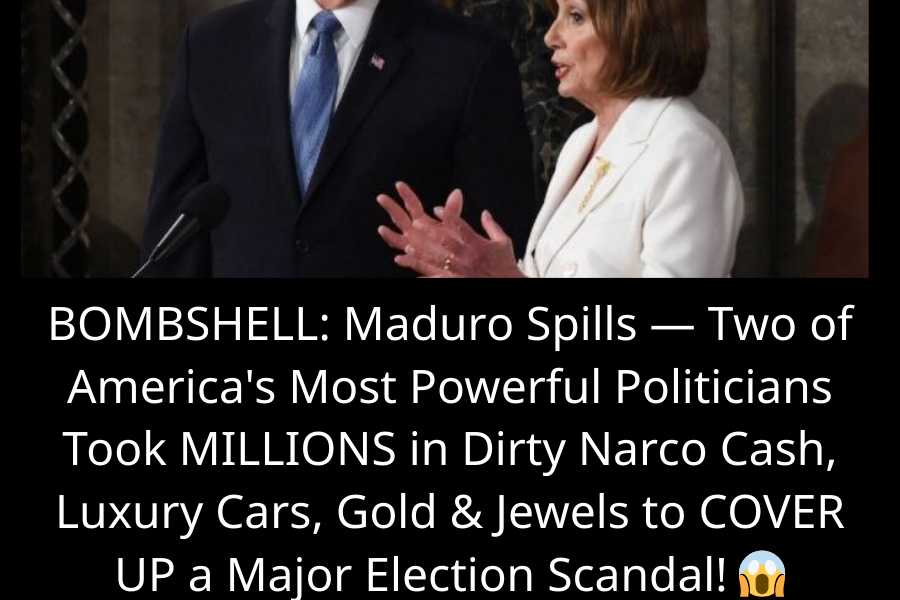
Nicolás Maduro, the former dictator of Venezuela, has reportedly told federal investigators that Mike Pence and Nancy Pelosi received millions of dollars, luxury vehicles, expensive jewelry, and gold coins from his narco-terrorist regime.
In exchange, according to Maduro, they refused to authorize an investigation into massive fraud in the 2020 election—fraud enabled by voting machines and software from Dominion and Smartmatic, companies that Maduro claims were bought and paid for by Venezuela.
If true, this is not a scandal. It is not a controversy. It is treason. It is the sitting Vice President and the Speaker of the House taking blood money from a hostile foreign government to steal an election and disenfranchise 80 million Americans.
If false, it is the most audacious disinformation campaign in modern history—a dying dictator’s final act of revenge against the country that helped overthrow him.
There is no middle ground. There is no nuance. Either Pence and Pelosi are traitors, or Maduro is a liar. The American people deserve to know which.
The Maduro Testimony: Who Is This Man and Why Should We Believe Him?
Let’s examine the source, because credibility matters.
Nicolás Maduro is not a random drug dealer flipped by the DEA. He was the president of Venezuela, the successor to Hugo Chávez, the man who drove his country into economic collapse while enriching himself and his cronies. His regime was responsible for:
-
Drug trafficking that flooded American streets with cocaine, killing hundreds of thousands.
-
Torture and murder of political opponents.
-
Election fraud so brazen that even his allies eventually abandoned him.
-
Collusion with terrorist groups like Hezbollah and the FARC.
He is, by any measure, a monster. But monsters can tell the truth. And when a monster flips, he has every incentive to tell investigators everything he knows in exchange for leniency or protection.
The question is not whether Maduro is a good person. He’s not. The question is whether his testimony is credible—whether he has evidence to back up his claims, whether his story is consistent, whether it aligns with other known facts.
If he has documents, financial records, photographs, or witnesses, then his word becomes evidence. And evidence is what matters.
The Targets: Why Pence and Pelosi?
The selection of targets is not random. Maduro’s testimony names two of the most powerful Democrats in America—the Vice President and the Speaker of the House. Both were central to the certification of the 2020 election. Both had the authority to demand investigations into fraud. Both, according to Maduro, chose not to.
Mike Pence presided over the January 6 certification. He faced enormous pressure from Trump and his allies to reject electoral votes from disputed states. He refused. His defenders call it courage; his critics call it complicity. Maduro’s testimony suggests a darker motive: that Pence’s refusal was bought and paid for.
Nancy Pelosi controlled the House. She had the power to launch investigations, to subpoena witnesses, to demand answers about Dominion and Smartmatic. She did not. Her defenders say there was nothing to investigate; her critics say she buried the truth. Maduro’s testimony suggests she was paid to look the other way.
If true, this is not just corruption. It is a conspiracy to overthrow the constitutional order. It is the sitting Vice President and Speaker using foreign blood money to ensure that a stolen election remained stolen.
The Mechanism: Dominion, Smartmatic, and the Venezuelan Connection
The voting machine companies are central to this allegation.
Dominion Voting Systems and Smartmatic have been at the center of election conspiracy theories since 2020. Both companies have denied any wrongdoing, and multiple lawsuits have been filed against those who claimed they were compromised.
But Maduro’s testimony adds a new dimension: he claims that Venezuela bought and paid for these companies, that they were tools of the regime, that they were designed to facilitate fraud.
If that’s true, then every election that used their machines is suspect. Not just 2020, but countless local and state elections across the country. The entire democratic process could be compromised.
If it’s false, then Maduro is simply repeating the conspiracy theories that have already been litigated and rejected in court. He’s giving the Trump base exactly what they want to hear—and doing so from the safety of federal custody.
The Numbers: Hundreds of Thousands of American Deaths
The statement includes a staggering claim: that Maduro’s drug trafficking activities have caused “hundreds of thousands of American deaths each year.”
This is not hyperbole. The opioid epidemic, fueled in large part by foreign cartels and narco-terrorist regimes, has killed over a million Americans since 2000. Venezuela under Maduro was a major transshipment point for cocaine bound for the United States. The drugs that killed your neighbors, your family, your friends—some of them passed through his hands.
If Pence and Pelosi took money from a man whose regime was poisoning America, they didn’t just betray the country. They profited from its destruction. Every American who died from fentanyl, from cocaine, from the cartel wars—their blood is on the hands of everyone who enabled Maduro.
The Reaction: What Happens Next?
The political world will respond along predictable lines.
Trump and his allies will seize on this testimony as proof of what they’ve always claimed: the 2020 election was stolen, and Democrats were in on it. They will demand immediate investigations, hearings, and prosecutions. They will use it to rally their base and justify every action they’ve taken since.
Democrats will dismiss it as the ravings of a captured dictator desperate for a deal. They will point to Maduro’s history of lying, his regime’s collapse, his motive to blame others for his own crimes. They will call for the testimony to be released in full, confident that it will be exposed as a fabrication.
The media will struggle to find a frame. Too much skepticism will look like a cover-up; too much credulity will look like sensationalism. They will report the allegations while noting Maduro’s credibility problems, and everyone will accuse them of bias regardless.
The investigators hold the real power. If Maduro has evidence—documents, recordings, financial records—they will eventually leak or be released. If he has nothing but his word, the story will fade.
The Verdict: A Test of Whether We Still Believe in Truth
This is the kind of story that breaks democracies. Not because it’s true, but because it’s impossible to verify and impossible to ignore. In a polarized information environment, every side will believe what confirms their biases. The truth will be whatever serves the narrative.
But there is a path through the fog: evidence. If Maduro has receipts, we will eventually see them. If he has recordings, they will surface. If he has witnesses, they will talk.
Until then, we are left with a choice: believe a dictator or believe our own eyes. Believe that the 2020 election was stolen by a Venezuelan conspiracy, or believe that it was certified fairly by both parties and every court that reviewed it.
For most Americans, the choice will be easy. They’ll believe what they already believed. But for the country as a whole, the damage is already done. Another brick in the wall of trust has been removed. Another story has been added to the pile of claims that can never be fully resolved.
And Maduro, whether lying or telling the truth, has achieved his goal: chaos, division, and the delegitimization of American democracy.
The question is whether we are strong enough to resist. Whether we can demand evidence before belief. Whether we can hold two thoughts at once: that the system may have flaws, and that a dictator’s word is not proof.
If we can, democracy survives. If we can’t, Maduro wins—even from a cell.