The Kennedy Doctrine: Birthright Leadership and the Battle Over Who Gets to Represent America
The Proposal: Soil, Blood, and the Highest Office
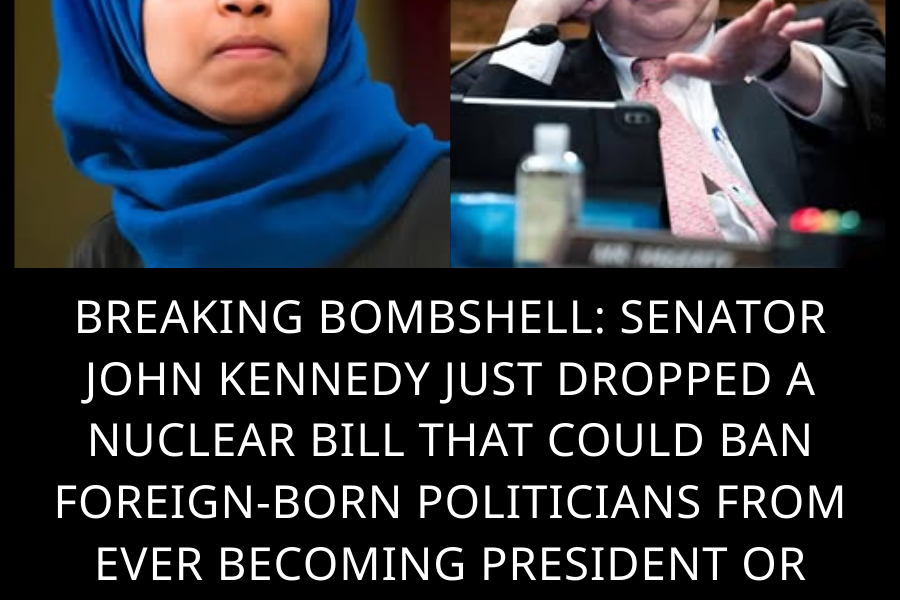
Let’s start with what Senator John Neely Kennedy is actually proposing. Because the headline—“limit the presidency and seats in Congress only to those born on U.S. soil”—is the kind of thing that launches a thousand arguments before anyone reads the fine print.
The bill would amend the Constitution (because the current requirements for president are already spelled out in Article II: natural-born citizen, 35 years old, 14 years residency) to close what Kennedy’s camp sees as a loophole. Currently, “natural-born citizen” has been interpreted to include anyone born on U.S. soil, regardless of parentage, as well as children born abroad to U.S. citizens. Kennedy’s proposal would restrict it further: only those born on American soil to parents who were themselves citizens? Only those with multiple generations of American birth? The details matter, and the details are where the battle will be fought.
But the principle is clear: Kennedy wants leaders with “unshakable American roots” and a “lifelong bond to the nation’s founding ideals.” In an era of globalized elites, dual citizens, and questions about where loyalties truly lie, he’s drawing a line in the soil itself.
The Constitutional Question: What Does “Natural-Born” Actually Mean?
The Constitution’s framers were specific about the presidency: the office must be held by a “natural-born citizen.” They were less specific about what that meant, largely because the concept was well-understood in 18th-century common law. You were either born a subject of the crown or you weren’t. Naturalization was the only way to change that status.
Over the centuries, the interpretation has expanded. The Supreme Court has never definitively ruled on whether someone born abroad to American citizens is “natural-born” for presidential purposes, but the consensus among legal scholars is yes—and several candidates have run on that understanding (John McCain, born in the Panama Canal Zone to American parents, being the most prominent example).
Kennedy’s proposal would contract that interpretation dramatically. Only birth on U.S. soil would count. No more overseas military bases. No more diplomatic missions abroad. No more children of American expats. If you weren’t born in Des Moines or Detroit or Dallas, you’re not eligible.
The constitutional amendment process is deliberately difficult: two-thirds of both houses, then ratification by three-fourths of the states. Kennedy knows this. The proposal is as much a political statement as a legislative one.
The Target: Who Would Be Excluded?
Let’s be honest about what this bill is really about. It’s not a abstract debate about constitutional interpretation. It’s about specific people—and the fears they represent to a certain segment of the American electorate.
The most obvious target: Ilhan Omar. Born in Somalia, naturalized as a citizen, now serving in Congress. Under Kennedy’s proposal, she would be ineligible for the presidency and, if applied to Congress (which would require a separate constitutional amendment, as the requirements for House and Senate are spelled out in Article I), potentially ineligible for reelection.
But Omar is just the symbol. The real target is the broader anxiety about who gets to be American and what that status means. For millions of Americans, citizenship is not just a legal category—it’s an identity, a heritage, a connection to place and history that can’t be acquired through paperwork. You’re either born here or you’re not. Everything else is naturalization, which is fine for voting and serving on juries and collecting Social Security, but not for the highest office in the land.
The proposal also targets dual citizens—people who hold passports from other countries, who maintain ties to ancestral homelands, who might have divided loyalties in a crisis. Kennedy’s “unshakable American roots” standard is designed to exclude anyone whose identity might be complicated, whose allegiance might be questioned.
The Debate: Heritage vs. Hyphenation
The arguments for and against this proposal are the arguments that have defined American identity since the first immigrants arrived.
The Case for Kennedy’s Bill:
-
Loyalty must be absolute. The president commands the military, negotiates with foreign powers, and represents the nation to the world. Any hint of divided allegiance is a national security risk.
-
The founders intended it. The “natural-born citizen” requirement was specifically designed to prevent foreign influence at the highest level. Kennedy is just restoring the original understanding.
-
Symbolism matters. The president is not just a CEO; they are the embodiment of the nation. Having a leader born on American soil, raised in American culture, steeped in American history, reinforces national unity.
-
Precedent exists. Many countries require their leaders to be native-born. It’s not an extreme position; it’s common sense.
The Case Against Kennedy’s Bill:
-
It’s exclusionary and xenophobic. The message is clear: even if you become a citizen, even if you serve in the military, even if you dedicate your life to this country, you will never be fully American. You will always be a second-class citizen, barred from the highest office.
-
It’s constitutionally dubious. The 14th Amendment guarantees citizenship to all born on U.S. soil, but it doesn’t create tiers of citizenship. Kennedy’s proposal would effectively create a hierarchy: natural-born (soil) at the top, natural-born (blood) second, naturalized third.
-
It’s politically motivated. This isn’t about principle; it’s about targeting specific individuals—Omar, Tlaib, anyone else who doesn’t fit the demographic profile of traditional American leadership.
-
It ignores reality. America is a nation of immigrants. Many of our greatest leaders have been immigrants or the children of immigrants. Alexander Hamilton was born in the West Indies. Henry Kissinger was born in Germany. Arnold Schwarzenegger was born in Austria. Would we really bar them from the presidency?
The Comment Section: Where the Debate Lives
The post promises “details in the comments,” and that’s where the real action will be. The comment section on a proposal like this is not a place for nuance; it’s a battlefield.
You’ll see the full spectrum:
-
The Enthusiasts: “Finally! Someone with the courage to say what we’re all thinking. America for Americans. Born here or go home.”
-
The Constitutionalists: “This requires a constitutional amendment. It’s never going to happen. Kennedy knows that. He’s just grandstanding.”
-
The Critics: “So Ted Cruz, born in Canada, would be ineligible? So much for the Tea Party favorite.”
-
The Confused: “Wait, what about military bases? What about diplomatic missions? What about kids born abroad to American parents?”
-
The Cynics: “This is about Omar. Just say it. You want to kick out the Muslim woman from Somalia. At least be honest.”
The Verdict: A Proposal That Reveals More Than It Changes
John Kennedy’s bill is unlikely to become law. Constitutional amendments are hard, and this one would face opposition from both parties—from Republicans with immigrant ancestors and Democrats who see it as nakedly exclusionary.
But the proposal serves its purpose: it forces a conversation. It makes visible the anxieties that many Americans feel but few politicians articulate. It says: Who gets to be American? Who gets to lead? And what does loyalty really mean in a globalized world?
These are not easy questions. They don’t have comfortable answers. But they are the questions at the heart of the “America First” movement—the belief that national identity matters, that sovereignty means something, that not everyone who wants to be American should automatically be considered American in the fullest sense.
Kennedy’s bill may die in committee. But the debate it sparks will live on, because the question it raises is fundamental: What does it mean to be American enough to lead?
And in a nation of immigrants, that question will never be fully settled. It will be fought over, election after election, generation after generation. Kennedy has simply thrown his weight behind one answer. The rest of us get to decide whether he’s right.