The Lot That Died: David Spade Just Said What Every Comedian in LA Is Whispering
The studio lot is empty.
Not “between productions” empty. Not “renovating” empty. Not “we’ll be back next quarter” empty. The kind of empty that happens when the money stops. When the deals stop getting made. When the people who used to fill those soundstages, who used to park in those lots, who used to eat at those commissaries, have packed up and left.
Some went to Atlanta. Some went to Austin. Some went to Albuquerque. Some went to places that, ten years ago, you wouldn’t have associated with anything except tumbleweeds and highway rest stops.
But they went. And they kept going. And now another studio lot has filed for bankruptcy. Another piece of the Hollywood machine has been unplugged. Another chapter in the greatest entertainment industry the world has ever known has been written in the past tense.
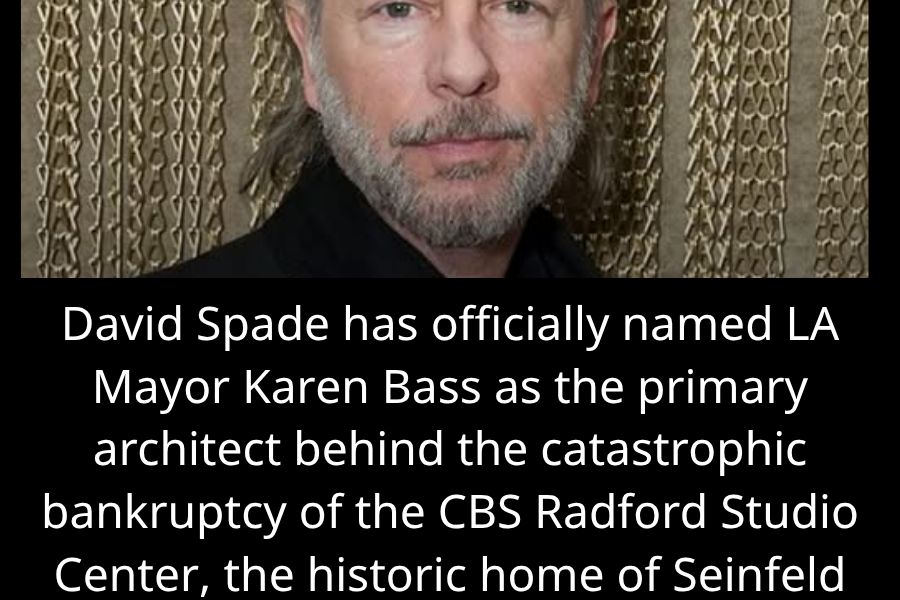
David Spade saw it. He’s been in the business long enough to know what dying looks like. He’s been on the soundstages, in the writers’ rooms, at the premieres. He’s watched the industry that made him—the industry that made all of us, whether we know it or not—slowly bleed out in front of him.
And he did what comedians do when they see something absurd. He said it out loud.
“Terrifying in LA. Thanks, Karen Bass. Thanks, Gavin.”
Three sentences. No explanation. No elaboration. No “let me walk you through the data.” Just a punchline that lands like a body blow.
Because everyone who lives in LA already knows what he’s talking about. And everyone who doesn’t live in LA is about to find out.
The Studio That Disappeared
Let’s talk about what a studio lot is.
It’s not just buildings. It’s not just soundstages and offices and parking structures. It’s an ecosystem. A city within a city. A place where craftspeople work alongside executives, where grips and gaffers eat lunch next to writers and directors, where the entire apparatus of storytelling is assembled, piece by piece, project by project.
When a studio lot closes, it’s not just a real estate transaction. It’s the death of a thousand jobs. The electricians who knew every circuit in every building. The carpenters who could build anything from a suburban kitchen to a spaceship bridge. The set dressers, the prop masters, the costume designers, the camera operators, the sound mixers, the editors, the assistants, the assistants to the assistants.
All of them. Gone. Or scattered. Or holding on by their fingernails, hoping the next call comes before the savings run out.
Spade has seen this before. He came up in the era when Hollywood was Hollywood. When the lots were full. When the industry was a machine that never stopped. When you could make a living—a real living, a middle-class living with a house and a family and a retirement plan—working behind the scenes on movies and television shows that the whole world watched.
That world is gone. And the people running California don’t seem to notice. Or if they notice, they don’t seem to care.
The Karen Bass Question
Karen Bass is the mayor of Los Angeles. She was elected on a wave of promises. She was going to fix the homelessness crisis. She was going to make the city work again. She was going to restore the dream that brought generations of dreamers to the Pacific coast.
Instead, she’s watching the city’s signature industry collapse.
Spade didn’t say “thanks, Karen Bass” because he thinks she personally killed Hollywood. He said it because she’s the person in charge. She’s the one who was supposed to be paying attention. She’s the one who was supposed to be making the city a place where businesses—even big businesses, even glamorous businesses, even businesses that have been there for a hundred years—want to stay.
And instead, she’s been focused on everything except the thing that made Los Angeles Los Angeles.
The homelessness crisis is real. The housing crisis is real. The budget crisis is real. All of these things demand attention. But if the industry that powers the city’s economy—that provides the tax base, the jobs, the cultural identity—collapses while the mayor is busy with other things, what exactly is being saved?
Spade’s joke isn’t a joke. It’s an obituary written in advance. And he’s making sure everyone knows who was holding the pen.
The Gavin Problem
Gavin Newsom is the governor of California. He’s been the governor for years. Before that, he was the mayor of San Francisco. He’s been part of the state’s political establishment for so long that it’s hard to remember a time when his name wasn’t on a ballot somewhere.
And under his watch, the entertainment industry—the industry that built the state’s modern identity, the industry that made California synonymous with creativity and ambition and the American dream—has been dying.
Not because of something he did. Because of something he didn’t do.
He didn’t make California more business-friendly. He didn’t address the tax structure that sends productions to Georgia and New Mexico and Texas. He didn’t fix the permitting process that makes it harder to shoot on location in Los Angeles than in Budapest. He didn’t stop the crime wave that makes production companies think twice about leaving expensive equipment on city streets. He didn’t make housing affordable enough that young writers and directors and craftspeople can afford to build their lives in the state where the industry was born.
He didn’t do any of it. And now the studios are leaving. And Spade, who has spent his entire career in the business, is looking at the empty lots and the bankrupt companies and the friends who have packed up and moved to states that actually want them—and he’s saying what everyone in his position is thinking but too afraid to say.
Thanks, Gavin.
The Exodus Nobody’s Talking About
Hollywood has always had cycles. Booms and busts. Studios rise and fall. Stars come and go. That’s the nature of the business. For a hundred years, the industry has reinvented itself over and over again, surviving wars and depressions and technological revolutions that were supposed to kill it.
But this is different. This isn’t a cycle. This is an exodus.
Georgia has become a production hub because it offers tax incentives that California won’t match. New Mexico has built soundstages that rival anything in Burbank. Texas is aggressively recruiting productions that want to shoot in a state that doesn’t treat them like an afterthought. London has become a post-production powerhouse because the talent moved there when the work moved there.
And California? California has watched it happen. Has done nothing to stop it. Has, in some ways, accelerated it by making it harder and harder to do business in the state that invented the business.
Spade isn’t a politician. He’s not an economist. He’s not a policy analyst. He’s a comedian who got his start at the same time as Chris Farley and Adam Sandler and the rest of the SNL crew that defined a generation of comedy. He’s watched the industry from the inside for decades. He’s seen the changes. He’s felt the shifts. And now he’s looking at a city he loves, an industry he loves, and he’s watching it die in front of him.
That’s not a political statement. That’s a eulogy.
The Comedian’s Truth
There’s a reason Spade is the one saying this and not some talking head on cable news.
Comedians have always been the canaries in the coal mine. They’re the ones who say what everyone else is thinking but too polite to articulate. They’re the ones who cut through the spin and the messaging and the carefully crafted press releases to land on the simple, brutal truth that everyone already knows but no one wants to admit.
Spade knows that Hollywood is dying because he’s watched it happen. He’s seen the budgets shrink. He’s seen the productions move. He’s seen the friends leave. He’s seen the lots go dark. And he’s done what comedians do when the world around them starts to look like a punchline: he told the joke.
“Terrifying in LA. Thanks, Karen Bass. Thanks, Gavin.”
It’s three sentences. It’s not a policy paper. It’s not a campaign ad. It’s not a think piece. It’s a comedian looking at a city that built an industry that built a culture that built a dream—and watching it all crumble while the people in charge look the other way.
And the reason it’s hitting so hard is because everyone knows it’s true.
The Silence from Sacramento
Watch the response. Or rather, watch the non-response.
Newsom’s office won’t comment on Spade’s remarks. Bass’s office will issue a statement about how the city is “committed to supporting the entertainment industry” and “working with stakeholders to address challenges.” The usual language. The words that don’t mean anything but fill up space in press releases.
No one will say: We should have done more. We should have seen this coming. We should have made it easier to stay.
Because that would require admitting that the state’s political leadership has been asleep at the wheel. That while they were fighting with each other, while they were passing laws that make California the most difficult place in America to run a business, while they were treating the entertainment industry like it would always be there no matter what they did—the industry was leaving.
And now it’s too late. You can’t bring back the productions that have already moved. You can’t convince the craftspeople who have already relocated to uproot their families again. You can’t rebuild the ecosystem that took a century to develop with a press release and a task force and a few million dollars in “incentives” that should have been offered a decade ago.
Spade knows this. That’s why he’s not asking for anything. He’s not launching a campaign. He’s not organizing a boycott. He’s just telling the truth. And the truth is that the people running California let the thing that made California California slip away while they were busy with other things.
The Lot That Could Have Been Saved
There’s a version of this story that ends differently.
In that version, California’s leaders see what’s happening to the entertainment industry and respond. They cut taxes. They streamline permits. They make it easier to shoot on location. They build housing so that young people can afford to live in the city where they work. They make it clear that the state values the industry that has defined it for a hundred years.
In that version, the studios stay. The productions stay. The jobs stay. The lot that just filed for bankruptcy gets bought, gets renovated, gets filled with new productions, becomes part of the next chapter of Hollywood history instead of the last chapter.
That’s not the version we live in.
We live in the version where a comedian has to stand up and say what the politicians won’t. Where the industry that built California is dying while the people in charge pretend everything is fine. Where another lot goes dark, another set of jobs disappears, another piece of the dream crumbles, and the only response is silence.
Spade isn’t a hero. He’s just a guy who’s been in the business long enough to know what he’s seeing. And what he’s seeing is terrifying.
The Last Shot
The lot is empty. The equipment is gone. The people who used to work there have scattered to Atlanta and Austin and Albuquerque and a dozen other places that actually want them. The commissary is closed. The gates are locked. The only thing left is the sign out front, the one that still says the name of the studio that used to be there, the one that hasn’t been taken down yet because no one has figured out what to put in its place.
David Spade saw it. He said what he saw. He thanked the people who were supposed to be watching and didn’t.
“Terrifying in LA. Thanks, Karen Bass. Thanks, Gavin.”
That’s the joke. That’s the eulogy. That’s the whole story of a city that built an industry that built a dream and then forgot that dreams need maintenance. They need attention. They need someone to notice when they start to fade.
No one noticed. Or if they noticed, they didn’t care. Or if they cared, they didn’t do anything.
And now the lot is empty. And David Spade is standing on the other side of the gate, looking at what used to be, and he’s saying the only thing anyone can say when something they love disappears while the people in charge were looking somewhere else:
Thanks. Thanks for nothing.