The Video That Changed Everything: McGovern, the Airport, and the Question No One Is Answering
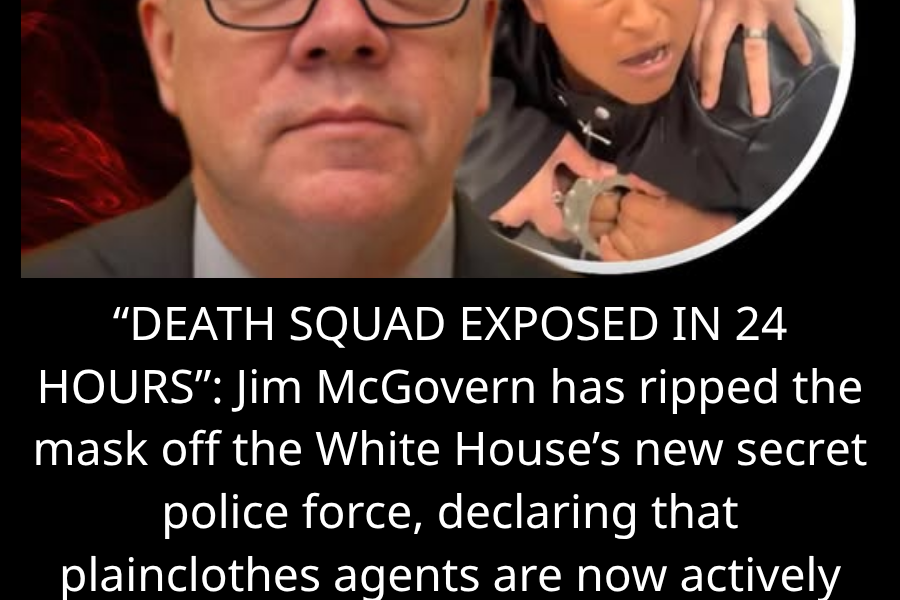
Watch the footage first. Before the statements. Before the spin. Before the politicians turn it into another chapter in the endless war. Watch the video. Watch the plainclothes officers. Watch the woman. Watch whatever happened in that terminal at San Francisco International Airport.
Then ask yourself: What did you just see?
Jim McGovern saw something very specific. He saw a “rogue secret police force.” He saw “kidnapping.” He saw “American citizens” being snatched from airports by agents who don’t wear uniforms, don’t announce themselves, don’t follow the rules that are supposed to govern how the government treats its own people.
“It hasn’t even been 24 hours, and Trump’s rogue secret police force is already kidnapping American citizens from our airports. This is not what a free country looks like.”
Those are fighting words. Those are the kind of words that members of Congress usually save for the floor, for the cameras, for the moments when they want to make a point so loudly that no one can ignore it. McGovern didn’t wait. He didn’t measure. He didn’t give the administration time to explain. He went straight to “kidnapping.” Straight to “secret police.” Straight to the language of authoritarianism, of dictatorship, of the things that Americans have always believed could never happen here.
And now the rest of us have to figure out what actually happened. Because the video is out there. The statement is out there. The Department of Homeland Security has its version. McGovern has his. And somewhere in the middle is the truth—a truth that might tell us more about where this country is headed than any press release or cable news segment ever could.
The Incident at SFO
Let’s establish what we know.
The woman was at San Francisco International Airport. She was approached by plainclothes immigration officers. There was an interaction. There was a restraint. There was footage—widely circulated, heavily viewed, impossible to ignore. The officers were from Immigration and Customs Enforcement. They were doing something that looked, to the people watching, like an arrest. Or a detention. Or something in between.
According to DHS, the woman had a prior removal order. She was in the country illegally. She was being escorted for processing when she attempted to flee. The officers restrained her. That’s the official account. That’s the version the Department is sticking with.
According to McGovern, the woman was an American citizen. Or at least, she might have been. Or at least, the agents didn’t know she wasn’t. Or at least, the entire operation was so sloppy, so aggressive, so fundamentally lawless that the distinction between citizen and non-citizen became irrelevant in the moment. She was grabbed. She was restrained. She was treated like a criminal before anyone had established that she was anything at all.
The Department says there is no broader federal operation underway at the airport. This was an isolated incident. A routine enforcement action. A woman with a removal order who tried to run and was stopped. That’s all.
McGovern says this is the beginning of something much larger. A “rogue” operation. A “secret police force.” The opening salvo in a campaign of intimidation designed to make every airport, every public space, every moment of American life feel like a checkpoint in an occupied country.
Who’s right? The answer depends entirely on who you trust. And right now, in America, no one trusts anyone.
The Language of Kidnapping
McGovern chose his words carefully. He didn’t say “arrest.” He didn’t say “detention.” He didn’t say “immigration enforcement.” He said “kidnapping.”
Kidnapping is not a legal term in this context. It’s an accusation. It’s a charge. It’s a way of saying that what the government did was not just wrong but criminal. That the agents who took that woman were not enforcing the law but breaking it. That the operation was not about immigration but about power—raw, unchecked, terrifying power.
It’s the kind of language that used to be reserved for regimes we opposed. For Soviet secret police. For Latin American death squads. For the kind of governments that American presidents spent decades condemning, sanctioning, sometimes overthrowing. “Secret police” is not a phrase Americans apply to their own government. It’s a phrase we apply to governments we want to destroy.
McGovern applied it to the United States. On purpose. With full knowledge of what he was saying and what it would mean.
He’s not alone. The word “kidnapping” is appearing in headlines. “Secret police” is trending. The video is being shared with captions that describe what happened in terms that would have been unthinkable a few years ago. Something has shifted. Something has broken. The language we use to describe our own government has become the language we used to describe the enemies we defeated.
Is that because the government has changed? Or because the people watching the video have changed? Or because the gap between what the government says it’s doing and what it actually does has become so wide that the old words no longer fit?
McGovern is betting that Americans will see the video and see what he sees: not enforcement, but overreach. Not security, but intimidation. Not law, but something that looks a lot like lawlessness.
The Question of Citizenship
Here’s the question that McGovern didn’t answer. The question that the video can’t answer. The question that DHS is trying to answer with its version of events:
Was the woman a citizen?
If she was—if she was an American citizen, born in the United States, entitled to all the rights and protections that citizenship confers—then what happened at SFO was something very different from what DHS is describing. It was a mistake. A violation. A breakdown in the systems that are supposed to prevent the government from treating its own people like foreigners in their own country.
If she wasn’t—if she was in the country illegally, if she had a removal order, if she tried to flee—then what happened was routine. Aggressive, maybe. Uncomfortable, certainly. But routine. The kind of thing that happens every day, at every airport, in every city, when the government enforces the immigration laws that Congress wrote and presidents signed.
McGovern is asserting that she was a citizen. Or at least, that she might have been. Or at least, that the agents didn’t know. Or at least, that the entire operation was so fundamentally flawed that the distinction between citizen and non-citizen became irrelevant. The point, for McGovern, is not the woman’s status. The point is the operation itself. The plainclothes agents. The airport terminal. The video. The feeling that no one is safe, no one is exempt, no one can assume that the government knows who they are before it decides to treat them like a criminal.
DHS is asserting that the woman had a removal order. That she was not a citizen. That she tried to flee. That the officers were doing what officers are supposed to do. That the video, seen in context, shows not a kidnapping but an enforcement action. That the only reason anyone is talking about this is because McGovern and others like him are trying to turn a routine incident into a scandal.
Who’s right? We don’t know. And in the absence of certainty, people will choose the version that fits what they already believe about the government, about immigration, about the country they live in.
The Fear of What Comes Next
McGovern’s statement is not just about what happened at SFO. It’s about what happens next. About what the administration is planning. About what the next 24 hours, the next week, the next month will bring.
“It hasn’t even been 24 hours.”
That’s the line. That’s the warning. That’s McGovern saying: This is just the beginning. The first day. The opening move. Whatever you think you saw at the airport, there is more coming. And it will be worse.
This is the fear that McGovern is trying to tap into. The fear that the administration is planning something massive. Something coordinated. Something that will make what happened at SFO look like a warm-up. The fear that the plainclothes officers are just the first wave. That the “secret police” are already in place, already operating, already watching.
Is that fear justified? The administration says no. There is no broader operation. This was an isolated incident. The officers were doing their jobs. The woman had a removal order. That’s all.
But the administration also says a lot of things that turn out not to be true. Or that turn out to be true in ways that don’t match what the words seem to promise. And McGovern is betting that Americans have learned, over years of broken promises and hidden operations, to trust what they see with their own eyes more than what they hear from official sources.
The video is the evidence. The video is the proof. The video is what McGovern wants Americans to watch, to share, to talk about. Because the video doesn’t need an explanation. The video doesn’t need context. The video shows something that looks, to the untrained eye, exactly like what McGovern says it is: a kidnapping. A secret police force. A government that has forgotten the limits of its own power.
The Rogue Operation
McGovern called the operation “rogue.” That’s another word with weight. Rogue doesn’t mean authorized. Rogue doesn mean sanctioned. Rogue means operating outside the law, outside the chain of command, outside the boundaries that are supposed to constrain the government’s power over its people.
If the operation was rogue, then the problem is not the administration. The problem is that the administration has lost control. That the agencies it oversees are doing things without authorization, without oversight, without accountability. That the “secret police” McGovern is warning about are not following orders from the top but operating on their own, with their own agendas, their own priorities, their own understanding of what the law allows.
That’s a darker picture than the one where the administration is simply doing what it promised. That’s a picture of a government that has fractured, that has splintered, that has allowed elements within it to pursue their own missions without regard for the law or the Constitution or the rights of the people they are supposed to protect.
McGovern is not accusing the administration of being too aggressive. He’s accusing it of being unable to control the aggression. Of creating a culture, an atmosphere, an permission structure that allows agents to do things that no one authorized, that no one approved, that no one will take responsibility for.
Is that true? The Department of Homeland Security says no. The agents were doing their jobs. The operation was routine. The woman had a removal order. The restraint was necessary because she tried to flee. There is nothing rogue about any of it.
But the video is out there. And the video doesn’t look routine. The video doesn’t look controlled. The video looks like something that happened because someone decided it was going to happen, and no one was there to say it shouldn’t.
The Free Country Argument
“This is not what a free country looks like.”
That’s the closing line. That’s the argument. That’s McGovern saying: Whatever you think about immigration, whatever you think about enforcement, whatever you think about the woman at the airport—this is not us. This is not who we are. This is not what America is supposed to be.
It’s an appeal to something larger than the incident. An appeal to the idea of America. To the country that welcomes immigrants, that respects due process, that does not allow its government to snatch people from public spaces without explanation or accountability.
McGovern is betting that the video will make Americans feel something. Not anger, necessarily. Not fear. Something deeper. Something that touches the sense of who they are and what they believe their country should be. He’s betting that when they see plainclothes officers restraining a woman in an airport terminal, they will think: That could be me. That could be my mother. That could be anyone. And that thought will make them demand answers, demand accountability, demand that the government explain itself.
The Department of Homeland Security has an explanation. The woman had a removal order. She tried to flee. The officers did what officers are supposed to do. There is nothing to see here. Nothing to explain. Nothing to apologize for.
But the video is out there. And the video tells a different story. Or maybe it tells the same story, just from a different angle. Or maybe it tells a story that can’t be captured in press releases and official statements. A story about power. About fear. About what happens when the government decides that the laws it is supposed to enforce are more important than the people it is supposed to protect.
McGovern is telling Americans to watch the video and make up their own minds. He’s betting that when they do, they’ll see what he sees: a government that has crossed a line. A government that is becoming something it was never supposed to be. A government that treats its own people the way it used to treat only its enemies.
The Line That Was Crossed
There is a line. There has always been a line. A line that separates enforcement from overreach. A line that separates security from intimidation. A line that separates the government that protects its people from the government that preys on them.
Where is that line? Is it at the airport terminal? Is it when the officers are plainclothes instead of uniformed? Is it when the restraint happens in public instead of behind closed doors? Is it when the person being restrained might be a citizen, might not be, might be something in between?
McGovern says the line has been crossed. Not just at SFO. Everywhere. Across the country. In ways that Americans are only beginning to see. The “secret police” he’s warning about are not new. They’ve been there for years, operating in the shadows, doing things that no one noticed until the video started circulating.
The video is the proof. The video is the evidence. The video is what happens when the line gets crossed and someone happens to be filming.
The Department of Homeland Security says no line was crossed. The officers were doing their jobs. The woman had a removal order. She tried to flee. The restraint was necessary. There is nothing in the video that shows anything other than routine enforcement.
But the video is out there. And the video is being watched. And the people watching it are deciding for themselves where the line is and whether it’s been crossed.
The Video That Changed Everything
McGovern’s statement will be forgotten in a week. The incident at SFO will be replaced by the next outrage, the next controversy, the next moment that demands our attention and then fades away. The cycle will continue. The arguments will repeat. The country will move on.
But the video will remain. The video will be watched again. The video will be shared in new contexts, new debates, new moments when Americans are trying to understand what their government has become. The video will be evidence. For McGovern, for the Department, for the people who saw it and felt something they couldn’t explain.
What did you see? That’s the question McGovern is asking. Not what the Department says happened. Not what the law allows. What you saw with your own eyes. What you felt in your own chest. What you thought when you watched plainclothes officers restrain a woman in an airport terminal and wondered: Could that be me?
The answer to that question is the only one that matters. Because the video is out there. And once it’s out there, no press release can put it back. No explanation can make it unseen. No statement can change what people saw and what they felt when they saw it.
McGovern is betting that what they saw will change them. That it will make them ask questions they never asked before. That it will make them demand answers that no one wants to give. That it will make them look at their government and wonder: Is this who we are? Is this what we’ve become?
The Department of Homeland Security says nothing happened. Nothing to see. Nothing to explain. Nothing to apologize for.
But the video is out there. And the video doesn’t lie. Or maybe it does. Or maybe it tells a truth that no one wants to hear. Or maybe it tells a truth that everyone already knows but no one has been willing to say out loud.
Jim McGovern said it. In the first 24 hours. Before the explanations. Before the spin. Before the Department could get its story straight.
“This is not what a free country looks like.”
That’s the accusation. That’s the warning. That’s the line in the sand that McGovern just drew.
Now the rest of us have to decide what we saw. And what we’re going to do about it.