The Cop Who Won’t Be Silent: Michael Fanone’s Final Warning
The Voice from the Front Lines
Let’s start with who Michael Fanone is, because his biography is the foundation of everything he says.
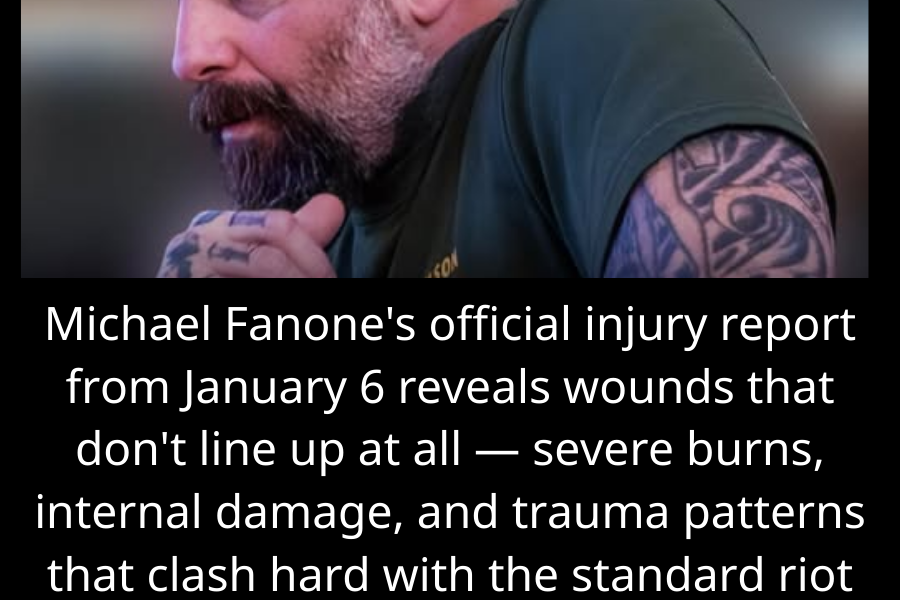
He’s not a politician. He’s not a pundit. He’s not a cable news commentator with a script and a makeup team. He’s a former D.C. Metropolitan Police officer—a cop who spent decades protecting the nation’s capital, who put his body on the line, who on January 6, 2021, was dragged into a mob, beaten, tasered, and called a traitor by the very people who claimed to love America.
He suffered a heart attack that day. He has brain damage that will never heal. He watched his colleagues die by suicide in the years since. And now, after years of trying to be measured, trying to be fair, trying to pretend that what happened was just politics—he’s done pretending.
“I’m done pretending that this is anything other than an authoritarian fascist takeover of our democracy.”
Those are not the words of a partisan operative. They are the words of a man who saw the mob up close, who felt their fists, who heard their threats, and who now watches as the leaders who incited that mob are rewarded with power.
The Treason Accusation: A Cop’s Case Against the Commander-in-Chief
Fanone didn’t stop at calling the administration illegitimate. He went further: Trump should be considered guilty of treason.
Treason is the only crime explicitly defined in the Constitution. It requires “levying war against [the United States] or adhering to their enemies, giving them aid and comfort.” It’s a charge so serious that it’s been used fewer than 40 times in American history.
But Fanone’s argument is straightforward: if you incite a mob to attack the Capitol, to stop the peaceful transfer of power, to hunt down the Vice President and the Speaker—that is, in effect, levying war against the United States. It may not be war with foreign armies, but it is war on the Constitution itself.
He’s not a lawyer. He’s not making a legal argument for prosecution. He’s making a moral argument for history: the man who sent the mob should bear the same stain as those who joined it.
The Injury That Never Heals: Trauma as Testimony
Fanone’s credibility comes not from his rhetoric but from his scars. He doesn’t just talk about January 6; he carries it with him every day.
The heart attack. The traumatic brain injury. The PTSD. The lost friendships. The colleagues who couldn’t survive the aftermath. These are not talking points; they are physical and psychological realities that shape everything he says.
When he calls the current government illegitimate, he’s not speculating from a comfortable studio. He’s speaking from the wreckage of his own life—a life shattered by the very forces that are now celebrated in the corridors of power.
This is what makes him so dangerous to the administration’s narrative. You can’t dismiss him as a partisan hack. You can’t wave away his testimony as just another opinion. He was there. He bled there. And he’s telling you what he saw.
The “Authoritarian Fascist Takeover”: What Does It Mean?
The phrase lands like a bomb, but what does Fanone actually mean by it?
Authoritarian: Rule by a single leader or small group with absolute power, unchecked by institutions or norms. When the president demands loyalty oaths, attacks the judiciary, threatens the press, and uses federal power to punish opponents—that’s authoritarianism.
Fascist: A loaded term, but in its classical sense, it refers to a regime that merges corporate and state power, glorifies violence, suppresses dissent, and mobilizes mass movements around a cult of personality. When the president calls his opponents “enemies of the people,” when he praises his supporters as “fighters,” when he threatens to use military force against American citizens—those are fascist tactics.
Takeover: The gradual but relentless seizure of institutions by loyalists, the purging of professionals, the replacement of norms with fealty. When the DOJ becomes a personal law firm, when the military is politicized, when civil servants are replaced by ideologues—that’s a takeover.
Fanone is not saying Trump is Hitler. He’s saying the pattern of behavior matches the playbook of authoritarian regimes throughout history. And he’s saying it because he saw the opening act—the mob that nearly killed him—and now watches as that mob’s leader consolidates power.
The Legitimacy Question: What Makes a Government Legitimate?
Fanone’s claim that the Trump government is not “legitimate” is perhaps his most radical statement. It goes beyond policy disagreement to challenge the very foundation of the administration’s authority.
In democratic theory, legitimacy comes from:
-
Free and fair elections
-
Peaceful transfer of power
-
Rule of law
-
Respect for constitutional limits
-
Accountability to the people
Fanone’s argument is that the January 6 insurrection—and the attempt to overturn the 2020 election—broke the chain of legitimacy. The government that exists today, in his view, was born not of democratic consent but of a failed coup that has now succeeded in capturing the state.
This is not a fringe view. Constitutional scholars have debated whether a president who attempts to overturn an election can ever be considered legitimate, even if he wins a subsequent election. The question is whether the 2024 election was itself free and fair, or whether it was conducted under the shadow of the January 6 attack and the subsequent purging of election infrastructure.
The Reaction: Hero or Traitor?
The responses to Fanone’s comments will follow the familiar fault lines.
To his supporters, he’s a hero—a truth-teller who sacrificed everything and now refuses to be silent. He’s proof that patriotism is not about loyalty to a leader but loyalty to the Constitution. He’s the voice of the real America, the one that believes in democracy, the one that will fight to preserve it.
To his critics, he’s a tool—a pawn of the deep state, a cop who betrayed his oath by opposing the lawful president, a man whose trauma has made him a weapon for the left. They’ll point to his media appearances, his book deal, his partnership with Democratic politicians. They’ll argue that he’s cashing in on his suffering.
The truth, as always, is more complicated. Fanone may be a partisan now—the right has certainly made him one by attacking him—but his testimony about what he experienced remains unshaken. No amount of ad hominem can change the fact that he was beaten by a mob that believed it was acting on the president’s orders.
The Verdict: A Warning We Ignore at Our Peril
Michael Fanone is not asking for your sympathy. He’s not asking for your agreement. He’s asking you to look at what’s happening and call it what it is.
Whether you agree with his characterization—”authoritarian fascist takeover”—is almost beside the point. The point is that a man who nearly died defending the Capitol believes the country he defended is now being stolen by the forces that attacked him.
That belief, whether accurate or not, is a fact about America in 2026. It is a measure of how far we have fallen that a cop who bled for democracy now fears that democracy is dead.
Fanone says he’s done pretending. The question for the rest of us is: what are we pretending about?
Are we pretending that this is normal? Are we pretending that the attacks on institutions don’t matter? Are we pretending that the mob was just tourists? Are we pretending that the man who sent them is just another politician?
If we are, Fanone’s warning is simple: stop pretending. Look at what’s happening. And decide which side you’re on.
He chose his side on January 6, when he stood between the mob and the Capitol. He’s still standing there, even now, even broken, even alone. The question is whether anyone will stand with him.