“High Treason”: Elon Musk Drops a Bomb on the SAVE Act Debate
The Post That Broke X
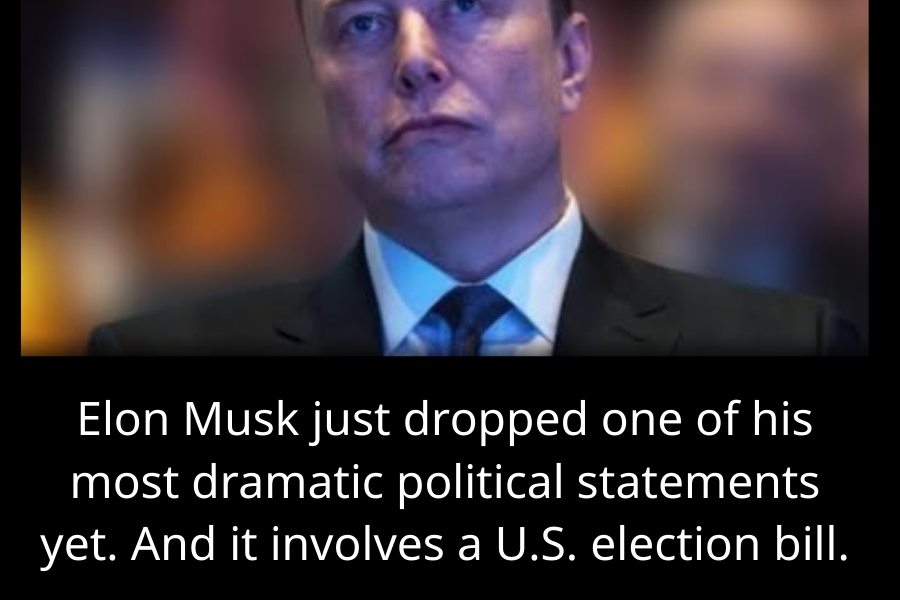
Let’s start with the words themselves, because Elon Musk doesn’t do subtle:
“Failing to pass SAVE is an act of high treason against the people of America.”
Twelve words. No qualifications. No caveats. No “in my opinion” or “some might say.” Just a direct, unambiguous declaration that any member of Congress who votes against the SAVE Act is committing treason.
The post exploded across X (formerly Twitter) within minutes. Millions of views. Hundreds of thousands of likes. Tens of thousands of comments. The algorithms did their work, and the controversy spread faster than anyone could fact-check it.
But beneath the predictable outrage and celebration, a serious question emerged: What does “high treason” actually mean? And does Musk’s language help or hurt the cause he claims to support?
The SAVE Act: A Quick Refresher
Before we can evaluate Musk’s claim, we need to understand what the SAVE Act actually does.
The SAVE Act (Secure American Votes through Enhanced verification) would:
-
Require proof of citizenship (passport, birth certificate, naturalization papers) to register to vote in federal elections.
-
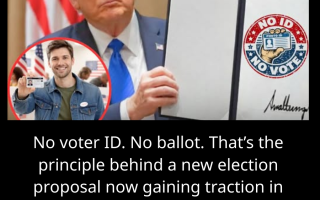
Mandate voter ID at polling places for federal elections.
-
Impose stricter mail-in ballot deadlines, requiring ballots to arrive by the close of polls on Election Day.
Supporters say it’s about election integrity—ensuring only citizens vote in citizen elections. Critics say it’s voter suppression—creating barriers that disproportionately affect minorities, the poor, and the elderly.
The bill has become a rallying cry for Trump supporters and a red line for Democrats. Its fate will likely be decided in the coming weeks, with the filibuster and possibly the future of the Senate majority hanging in the balance.
The Treason Claim: What Musk Is Actually Saying
Musk’s use of “high treason” is deliberately provocative. In legal terms, treason is defined in Article III, Section 3 of the Constitution:
“Treason against the United States, shall consist only in levying War against them, or in adhering to their Enemies, giving them Aid and Comfort.”
Voting against an election integrity bill does not meet this definition. It’s not levying war. It’s not adhering to enemies. It’s not giving aid and comfort to adversaries. It’s a policy disagreement, encoded in legislation, expressed through the normal democratic process.
So Musk is not using the word in its legal sense. He’s using it in its rhetorical sense—as the strongest possible condemnation of an action he considers fundamentally illegitimate.
When Musk says “treason,” he means: This is a betrayal so profound that it cannot be understood as ordinary politics. This is a violation of the basic compact between government and governed. This is unforgivable.
The Supporters’ Response: Finally, Someone With Courage
Musk’s supporters immediately rallied behind him. Their arguments are straightforward:
-
The SAVE Act is essential to democracy. Without it, elections cannot be trusted.
-
Opposing it is not a legitimate policy disagreement—it’s a choice to preserve a system that allows fraud.
-
Calling it “treason” is not hyperbole; it’s an accurate description of what happens when elected officials prioritize their party’s power over the integrity of elections.
-
Musk has the courage to say what millions think but politicians are afraid to utter.
For this audience, Musk’s language is refreshing. It cuts through the euphemisms and the spin. It names the stakes in terms everyone can understand.
The Critics’ Response: Dangerous and Reckless
Critics see it very differently:
-
Treason is a specific legal term with a specific meaning. Using it for policy disagreements cheapens the word and makes real treason harder to identify and punish.
-
Calling opponents “traitors” escalates political conflict beyond the bounds of democratic debate. It delegitimizes opposition and makes compromise impossible.
-
If every policy disagreement is treason, then the only resolution is elimination of the opposition—politically, and eventually physically.
-
Musk’s platform gives his words enormous reach. His rhetoric doesn’t just express an opinion; it shapes the discourse for millions.
The critics also note the irony: Musk, who claims to be a free speech absolutist, is essentially arguing that voting a certain way should be considered treason—a capital offense. The contradiction is glaring.
The Historical Context: Treason as a Political Weapon
Accusing political opponents of treason is an American tradition as old as the republic itself.
The Alien and Sedition Acts targeted critics of the Adams administration as traitors. The Civil War saw countless accusations of treason against both Union and Confederate supporters. McCarthyism built careers on accusing Americans of treasonous sympathy with communism. Every era has its traitors.
But historically, these accusations have been used to silence dissent, not to strengthen democracy. When everyone who disagrees is a traitor, there’s no room for legitimate opposition. There’s only enemies to be destroyed.
Musk is operating in this tradition, whether he knows it or not. He’s using the most powerful word in the political lexicon to delegitimize his opponents and rally his supporters. It’s effective. It’s also dangerous.
The Impact on the SAVE Act Debate
What does Musk’s intervention actually accomplish?
In the short term: It energizes the base. Trump supporters who were already fired up about the SAVE Act are now even more committed. Musk’s post will be shared, quoted, and used to pressure Republican senators who might be wavering.
In the medium term: It hardens positions. Democrats who might have been open to negotiation now have an excuse to dig in. If the other side thinks you’re a traitor, why would you work with them?
In the long term: It raises the stakes. By framing the SAVE Act as a matter of treason, Musk makes compromise impossible. There’s no middle ground between patriots and traitors. You’re either with us or against us.
This may be Musk’s intent. He may believe that the SAVE Act is so important that any compromise is unacceptable. But the result is to make a difficult political problem even harder to solve.
The Musk Factor: Why His Voice Matters
Elon Musk is not just another Twitter user. He’s the owner of the platform. He’s one of the wealthiest people on earth. He has a massive and passionate following. When he speaks, people listen.
This gives his words extraordinary power. A post from Musk can move markets, shape public opinion, and influence political outcomes. His claim that opposing the SAVE Act is “treason” will be seen by millions, believed by many, and acted upon by some.
With that power comes responsibility. Musk’s words have consequences. When he calls opponents “traitors,” he’s not just expressing an opinion—he’s potentially inciting harassment, threats, or worse against the people he targets.
Does he understand this? Does he care? The answer isn’t clear. But the impact is real.
The Verdict: Effective Rhetoric, Dangerous Precedent
Elon Musk’s “treason” post is a masterclass in political communication. It’s short, memorable, and emotionally powerful. It frames the debate in terms that favor his side. It energizes his base and demoralizes his opponents.
But it’s also a step down a dangerous path. When policy disagreements become treason, democracy becomes impossible. When opponents become traitors, compromise becomes collaboration. When the other side is not just wrong but evil, there’s no reason to listen, negotiate, or coexist.
The SAVE Act will pass or fail based on votes, not rhetoric. But the rhetoric shapes the environment in which those votes are cast. Musk’s words will make it harder for Republicans to defect, harder for Democrats to compromise, and harder for the country to find common ground.
That may be what he wants. It may be what his supporters want. But it’s not how democracies survive. Democracies survive by recognizing that opponents are not enemies, that disagreement is not betrayal, and that the peaceful transfer of power depends on mutual acceptance of legitimacy.
Musk’s “treason” frame rejects all of that. And in doing so, it makes the country a little less democratic, a little more divided, and a little closer to the breaking point.
Whether that’s a price worth paying for the SAVE Act is a question each American must answer for themselves.