The Ter Apel Crossing: When America Becomes a Place to Flee
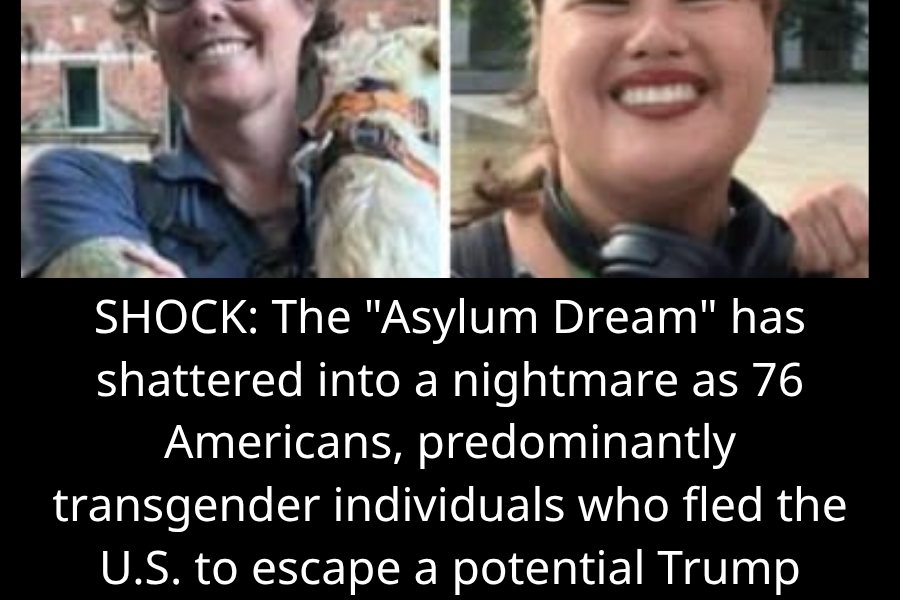
Let’s start with the number. Seventy-six. That’s not a wave. That’s not an exodus. That’s a handful of people. A busload. A single flight’s worth of passengers. Seventy-six Americans who looked at their country and decided they could not stay. Seventy-six people who packed their bags, boarded planes, and landed in the Netherlands with nothing but a story and a hope.
They are transgender. All of them. Or most of them. The reporting is not precise on the breakdown, but the headline is clear: these are people who felt so unsafe in the United States that they chose to become refugees in a foreign country. They chose to live in a camp. They chose to trade the familiar for the unknown. They chose to leave everything behind because staying was no longer an option.
Now they are in Ter Apel. A name that means nothing to most Americans. A refugee camp in the northern Netherlands. Overcrowded. Underfunded. Described as prison-like. Graffiti on the walls. Dirty rooms. Daily checks. Basic allowances that barely keep body and soul together. This is what they chose. This is what they fled to. This is what America has become in their eyes: a place so dangerous, so hostile, so unwelcoming that a prison-like camp in a foreign country is preferable to home.
The Dutch officials are not impressed. They consider the United States a safe country. They do not grant asylum to people from safe countries. No claims have been approved. Many have already been rejected. The courts have spoken: the conditions that these Americans describe do not meet the threshold for persecution.
So the seventy-six are stuck. They cannot go back. They cannot stay. They are in limbo, in a camp, in a country that does not want them, waiting for a decision that is unlikely to come. They are the human face of a political crisis. They are the symptom of a country that has become so divided, so hostile, so unrecognizable that some of its own citizens would rather live in a refugee camp than return home.
The Persecution Threshold
The Dutch courts have been clear. The conditions that the applicants describe—assaults, harassment, job loss, threats—do not meet the threshold for persecution. Not because these things are not real. Not because these things are not serious. Because persecution, in the legal sense, requires something more. It requires the state to be the perpetrator. It requires a systematic, government-directed campaign of violence and oppression. It requires the kind of things that happen in places like Syria, like Afghanistan, like Myanmar.
It does not require the kind of things that happen in the United States. Because the United States, for all its flaws, is still a democracy. It still has laws. It still has courts. It still has protections for its citizens, even when those protections are imperfectly applied. The Dutch courts look at the United States and see a country where transgender people can vote, can work, can organize, can advocate for their rights. They see a country where the government is not rounding up transgender people and putting them in camps. They see a country that is safe, even if it is not always welcoming.
The seventy-six disagree. They have experienced something that the courts cannot see. They have lived through something that the legal definition of persecution does not capture. They have been assaulted. They have been harassed. They have lost jobs. They have been threatened. They have felt the weight of a society that does not want them, that does not understand them, that sometimes actively hates them.
The courts say this is not enough. The courts say that persecution requires more. The seventy-six say that they have already endured more than enough. And the gap between these two perspectives is the gap between law and experience, between the way the world is supposed to work and the way it actually works, between the promise of America and the reality of being transgender in America in 2026.
The Ter Apel Experience
Ter Apel is not a place anyone would choose. It is a refugee camp, and refugee camps are not designed for comfort. They are designed for function. They are designed to process people, to house them temporarily, to move them along to something else. They are not designed to be homes.
The camp is overcrowded. That is the first thing the reports mention. Too many people in too little space. The rooms are dirty. The walls are covered in graffiti. The daily checks are invasive. The basic allowances are barely enough to survive. This is what the seventy-six fled to. This is what they chose over America.
Think about that for a moment. Think about what it says about America that seventy-six of its citizens would rather live in an overcrowded, prison-like refugee camp than return home. Think about what it says about the country they left that a dirty room in the Netherlands feels safer than a clean room in the United States. Think about what it says about the state of transgender rights in America that people are willing to give up everything, to live in limbo, to wait for a decision that will probably never come, rather than go back.
The seventy-six are not the first. They will not be the last. There will be more. There will be more Americans who look at their country and see a place that does not want them. There will be more Americans who choose the uncertainty of exile over the certainty of life in a country that has become hostile to their existence. There will be more Ter Apels, more camps, more people waiting for decisions that will not come, because the world still considers America a safe country, and safe countries do not produce refugees.
The Dutch Perspective
The Dutch officials are not being cruel. They are being consistent. They have a definition of persecution that has been shaped by decades of dealing with refugees from actual war zones, from actual dictatorships, from actual campaigns of state-sponsored violence. They look at the United States and they see a country where transgender people can still go to court, can still speak their minds, can still organize and advocate and fight for their rights. They see a country where the government is not hunting them down. They see a country that is safe.
They are not wrong. The United States is safe by the standards of the world. It is safe by the standards of Syria, of Afghanistan, of Myanmar. It is safe by the standards of countries where being transgender is a crime punishable by death. It is safe by the standards of places where the government is the persecutor, not the protector.
But safety is not the same as welcome. Safety is not the same as acceptance. Safety is not the same as being able to live your life without fear of assault, harassment, job loss, threats. The Dutch courts have defined persecution narrowly. The seventy-six have experienced it broadly. And the gap between these definitions is where they are trapped.
The Dutch officials are not going to change their minds. They are not going to start granting asylum to Americans. They are not going to declare the United States an unsafe country, because the United States is not unsafe by any objective measure. The seventy-six are going to stay in limbo. They are going to wait for decisions that will not come. They are going to live in a camp, in a foreign country, because the country they left no longer feels like home.
The American Divide
The seventy-six are a symptom. They are a symptom of a country that has become so divided, so polarized, so unrecognizable that some of its citizens would rather live in a refugee camp than return to it. They are a symptom of a culture war that has made transgender people the front line. They are a symptom of a political system that has decided that the rights of a minority are negotiable.
The United States has always been a difficult place for people who do not fit in. It has always been a place where conformity is rewarded and difference is punished. But there was always a promise. There was always the idea that America was a place where you could be yourself, where you could live your life, where you could find a community that would accept you. That promise is fraying. It is fraying for transgender people. It is fraying for anyone who does not fit the narrow definition of what it means to be an American.
The seventy-six are the ones who could not hold on. They are the ones who looked at the promise and saw that it was broken. They are the ones who decided that the cost of staying was higher than the cost of leaving. They are the ones who chose Ter Apel over America.
And they are not alone. There will be more. There will be more Americans who look at their country and see a place that does not want them. There will be more Americans who choose exile over endurance. There will be more Americans who pack their bags and leave, not because America is unsafe by the standards of the world, but because America is unsafe by the standards of their own lives.
The Asylum Question
The asylum system was not designed for Americans. It was designed for people fleeing war, for people fleeing dictatorship, for people fleeing the kind of state-sponsored violence that the United States does not practice. It was designed for people who could not go home because home was literally killing them. It was not designed for people who felt unwelcome. It was not designed for people who faced harassment and job loss and threats. It was designed for people who faced death.
The seventy-six are not facing death. They are facing something else. Something that the asylum system does not recognize. Something that the Dutch courts have said does not meet the threshold for persecution. Something that is real, that is serious, that is life-altering, but that is not, in the legal sense, persecution.
So they will stay in Ter Apel. They will wait. They will appeal. They will hope. And eventually, most of them will be sent back. They will be sent back to the country they fled. They will be sent back to the lives they left. They will be sent back to the assaults and the harassment and the job loss and the threats. Because the world has decided that America is safe, and that is the end of it.
The Last Word
Seventy-six Americans fled to the Netherlands. They are transgender. They are living in a camp. They are waiting for asylum that will not come. They are the human face of a country that has become so divided that some of its citizens would rather live in a prison-like refugee camp than return home.
The Dutch courts say they are not refugees. The Dutch courts say America is safe. The Dutch courts say that assaults, harassment, job loss, and threats do not meet the threshold for persecution.
The seventy-six say that they have already endured enough. They say that home is no longer safe. They say that they would rather live in a dirty room in Ter Apel than go back to the life they left.
Both sides are telling the truth. The Dutch courts are applying the law as it was written. The seventy-six are describing their lives as they have lived them. And the gap between these truths is the gap between what the world considers persecution and what it actually feels like to be hunted by your own society.
Seventy-six people left America. They thought they were leaving for somewhere better. They found Ter Apel. They found a camp. They found a system that does not recognize their suffering. They found a world that still considers America safe.
They will not get asylum. They will be sent back. They will return to the country they fled. They will return to the assaults and the harassment and the job loss and the threats. They will return to a place that does not want them.
And the world will go on. The Dutch courts will process the next case. The Ter Apel camp will fill up with the next wave of refugees. The United States will continue to be considered a safe country. And seventy-six people will be forgotten.
They are the symptom. They are the warning. They are the human cost of a country that has lost its way. They are the ones who left. They are the ones who could not stay. They are the ones who chose Ter Apel over America.
And they are not the last.