The Hug Heard Round the Internet: When Gavin Newsom Became a Security Blanket
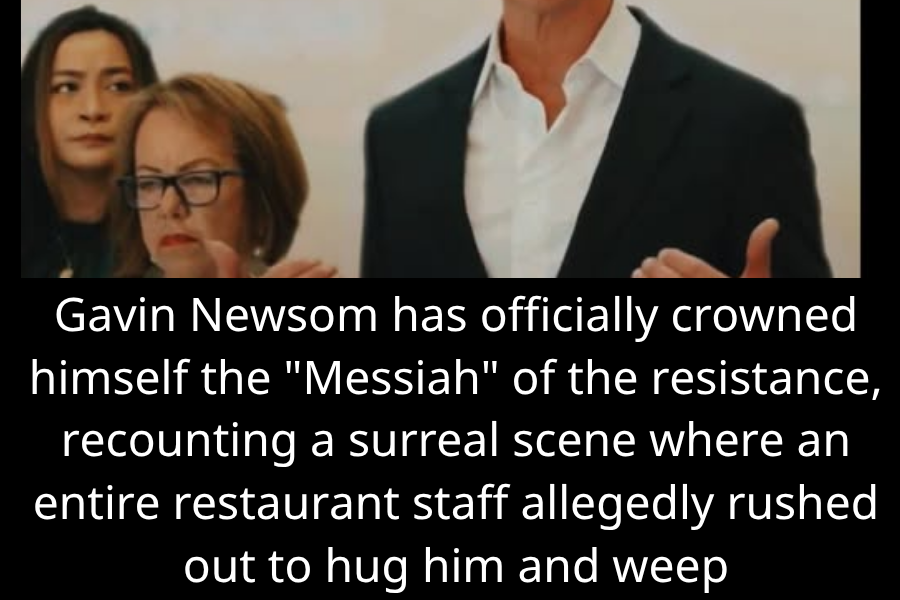
Let’s start with the image. Gavin Newsom, the former governor of California, walks into a restaurant. Not a campaign stop. Not a rally. Not a fundraiser. Just a restaurant. A place where people go to eat, to work, to live their lives. He is not there to make a speech. He is not there to ask for votes. He is just there.
And the entire staff comes out. Hugging him. Crying. Emotional. Not because they agree with his politics. Not because they love his policies. Because they are scared. Because they are afraid of what is happening under the current administration. Because they see him as a “safety net.” Someone who made them feel safe. Someone they needed to see that day.
That is the story Newsom told. He told it on camera. He told it to the world. He told it as if it were a heartwarming moment, a testament to his leadership, a sign that people are hungry for someone like him to step in and save them.
But here is the question that Newsom did not ask himself. Here is the question that the media will not ask. Here is the question that everyone who hears this story should be asking:
What does it say about a leader that people cry when they see him in a restaurant?
Not because they are happy. Because they are scared. Not because they are grateful for what he has done. Because they are terrified of what is being done to them. Not because he gives them hope. Because he reminds them of a time when they felt safe.
Newsom wants us to see this as a tribute. It is not a tribute. It is an indictment. It is an indictment of a political class that has left people so desperate, so fearful, so anxious that the sight of a former governor in a restaurant brings them to tears. It is an indictment of a Democratic Party that has failed to protect the people it claims to champion. It is an indictment of a system that has made people feel that their only hope is a politician who has already been rejected by the voters.
The Safety Net Illusion
Newsom called himself a “safety net.” That is a remarkable phrase. A safety net is something that catches you when you fall. It is something that protects you from harm. It is something that you can rely on when everything else fails.
Newsom was the governor of California. California is a state with some of the highest taxes, the highest homelessness rates, the highest cost of living, and the highest income inequality in the country. It is a state where the middle class is shrinking, where the working class is struggling, where the poor are being pushed out of their homes and onto the streets.
If Newsom is a safety net, he is a safety net with holes in it. He is a safety net that did not catch the people who lost their homes. He is a safety net that did not protect the small businesses that closed during the pandemic. He is a safety net that did not stop the exodus of families fleeing to Texas and Florida and other states where they could actually afford to live.
The restaurant workers who hugged him were not hugging him because he saved them. They were hugging him because they remember a time when they thought he might. They were hugging him because they are scared of what comes next. They were hugging him because he is a symbol of something they have lost, not something they have gained.
The Fear Factor
The workers were scared. Newsom said so himself. They told him they were scared about what is happening under the current administration. They are not alone. Millions of Americans are scared. They are scared about the economy. They are scared about the border. They are scared about crime. They are scared about the future.
But here is the question Newsom does not want to answer: What did he do about it when he had the chance? What did he do to make them feel safe when he was in power? What did he do to address the fears that are now driving them to tears at the sight of his face?
The answer is not comforting. Newsom had years to address the problems that are now terrifying people. He had years to fix the economy, to secure the border, to reduce crime, to make California a place where people felt safe. He did not. He failed. And now he wants credit for being a symbol of the safety he never provided.
The workers are scared. They have reason to be scared. But Newsom is not the solution to their fear. He is a reminder of why they are scared in the first place. He is a reminder of a political class that talked a good game and delivered nothing. He is a reminder of a Democratic Party that promised to protect them and then abandoned them when they needed help.
The Real Leader Question
Newsom said the workers were happy to see a “real leader.” That phrase tells you everything you need to know about how Newsom sees himself. He is not just a politician. He is not just a former governor. He is a “real leader.” Someone who stands above the fray. Someone who can be trusted. Someone who will save them.
But what is a real leader? A real leader does not just make people feel safe. A real leader makes people safe. A real leader does not just hug people who are crying. A real leader addresses the problems that are making them cry. A real leader does not just show up at a restaurant and accept the adulation of a frightened staff. A real leader stays in the arena and fights for the people who need him.
Newsom is not in the arena. He is not in power. He is not fighting. He is touring the country, telling stories about the people who cry when they see him, building a narrative that he is the one who can save America from the current administration.
But he could not save California. He could not fix the problems that drove people to tears in his own state. Why should anyone believe he can save the country?
The Performance
There is something performative about this story. Something self-serving. Something that feels less like an authentic moment and more like a campaign ad. Newsom walked into a restaurant. The staff came out hugging him and crying. He tells the story to the world, presenting himself as the leader people are desperate for.
But who told the story? Newsom did. Who benefits from the story? Newsom does. Who is positioning himself for a future run at national office? Newsom is.
The story is not about the restaurant workers. The story is about Newsom. It is about how people see him. It is about how they need him. It is about how he is the only one who can save them. It is a story designed to build a narrative, to create a movement, to position him as the alternative to the current administration.
The workers are props. Their tears are props. Their fear is a prop. Newsom is using them to build his own brand, to advance his own career, to position himself for a future that he hopes will include the White House.
It is cynical. It is manipulative. It is politics at its worst. And it is exactly what you would expect from a man who has spent his entire career putting his own ambition ahead of the people he claims to serve.
The Safety They Need
The workers told Newsom they saw him as a safety net. They needed him. They needed to see him that day. They needed to feel that someone was looking out for them.
But what they really need is not a safety net. What they really need is a trampoline. Something that will bounce them back. Something that will lift them up. Something that will give them the tools to build their own futures, not just catch them when they fall.
Newsom cannot give them that. He never could. He is a product of the same system that failed them. He is a symbol of the same politics that left them scared and desperate. He is a reminder of a time when they thought things might get better, only to watch things get worse.
The workers cried when they saw him. They cried because they are scared. They cried because they are desperate. They cried because they have nowhere else to turn. They cried because they have been let down by everyone who was supposed to help them.
Newsom wants us to see their tears as a tribute. It is not a tribute. It is a tragedy. It is a tragedy that people are so desperate that the sight of a failed governor brings them to tears. It is a tragedy that the Democratic Party has left its own supporters so vulnerable. It is a tragedy that the people who need help the most are forced to rely on the people who failed them.
The Last Word
Gavin Newsom walked into a restaurant. The staff came out hugging him and crying. They told him they were scared. They told him they needed him. They told him he made them feel safe.
It is a powerful story. It is a moving story. It is a story that Newsom will tell again and again as he builds his case for national office.
But it is not the story Newsom thinks it is. It is not a story about a leader who inspires hope. It is a story about a political class that has failed so badly that people are brought to tears by the sight of a politician who once promised to help them and did not.
The workers are scared. They have reason to be scared. But Newsom is not the answer to their fear. He is a symptom of the problem. He is a reminder of why they are scared in the first place. He is a symbol of a system that has let them down.
Newsom wants to be president. He wants to be the leader who saves America. But he could not save California. He could not stop the exodus. He could not fix the problems that are now driving people to tears.
The workers hugged him. They cried. They told him they needed him.
He told the world about it. He made their tears about him. He used their fear to build his brand.
That is not leadership. That is exploitation. And it is the reason why so many Americans have lost faith in the people who claim to represent them.