# The Firestorm Senator: Tuberville’s Words Ignite a Fight Washington Didn’t Want
The phones started ringing before he finished the sentence.
That’s how it works in Washington. You say something. The cameras catch it. The clips get clipped. The outrage machine whirs to life. And within hours, you’re either a hero or a villain, depending entirely on which side of the line you’re standing on.
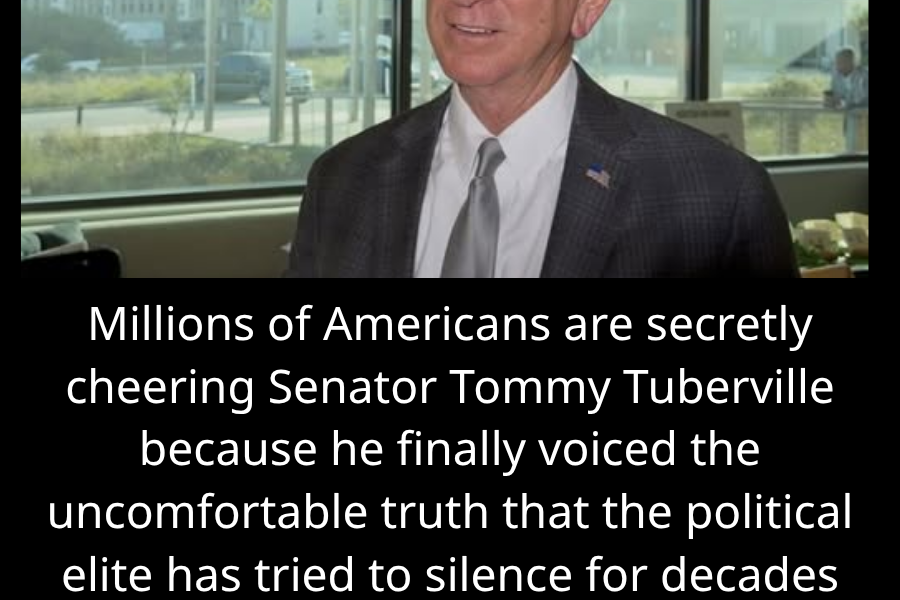
Senator Tommy Tuberville knows this. He’s been in Washington long enough to understand the rhythm. But knowing it and caring about it are two different things. And Tuberville, by all evidence, does not care.
His latest firestorm began with two words. Words that, depending on who you ask, were either a moment of brutal honesty or a bridge too far. Words that have split the comment sections, lit up the cable news chyrons, and forced every Republican in the Senate to answer a question they didn’t want to answer:
*Is he right? Or did he go too far?*
The senator from Alabama said something about Muslims. Something that, in the clipped and edited versions circulating on social media, sounds like a declaration of war against 1.8 billion people. Something that his defenders call “speaking plainly” and his critics call something much worse.
But here’s what gets lost in the outrage: The fight isn’t really about what he said. The fight is about whether someone can say it without being destroyed.
—
### The Usual Suspects
The “usual suspects” are doing what they always do. The statements are being drafted. The press releases are being sent. The cable news bookers are making calls. The organizations that exist to be outraged by things Republicans say are, once again, outraged.
They want an apology. They want a retraction. They want him censured. They want him stripped of his committee assignments. They want him driven from the Senate, or at least driven into silence. They want to make an example of him, to show that there are lines that cannot be crossed, words that cannot be spoken, thoughts that cannot be thought—at least not out loud, at least not by a United States senator.
And Tuberville’s supporters are doing what they always do. They’re digging in. They’re calling the outrage fake. They’re saying the media is twisting his words. They’re saying that the people who are angry were always going to be angry, that nothing he could say would change that, that the only thing that matters is that he didn’t back down.
This is the pattern. This is the dance. This is what passes for political discourse in a country that has forgotten how to disagree without declaring war.
But beneath the pattern, there’s a real question. A question that neither side wants to answer honestly:
*What are the limits? What can a senator say about a religious group? What lines exist, and who gets to draw them?*
—
### The Plain Speech Trap
Tuberville’s defenders say he was “speaking plainly.” That’s the phrase. It’s the same phrase used to defend every controversial statement from every politician who has ever said something that made people uncomfortable. “He’s just saying what everyone is thinking.” “He’s not afraid to tell the truth.” “He’s a fighter, not a politician.”
The implication is that the people who are upset are upset because they’re delicate. That they can’t handle the truth. That they prefer the carefully worded, focus-grouped, poll-tested language that politicians usually use to avoid saying anything that might offend anyone.
But here’s the problem with “plain speech”: It’s only plain if everyone agrees on what it means. And when you’re talking about an entire religious group—a group that includes American soldiers, American doctors, American neighbors—the meaning is not plain. It’s contested. It’s explosive. It’s the kind of thing that reasonable people can hear in completely different ways.
Tuberville’s supporters hear him talking about radical Islamists. About terrorists. About the people who attacked America on 9/11. They hear him using shorthand, speaking to an audience that already knows what he means, trusting them to understand the distinction between a religion and the extremists who twist it.
His critics hear him talking about Muslims. All Muslims. Every Muslim. The ones who serve in the military, who work in the White House, who sit next to you on the plane. They hear him saying that an entire faith—one of the world’s great religions—is the enemy of the United States.
Both sides hear what they want to hear. Both sides assume the worst about the other side’s intentions. And neither side is willing to ask the question that might actually move the conversation forward:
*What did he actually mean? And does it matter what he meant, or does it only matter what he said?*
—
### The Fighter Frame
The people rallying behind Tuberville aren’t rallying behind his words. Most of them haven’t read the full transcript. Most of them haven’t watched the unedited video. Most of them are reacting to the reaction. They’re rallying behind the idea that there’s a senator who won’t apologize, who won’t back down, who won’t let the “usual suspects” dictate what he can and cannot say.
This is the fighter frame. It’s the same frame that has protected every controversial figure in American politics for the last decade. The details don’t matter. The words don’t matter. What matters is that someone is willing to take the arrows. That someone is willing to stand in the arena and let the other side throw everything they have.
The fighter frame works because the other side has spent years convincing people that they are the gatekeepers of acceptable discourse. That they get to decide what can be said and what cannot. That they have the authority to determine who is a bigot and who is a truth-teller.
When you’ve positioned yourself as the decider of what’s acceptable, you create a constituency for anyone who defies you. The people who are tired of being told what they can say, what they can think, what they can believe—they will rally behind anyone who seems to be fighting against that system. Even if the person they’re rallying behind said something they wouldn’t have said themselves. Even if they’re not entirely sure what he meant.
Tuberville is benefiting from this dynamic. He’s not being defended because his words were precise. He’s being defended because he’s not apologizing. And in a political culture where the first instinct of most politicians is to apologize for everything, that’s enough.
—
### The Safety Question
There’s another layer to this that the fighter frame obscures.
Tuberville’s defenders say he was talking about national security. About the safety of the nation. About the real threats that the political class is too afraid to name.
There is a serious conversation to be had about national security and religious extremism. About the threat posed by terrorist organizations that claim to act in the name of Islam. About the challenge of distinguishing between a religion and the people who pervert it. About how to protect the country without alienating the allies we need in the fight against actual enemies.
That conversation is not happening. Because the conversation has been reduced to two words. Two words that have become a Rorschach test for where you stand in the culture war.
Tuberville’s supporters say he was trying to start that conversation. They say he was trying to force the political class to acknowledge that there is a threat, that it comes from somewhere, that pretending otherwise is dangerous.
His critics say he was doing something else. Something uglier. Something that has nothing to do with national security and everything to do with dividing Americans against each other.
The truth is probably somewhere in between. But the truth doesn’t matter anymore. What matters is the fight. What matters is which side you’re on. What matters is whether you’re willing to defend someone who said something that made people angry.
—
### The Question No One Asks
Here’s the question that never gets asked in these firestorms:
*What does “the enemy” actually mean?*
If Tuberville was talking about terrorists, about extremists, about people who want to destroy America—then he’s stating the obvious. Of course those people are the enemy. Every American, of every party, of every faith, agrees on that.
If he was talking about Muslims—about the religion itself, about the billion-plus people who practice it around the world—then he’s saying something fundamentally different. Something that puts him outside the mainstream of American political discourse. Something that the vast majority of Americans, including most Republicans, would reject.
The difference between those two interpretations is everything. But no one is asking which one he meant. Because asking would require listening. And listening would require admitting that the other side might have a point. And admitting that the other side might have a point is not something anyone in American politics is willing to do anymore.
So we get the firestorm. The outrage. The defense. The rallying cries. The demands for apologies. The refusal to apologize. The whole pointless, exhausting cycle that never answers the one question that actually matters.
—
### The Real Enemy
There’s a bitter irony in all of this.
The real enemies of the United States—the people who actually want to harm Americans, who have killed Americans, who plot against America every day—are watching this firestorm. They’re watching a United States senator become the center of a national controversy over two words. They’re watching the country tear itself apart over whether it’s acceptable to say something about Muslims.
And they’re laughing. Because every minute we spend fighting about what a senator said is a minute we’re not spending on anything that actually matters. Every minute we spend dividing ourselves into tribes, into factions, into people who defend and people who attack, is a minute we’re not united against the people who actually want to destroy us.
Tuberville’s defenders say he was trying to wake people up to the threat. But if the threat is real—and it is—then the response should be to unite, not to divide. To build coalitions, not to burn them. To find allies, not to alienate them.
There are Muslims in the United States military. There are Muslims in the intelligence community. There are Muslims who have given their lives to protect this country from the very extremists that Tuberville’s supporters are worried about. They are not the enemy. They are allies. They are Americans.
If the conversation about national security cannot make that distinction—cannot distinguish between the people who want to destroy us and the people who share our values and our faith in America—then the conversation is not worth having.
—
### The Bottom Line
Tommy Tuberville said something. The usual suspects are furious. His supporters are rallying. The cycle continues.
The people who agree with him will continue to agree with him. The people who disagree will continue to disagree. Nothing will change. No minds will be moved. No understanding will be reached. The country will be slightly more divided than it was before, and everyone will move on to the next firestorm, and the next, and the next.
But the question that started this—the question about what a senator can say, about where the lines are, about what “the enemy” actually means—will still be there. Unanswered. Unaskable. Lurking beneath the surface of the next controversy, and the one after that.
Tuberville is taking heat. He’s also taking support. He’s become a symbol of something, though it’s not clear what. And the people who are furious at him will move on to being furious at someone else, because that’s what they do.
But the country is not safer because of this. The national security conversation is not more serious. The threats we face are not diminished. And the only people who benefit from any of it are the ones who want us divided, distracted, and fighting with each other instead of focusing on them.
That’s the real enemy. And we’re doing their work for them.