The Kelly Comeback: When a Combat Veteran Schools a Draft Dodger
The Exchange That Defined the Week
Let’s start with the insults, because in modern politics, that’s where the attention goes.
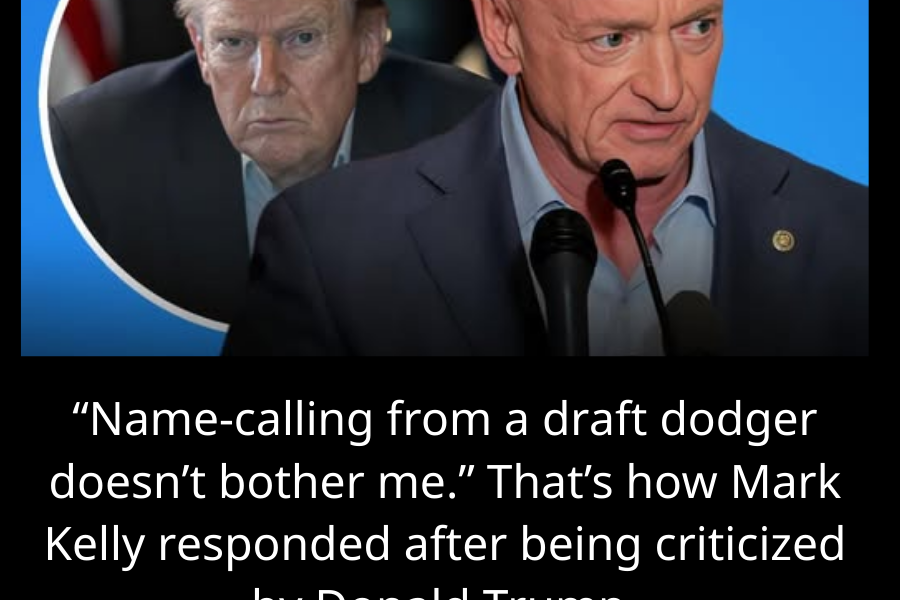
Donald Trump, on Fox News: “Mark Kelly is not a smart man. He’s terrible. What he said is terrible about leadership. Follow him. You follow him into a grave. He’s terrible. He’s a pathetic guy.”
Mark Kelly, on X: “Name calling from a draft dodger doesn’t bother me. What bothers me is a clueless commander in chief who took our country to war without a strategy because no one around him has the guts to tell him when he’s wrong.”
One sentence from Kelly does more damage than Trump’s entire tirade. Because Kelly has something Trump will never have: credibility.
Mark Kelly is a retired Navy combat pilot. He flew 39 combat missions in Operation Desert Storm. He’s a former NASA astronaut who spent weeks in space. His twin brother is also an astronaut. His wife, Gabby Giffords, was shot in the head while serving in Congress and has spent years fighting to recover.
Donald Trump avoided military service with five draft deferments during the Vietnam War—four for education, one for bone spurs. He has never faced combat, never worn a uniform, never put his life on the line for his country.
And now he’s calling a combat veteran “pathetic”? The contrast writes itself.
The Draft Dodger Framing: Why It Stings
Kelly’s use of “draft dodger” is not just name-calling. It’s a frame—a way of organizing the entire debate around Trump’s character and credibility.
For decades, Trump’s draft record has been a vulnerability. During the 2016 campaign, he claimed he couldn’t remember which doctor gave him the bone spurs diagnosis. The doctor later told the New York Times that he had done Trump a favor. The implication was clear: Trump avoided service through privilege and connections.
Now, when Trump attacks a combat veteran, that history becomes relevant. It’s not ad hominem; it’s context. A man who never served attacking someone who did—and attacking him on leadership, of all things—is the kind of irony that writes itself.
Kelly’s point is subtle but devastating: You have no standing to lecture me on courage, leadership, or sacrifice. You don’t know what those words mean.
The Substance: War Without Strategy
But Kelly didn’t stop at the personal. He pivoted to policy:
“A clueless commander in chief who took our country to war without a strategy.”
This is the part that will get less attention but matters more. Kelly is a military man. He understands strategy. He understands what happens when wars are fought without clear objectives, without exit plans, without understanding the enemy.
His critique of Trump’s Iran policy is not just partisan sniping. It’s a professional assessment from someone who has actually been in combat.
The war with Iran has escalated dramatically since the killing of the elder Khamenei. Tankers are burning in the Gulf. Oil prices are spiking. Drones are flying over multiple countries. Hezbollah is firing rockets into Israel. And the administration’s stated goal—”unconditional surrender”—is not a strategy. It’s a slogan.
Kelly is saying what military professionals have been saying privately: We don’t know how this ends. We don’t know what victory looks like. We don’t know when we can leave. We’re stumbling into a quagmire because the president listens to real estate developers and son-in-laws instead of generals and intelligence professionals.
The Contrast in Leadership Styles
The exchange between Trump and Kelly is also a contrast in how each man understands leadership.
For Trump, leadership is dominance. It’s being the loudest voice in the room. It’s never apologizing, never admitting error, never backing down. It’s attacking anyone who questions you, no matter their credentials or service.
For Kelly, leadership is responsibility. It’s understanding the stakes before you commit. It’s knowing that the people who follow your orders might not come home. It’s having the humility to listen to experts and the courage to admit when you’re wrong.
These two visions cannot be reconciled. And in Kelly’s response, millions of Americans will see the difference.
The Military Vote: Who Do Veterans Trust?
This exchange matters because military voters are a key swing constituency. They’ve traditionally leaned Republican, but Trump’s relationship with the military has been complicated.
On one hand, he’s expanded defense spending and taken a hard line on national security. On the other hand, he’s reportedly called fallen soldiers “suckers” and “losers” (a claim he denies), attacked Gold Star families, and now, attacked a combat veteran who served his country with distinction.
Kelly’s response will resonate with veterans who understand the difference between those who served and those who didn’t. It will remind them that Trump’s “leadership” has never been tested in combat—and that his attacks on those who have been tested reveal a fundamental lack of respect for service.
The Media Framing: Who “Won” the Exchange?
In the immediate aftermath, the media narrative is clear: Kelly landed the more effective blow.
Trump’s attack was personal and petty. Kelly’s response was personal too, but it was grounded in a substantive critique of policy and a contrast in life experience. The “draft dodger” line is devastating because it’s true—and because it frames everything else Trump says about leadership as illegitimate.
The Kelly camp will amplify this. They’ll use it to raise money, rally supporters, and reinforce the image of Kelly as the serious, experienced alternative to Trump’s chaos.
The Trump camp will try to change the subject. They’ll focus on Kelly’s policy positions, his votes, his alignment with Biden. They’ll argue that personal attacks don’t matter—only results do.
But in a political environment where image often trumps substance, the image of a combat veteran schooling a draft dodger is hard to beat.
The Verdict: A Moment That Defines the Race
Mark Kelly is not just any senator. He’s a potential presidential contender, a surrogate for the Democratic Party on national security, and a living rebuke to the idea that Republicans have a monopoly on military credibility.
His response to Trump does what effective political communication always does: it turns an attack into an opportunity. Trump tried to diminish Kelly. Instead, Kelly used the moment to elevate himself—and to diminish Trump in the process.
The “draft dodger” frame will stick. It will be repeated, memed, and weaponized every time Trump attacks a veteran. It will remind voters that for all his bluster about strength and leadership, Trump chose to sit out the one experience that actually tests those qualities.
Kelly, by contrast, chose to serve. He chose to fly combat missions. He chose to go to space. He chose to spend his life in service to his country.
That contrast is not just political. It’s personal. And in a race where character matters, it could be decisive.