The Obama Nostalgia Trap: When Memory Erases Reality
Let’s pause on that quote. Let it sit in the air. Let the warmth of it wash over you for a moment.
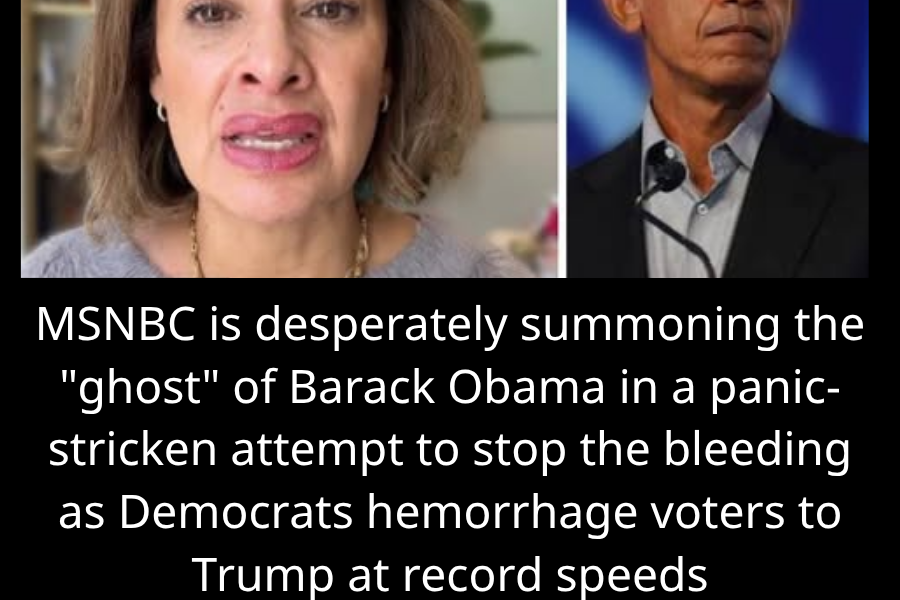
“When people see Barack Obama, they remember a time in America where there was unity. They remember a time when there was calm, when there was opportunity for their families.”
Maria Teresa Kumar said this on MSNBC. On air. With the kind of earnest, wistful tone that news anchors use when they’re not just reporting a story but feeling it. She wasn’t reading a teleprompter. She was remembering. She was summoning a feeling. She was inviting the audience to go back to a place that, in her telling, was better. Quieter. Kinder.
A time of unity. A time of calm. A time when opportunity wasn’t a partisan battleground but a shared American promise.
It’s a beautiful picture. It’s the kind of picture that makes you want to close your eyes and nod along and agree that yes, that was the way things were, and yes, we should want to go back.
There’s just one problem.
That time never existed.
The Audacity of Nostalgia
Let’s be precise about the Obama years. Not the memory. The reality.
2009 to 2017. Eight years. A presidency that began with a financial crisis that wiped out trillions in wealth, cost millions of jobs, and left families across America wondering if they would ever recover. A presidency that was greeted, from its very first day, with a level of opposition that was unprecedented in modern American history.
Remember the Tea Party? The rallies? The signs with Obama depicted as the Joker, as a witch doctor, as something other than a legitimate American president? Remember the birther movement? The conspiracy theories about his birth certificate, his religion, his citizenship? Remember Mitch McConnell standing on the Senate floor and saying, explicitly, that the Republican Party’s number one priority was making Obama a one-term president?
That was unity? That was calm?
The Obama years were not a break from division. They were the petri dish in which modern division was cultivated. The hatred that Maria Teresa Kumar attributes to “MAGA Republicans” did not appear in 2015, fully formed. It grew. It festered. It found its voice in opposition to the first Black president of the United States.
To remember the Obama years as a time of unity is not just to misremember. It’s to erase. To erase the millions of Americans who saw Obama not as a unifier but as a threat. To erase the movement that was built, explicitly and unapologetically, to oppose everything he stood for. To erase the fact that the very divisions she deplores were forged in the fires of the Obama era.
The Calm Before What?
“Calm.” That’s the word that does the most work in Kumar’s statement. A time of calm. A time when the waters were still and the political discourse was measured and people could disagree without wanting to burn the house down.
Is that how anyone who lived through the Obama years actually remembers them?
The 2010 midterms, when the Tea Party wave swept Democrats out of power in the most dramatic electoral repudiation in a generation. The debt ceiling crises, when the threat of default became a routine bargaining chip. The government shutdowns, when the opposition party decided that closing down the government was a reasonable price to pay for defunding Obamacare. The rise of the Freedom Caucus, the sit-ins, the procedural warfare that turned the House of Representatives into a perpetual battlefield.
Calm? The Obama years were anything but calm. They were the training ground for the politics of chaos. They were the dress rehearsal for the Trump era. They were the moment when the Republican Party decided that obstruction was not just a tactic but an identity.
To call that period “calm” is to have forgotten what it felt like to live through it. Or to have never felt it at all.
The Opportunity Question
Then there’s “opportunity for their families.” The idea that the Obama years were a golden age of economic possibility, when the American Dream was within reach and families could look to the future with hope.
The reality is more complicated.
Obama inherited an economy in free fall. He stabilized it. He passed stimulus. He saved the auto industry. He put in place policies that, over time, led to the longest economic expansion in American history. Those are facts. They are accomplishments. They deserve recognition.
But opportunity? For whom? The recovery was uneven. The middle class continued to shrink. Wages stagnated for years. The gap between the rich and everyone else grew. Homeownership, the classic marker of middle-class security, fell to its lowest level in decades. Millions of Americans who had lost jobs in the crash never fully recovered.
For some families, the Obama years were a time of opportunity. For others, they were a time of hanging on. For too many, they were a time of watching the American Dream drift further away.
The nostalgia for the Obama years is selective. It remembers the good parts and forgets the rest. It remembers the hope and forgets the anxiety. It remembers the man and forgets the millions of Americans who never felt the unity, never experienced the calm, never found the opportunity.
The Contrast Game
Kumar’s framing is designed to do one thing: contrast Obama with the MAGA Republicans she sees as the source of America’s current divisions. Obama is calm. Obama is collected. Obama says we don’t have to be this way. The MAGA side pushes hate.
It’s a clean story. A simple story. A story that fits neatly into the MSNBC worldview where the good guys are good and the bad guys are bad and the solution to everything is to go back to the way things were before the bad guys took over.
But history is not clean. It is not simple. And the divisions that Kumar laments were not invented by MAGA. They were amplified by MAGA. They were weaponized by MAGA. But they existed before MAGA. They existed because the Obama years, for all their historic significance, were also a time of profound political realignment, cultural upheaval, and economic anxiety.
The unity Kumar remembers was never there. The calm she recalls was an illusion. The opportunity she invokes was distributed unevenly, if at all.
The Obama Paradox
Barack Obama is a remarkable figure. The first Black president. A gifted orator. A man who, by any measure, conducted himself with dignity and grace in the face of unprecedented opposition. He is rightfully admired by millions of Americans, including many who voted against him.
But admiration is not the same as nostalgia. And nostalgia is not the same as history.
The Obama years were not a break from America’s divisions. They were a reflection of them. The hatred that Kumar attributes to MAGA was already there, in force, during Obama’s presidency. The conspiracy theories, the accusations of illegitimacy, the refusal to accept a Democratic president as a legitimate steward of the country—all of it was on display long before Donald Trump descended the escalator.
To pretend otherwise is to erase the lived experience of millions of Americans who watched the politics of hate take shape in real time. It is to forget the signs, the chants, the rhetoric that made the Obama years anything but calm.
The Danger of Nostalgia
There is a danger in this kind of nostalgia. Not just that it’s inaccurate. But that it prevents us from seeing the present clearly.
If you believe that the Obama years were a time of unity and calm, then you will look at the current moment and see only a departure from the norm. You will see Trump and MAGA as the aberration, the interruption, the thing that broke what was once whole. You will believe that if you can just defeat the bad guys, the good old days will return.
But what if the good old days never existed? What if the divisions were always there, just below the surface, waiting for the right spark? What if the Obama years were not the baseline but the exception—a brief moment when the contradictions of American politics were temporarily papered over by the charisma of one man?
If that’s the case, then the solution is not to go back. There is no going back. The solution is to go forward, to build something new, to accept that the politics of unity and calm may never return and to figure out how to govern in a world that is permanently divided.
That’s a harder message. It doesn’t fit on a bumper sticker. It doesn’t work as a campaign slogan. But it might be closer to the truth.
The MSNBC Frame
MSNBC has built its brand on being the anti-Fox. Where Fox offers red meat to the right, MSNBC offers comfort to the left. The comfort of knowing that you are on the right side of history. The comfort of believing that the other side is not just wrong but hateful. The comfort of nostalgia for a time when the good guys were in charge and the bad guys were on their heels.
Kumar’s statement is a perfect example of that comfort. It’s not meant to be a historical analysis. It’s meant to be a feeling. A warm, wistful feeling that makes the audience nod along and feel good about their memories of the Obama years.
But feelings are not facts. And nostalgia is not a strategy. The Democratic Party cannot win by convincing people that the past was better than it actually was. It cannot govern by pretending that the divisions of the present are a new phenomenon, a Trump-era invention that will disappear when he does.
The divisions are real. They are deep. And they were there before Obama, during Obama, and after Obama. Pretending otherwise is not just bad history. It’s bad politics.
The Last Word
Maria Teresa Kumar sees Barack Obama and remembers unity. She remembers calm. She remembers opportunity for families.
She is not alone. Millions of Americans share that memory. They look at Obama and feel a longing for a time that, in their recollection, was simpler, kinder, less hateful.
But memory is a trickster. It smooths the rough edges. It forgets the sleepless nights. It erases the hatred that was always there, simmering beneath the surface, waiting for its moment.
The Obama years were many things. Historic. Transformative. Inspiring. But they were not unified. They were not calm. And the opportunity they offered was not evenly distributed.
To remember them otherwise is to misunderstand not just the past, but the present. The divisions we face today did not come from nowhere. They were forged in the crucible of the Obama presidency. They were shaped by the forces that Obama’s election unleashed.
Barack Obama was a great president. But he was not a magician. He could not wave away the divisions that have always been part of American life. And pretending that he could does a disservice to his legacy and to the country he served.
The time of unity never came. The calm never arrived. The opportunity was real for some, but not for all.
That’s not nostalgia. That’s history. And history, unlike memory, does not lie.