The Wade Precedent: When a State Rep Asked America to Imagine an LGBTQ+ President
The Room: A Battlefield Dressed as a Hearing
Let’s set the scene, because the setting matters as much as the speech.
A legislative hearing in New Hampshire. A bill on the table that would limit the use of facilities based on biological sex and redefine “gender identity” in state law. The usual arguments, the usual tensions, the usual sense that whatever happens here will be appealed, litigated, and fought again somewhere else.
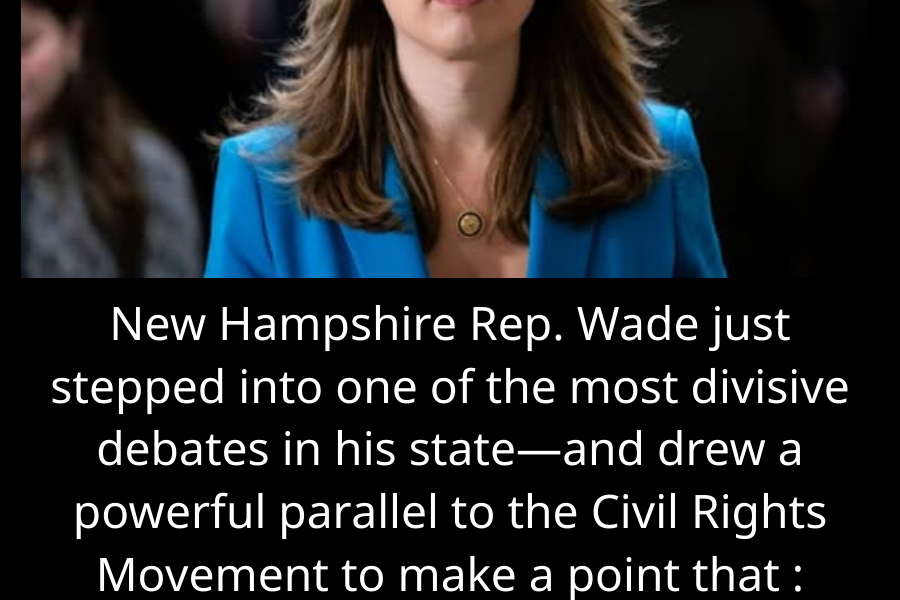
Then Rep. Wade, a transgender lawmaker, rises to speak. And instead of the predictable talking points, instead of the defensive crouch that comes from being the target of legislation, he shifts the frame entirely.
“Giving rights to trans people does not take them away from others, just as giving rights to Black Americans did not take them away from White Americans.”
The room shifts. The debate is no longer about bathrooms and pronouns. It’s about history, about oppression, about the fundamental nature of rights.
But then Wade goes further. He doesn’t just defend trans rights in the present. He asks America to imagine a future where an LGBTQ+ person sits in the Oval Office.
The Argument: Rights Are Not Zero-Sum
Wade’s core claim is simple but profound: rights are not a finite resource. When we extend them to one group, we do not diminish them for another.
This is the foundational argument of every civil rights movement in American history. It was true for abolitionists fighting to end slavery. It was true for suffragists fighting for women’s vote. It was true for the marchers at Selma. And it is true, Wade argues, for the trans community today.
The opposition to this view is rooted in a different understanding: that rights are competitive, that there are winners and losers, that if trans women gain access to women’s spaces, cis women lose something fundamental. Wade’s response is to reject that framing entirely. There is no loss. There is only inclusion.
The Provocation: An LGBTQ+ President
Having made the theoretical argument, Wade makes it concrete: America must finally ready itself for an LGBTQ+ President.
This is not a random hypothetical. It’s a logical extension of the civil rights argument. If we believe that discrimination is wrong, if we believe that talent and character should determine leadership, if we believe that the presidency should reflect the diversity of the nation—then we must be prepared for the day when an openly LGBTQ+ person holds the highest office.
The question is not whether that day will come. It’s whether we will be ready when it does.
Wade is asking America to do the work now—to examine its prejudices, to expand its imagination, to build a country where an LGBTQ+ candidate can be judged on their ideas, not their identity.
The Reaction: Silence, Then Fury
The video of Wade’s speech, posted by Libs of TikTok, captures the reaction in the room. Not everyone welcomed his words. Some listened in stony silence. Others shifted uncomfortably. A few, presumably opponents of the bill, nodded along.
But the real reaction came later, online. The comments exploded—some supportive, some furious, some simply confused about what Wade had actually said.
The opposition’s response reveals the deeper stakes. They don’t just disagree with Wade’s policy positions; they reject his entire framework. They don’t see trans rights as an extension of civil rights; they see them as a threat to women’s rights, to children’s safety, to the very concept of biological reality.
When Wade invokes the Civil Rights Movement, they hear appropriation. When he imagines an LGBTQ+ president, they hear a dystopian vision. There is no common ground, no shared language, no possibility of compromise.
The Historical Parallel: What the Civil Rights Movement Teaches
Wade’s comparison to the Civil Rights Movement is not just rhetorical. It’s grounded in a specific understanding of American history.
The fight for Black equality was met with the same arguments now used against trans rights:
-
“Separate but equal” was offered as a compromise.
-
“Rights are being taken away” was the cry of segregationists.
-
“Think of the children” was used to justify keeping schools segregated.
-
“This is happening too fast” was the plea of those who wanted change to wait.
In each case, the argument was that extending rights to one group would harm another. In each case, the argument was wrong.
Wade’s point is not that the trans experience is identical to the Black experience. It’s that the logic of exclusion is the same. The mechanisms of fear are the same. The appeals to tradition, to safety, to the natural order—all of it has been deployed before, against other groups, in other times.
The Future: When Will America Be Ready?
The question of an LGBTQ+ president is not academic. Polls show that Americans are increasingly comfortable with the idea. A 2023 Gallup poll found that 71% of Americans would vote for a gay or lesbian candidate—up from 59% in 2007. For a transgender candidate, the numbers are lower but rising.
But readiness is not just about polling. It’s about whether an LGBTQ+ candidate can run without their identity becoming the entire focus of the campaign. It’s about whether voters can see past the category to the person. It’s about whether the media can cover a trans candidate without reducing them to their transness.
Wade is arguing that we need to start preparing now—not by waiting for the first viable candidate to emerge, but by doing the cultural work that makes their emergence possible.
The Verdict: A Speech That Will Outlast the Bill
The bill Wade was opposing may pass or fail. The debate will continue in New Hampshire and across the country. But his words will echo beyond the legislative chamber.
By connecting the trans rights movement to the broader struggle for civil rights, he has claimed a place in a larger American story. By asking the country to imagine an LGBTQ+ president, he has challenged us to expand our vision of what leadership can look like.
The opposition’s reaction—the discomfort, the silence, the online fury—reveals how far we have to go. But it also reveals something else: the conversation is happening. People are arguing about whether a trans person can lead the country. That argument itself is progress.
Fifty years ago, Americans argued about whether a Black person could lead. Forty years ago, they argued about whether a woman could lead. Twenty years ago, they argued about whether a gay person could lead. Each time, the answer eventually became yes.
Wade is asking us to imagine the next step. The question is whether we’re ready to take it.