The Analogy That Exploded: Comparing Trans Rights to the Civil Rights Movement
The Moment: A State Rep Makes the Case
Let’s set the scene. A hearing room in New Hampshire. A bill on the table that would limit the use of facilities based on biological sex and redefine “gender identity” in state law. Testimony flying back and forth, the usual arguments about privacy, safety, and competing rights.
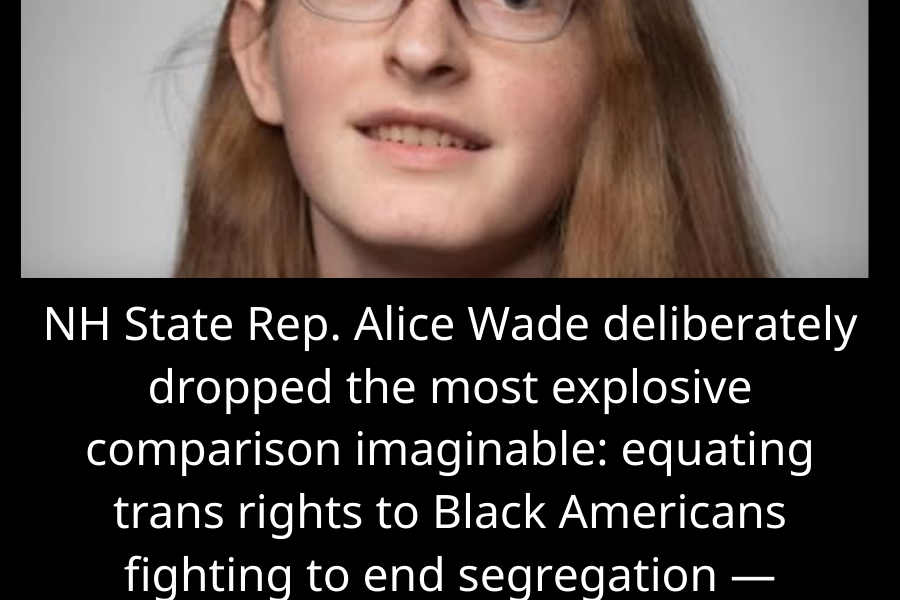
Then State Rep. Wade, a transgender lawmaker, rises to speak. And instead of the usual talking points, instead of the predictable back-and-forth, he drops something unexpected: a direct comparison between the trans rights movement and the struggle for Black civil rights.
“Giving rights to trans people does not take them away from others, just as giving rights to Black Americans did not take them away from White Americans.”
The room shifts. The debate is no longer just about bathrooms and pronouns. It’s about history, about oppression, about the very meaning of civil rights in America.
The Analogy: What It Claims
Wade’s argument is clear and structured:
1. The False Dichotomy: The core of opposition to trans rights, he argues, is a belief that rights are a zero-sum game—that if trans people gain something, others must lose something. He calls this a “false dichotomy.”
2. The Historical Parallel: Just as giving rights to Black Americans did not diminish the rights of White Americans, giving rights to trans people does not diminish the rights of cisgender people. Rights are not a finite resource. They expand to include more people without excluding anyone.
3. The Personal Stake: When opponents say “with all due respect, we need to take away your rights because trans people are inherently a threat,” the “with all due respect” becomes meaningless. It’s a polite preface to a fundamentally disrespectful position.
The Reaction: Libs of TikTok and the Viral Firestorm
The clip was posted by Libs of TikTok, the account dedicated to highlighting what it sees as progressive excess. The context is crucial: this is not a neutral platform. It’s a account that built its following by exposing and ridiculing trans activism, among other targets.
The comments, predictably, exploded.
Some saw the analogy as profound and necessary—a way to connect the trans struggle to a broader history of American civil rights. Others saw it as offensive and reductive—a trivialization of the unique horrors of Jim Crow, segregation, and centuries of anti-Black violence.
The debate over the debate was instantly more viral than the debate itself.
The Case for the Analogy: Why It Resonates
For many trans people and their allies, the comparison to the civil rights movement feels not just apt but obvious. The parallels, as they see them:
-
State-sanctioned discrimination: Laws that explicitly exclude trans people from facilities, from healthcare, from participation in public life.
-
The “threat” narrative: Just as Black men were portrayed as inherent threats to White women to justify segregation and Jim Crow, trans women are portrayed as inherent threats to cis women to justify exclusion from bathrooms and sports.
-
The “separate but equal” fallacy: The argument that trans people can just use separate facilities, just stay in their own spaces, echoes the segregationist logic of “separate but equal” that was rejected by Brown v. Board.
-
The fight for recognition: At its core, both movements are about being seen as fully human, fully American, fully deserving of the rights that others take for granted.
In this framing, Wade’s analogy is not just rhetorical; it’s theological. It places the trans rights movement within the grand narrative of American civil rights, claiming the moral authority of those who came before.
The Case Against the Analogy: Why It Offends
For critics, the comparison is not just wrong but deeply offensive. Their arguments:
-
Scale of suffering: Black Americans endured centuries of chattel slavery, followed by a century of Jim Crow, lynching, and systematic terror. The trans experience, however real its challenges, does not compare.
-
Legal reality: The Civil Rights Act of 1964 was necessary because Black Americans were systematically excluded from public life by law. Trans people, by contrast, are seeking to expand existing rights, not establish fundamental ones.
-
The “threat” equivalence: Comparing the stereotype of the predatory Black man to concerns about trans women in women’s spaces is, for many, a bridge too far. It ignores the legitimate privacy and safety concerns that some women raise.
-
Historical appropriation: Using the language and imagery of the civil rights movement can feel like a form of cultural appropriation—borrowing the moral capital of Black suffering without having earned it.
In this framing, Wade’s analogy is not just inaccurate; it’s insulting to those who actually lived through Jim Crow, who actually fought for the right to vote, who actually bled on the Edmund Pettus Bridge.
The Deeper Question: Who Gets to Claim Civil Rights?
Beneath the debate over the analogy lies a deeper question: What counts as a civil rights movement?
Traditionally, civil rights were understood as the rights of racial and ethnic minorities to equal treatment under law. But in recent decades, the concept has expanded to include women, LGBTQ people, people with disabilities, and others who face discrimination.
Is this expansion legitimate? Or does it dilute the term, making it harder to address the specific harms faced by specific groups?
The answer depends on where you stand. For trans activists, discrimination is discrimination. Exclusion is exclusion. The mechanism may differ, but the harm is real. For critics, there is a hierarchy of oppression, and trans people do not occupy the same position as Black Americans.
The Political Context: A Fight Over Language and Law
This debate is not happening in a vacuum. The bill Wade was opposing would:
-
Limit facility use based on biological sex, not gender identity.
-
Redefine “gender identity” in state law, likely narrowing its application.
-
Codify a binary understanding of sex that excludes trans people from certain protections.
For supporters of the bill, this is about privacy, safety, and common sense. They argue that women and girls should not have to share intimate spaces with biological males, regardless of identity. They see the bill as protecting vulnerable populations, not attacking trans people.
For opponents, this is about exclusion, discrimination, and stigma. They argue that trans people have existed throughout history, that denying them access to facilities aligned with their identity is a form of erasure, and that the “safety” argument is a pretext for prejudice.
The Verdict: An Analogy That Will Never Be Settled
Rep. Wade’s comparison of the trans rights movement to the civil rights struggle is not the kind of argument that can be won or lost. It’s the kind of argument that reveals fundamental disagreements about the nature of rights, the meaning of oppression, and the shape of American history.
For those who see trans rights as a natural extension of the civil rights project, the analogy is powerful and persuasive. It connects the present struggle to a noble past, claiming the mantle of those who fought and won.
For those who see trans rights as something different—a cultural shift, a medical issue, a threat to women’s hard-won protections—the analogy is offensive and illegitimate. It cheapens the memory of those who suffered under Jim Crow and inflates the stakes of the current debate.
The hearing in New Hampshire will continue. The bill will likely pass or fail based on the usual political calculations. But the debate over the analogy will outlast it, because the question it raises is fundamental: Who gets to be a civil rights movement?
The answer, like everything else in this divided country, depends entirely on who you ask.