The $17 Million Wall of Silence: How 357 Members Voted to Protect Predators
The Vote That Told America Everything
Let’s sit with the number for a moment. 357.
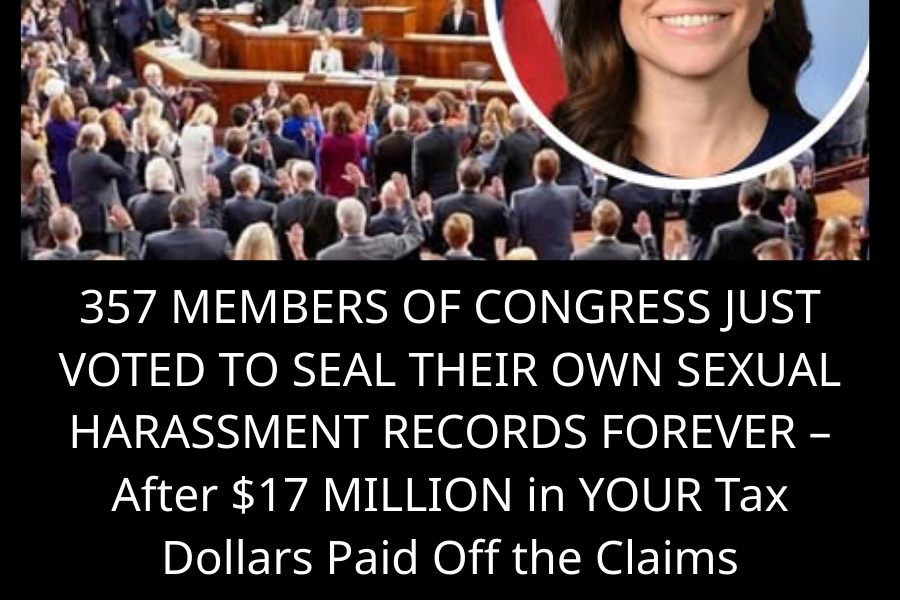
Not a handful. Not a faction. Not the usual suspects. Three hundred and fifty-seven members of the United States Congress—175 Republicans and 182 Democrats—voted together to keep something from you.
The something is $17 million of your money. Money paid to settle sexual harassment claims against the people you elected. Money used to make problems disappear. Money that came out of your paycheck to buy silence from people who were abused by the powerful.
And when Rep. Nancy Mace tried to force the release of those records—to let the public see which members had been accused, which had paid to bury their misconduct, which were still serving while hiding their past—357 members said no.
Only 65 sided with transparency. Only 38 Republicans and 27 Democrats stood with Mace. The rest built a wall across the aisle, bipartisan in their determination to keep the secrets safe.
The Gonzales Case: A Tragedy That Demanded Answers
This wasn’t abstract. It had a name, a story, and a victim.
Rep. Tony Gonzales (R-Texas) was accused of sending sexual texts to a staffer, Regina Santos-Aviles. The details are devastating: a power imbalance, inappropriate communications from a boss to an employee, and ultimately, a young woman who died by suicide.
Gonzales voted to send Mace’s resolution to committee—to kill it. Two days later, he announced he would not seek reelection. The Ethics Committee, suddenly moved to action, opened a formal investigation.
Read that timeline carefully. Gonzales didn’t resign when the allegations surfaced. He didn’t resign when the texts were reported. He waited until the vote to kill transparency succeeded, then announced his exit, knowing the records of his case would remain sealed. He protected himself until the very end.
And 356 other members voted to help him.
The Ethics Committee’s Argument: Compassion or Cover?
The Ethics Committee offered a rationale that sounds almost designed to insult your intelligence: releasing the records could “retraumatize victims.”
Let’s think about what this argument actually means.
The victims in these cases are already traumatized. They’ve already been harassed, already been silenced, already watched their abusers continue to serve while they themselves had to leave or stay silent. The settlements that cost you $17 million were paid precisely to make them go away, to buy their silence, to ensure that no one would ever know what happened.
Now the committee that enabled that system tells you that revealing the truth would hurt them more? That the only way to protect victims is to keep their abusers’ names secret?
The commenter Miki Rayne saw through it instantly: “Protect the victims and they too can be released. Start with talking to the victims for agreement and being sure identifiable information isn’t in them.”
This is not complicated. Release the records with victims’ names redacted. Protect the innocent. Expose the guilty. It’s what any honest institution would do.
But this institution isn’t honest. It’s protecting itself.
The Epstein Irony: Demanding Transparency While Hiding in Darkness
The commenters are united in their contempt:
“Everyone demanded the Epstein files. When it came to releasing Congress’s own sexual harassment records, 357 members said no.” (Brian Potter)
“Forget Epstein, open this file!” (Ashley Anello)
The hypocrisy is staggering. For years, members of Congress have held hearings, issued statements, and demanded the release of documents related to Jeffrey Epstein—the convicted sex offender whose network of powerful enablers has never been fully exposed. They’ve positioned themselves as crusaders for transparency, warriors for the victims, defenders of the truth.
And yet, when asked to open their own files—to let the public see which of them have been accused, which have paid settlements, which are still serving—they voted 357-65 to keep the lid on.
The message is unmistakable: We will investigate everyone except ourselves. We will demand transparency everywhere except here. We will protect victims everywhere except when it means exposing our own.
The Bipartisan Swamp: Why This Vote Matters
Nancy Mace called it exactly what it was: a bipartisan effort to “protect predators.”
This wasn’t a partisan vote. It wasn’t Republicans versus Democrats. It was incumbents versus transparency. It was the institution protecting itself against the people who fund it. It was the swamp, in its purest form, refusing to be drained.
The 357 members who voted to kill this resolution include:
-
Freshmen who haven’t been accused of anything but voted with leadership to maintain the system.
-
Veterans who may have settlements in their past and voted to keep them buried.
-
Committee chairs who control the process and used their power to shut down oversight.
-
Members of the Ethics Committee itself, the very body now tasked with investigating complaints in secret.
They all voted together. They all protected each other. They all expect you to forget.
The $17 Million Question: What Are They Hiding?
The commenters are asking what every American should be asking:
“That’s because 357 of them are on the list.” (Mary Barr)
“If public money is paying for settlement, then public has a right to know.” (Deborah Gordon Knight)
“Swamp protecting the swamp.” (Belinda Townsend)
“Because they are all in them.” (Ginnie Sobczynski)
“Didn’t they say no one is above the law?” (Ricky Kendrick)
We don’t know who is on the list. That’s the point. The 357 members who voted to keep it secret are counting on your cynicism, your distraction, your belief that nothing will change. They’re betting that by the next election cycle, this will be forgotten.
But $17 million is a lot of money. And 357 votes is a lot of members. And one dead staffer is a tragedy that demands more than a quiet resignation two days after the vote.
The Path Forward: What Transparency Would Actually Look Like
The solution isn’t complicated. It doesn’t require new laws or constitutional amendments. It requires political courage—the kind that 357 members just proved they don’t have.
A truly transparent system would:
-
Release all settlement records with victims’ names and personally identifiable information redacted.
-
Identify the members whose conduct necessitated the payments, so voters can decide whether to reelect them.
-
Ban the use of taxpayer funds for future settlements, forcing members to pay out of their own pockets if they want to make problems disappear.
-
Create an independent investigative body not controlled by members of Congress, so allegations are investigated by professionals, not colleagues.
None of this will happen as long as the 357 members who just voted to protect themselves remain in power. They’ve shown you who they are. The question is whether you’ll remember in November.
The Verdict: The Swamp Won. For Now.
The vote was 357-65. That’s not a close call. That’s a rout. That’s the institution saying, with one voice, We don’t answer to you.
Nancy Mace, whatever her political motivations, did something rare: she forced a vote that exposed the true nature of the institution she serves. She made them go on the record. And 357 of them went on the record in favor of secrecy, in favor of protecting their own, in favor of keeping the $17 million secret buried forever.
The Epstein files remain sealed. The congressional harassment records remain sealed. The powerful remain protected. And the rest of us are left to wonder: What else are they hiding?
The commenters have it right. Forget Epstein. Open this file. Let us see the names. Let us decide who deserves to stay.
Because if 357 members of Congress can vote to hide $17 million in secret settlements, they can vote to hide anything. And they just proved they will.