Pride Out, Veterans In: The Battle Over America’s Official Calendar
The Announcement That Lit the Fuse
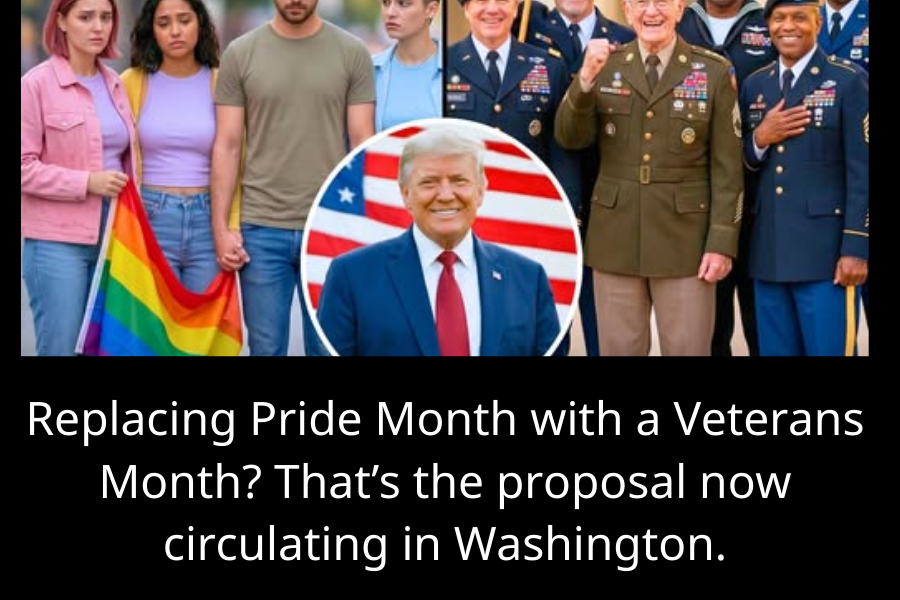
Let’s state it plainly: The Trump administration is moving to replace LGBTQ Pride Month with Veterans Month on the official federal calendar.
June, which has been recognized as Pride Month since 1999 (by presidential proclamation under Bill Clinton) and officially designated by Congress in 2021, would no longer carry that designation. Instead, a month—likely November, which already contains Veterans Day—would be expanded or a new month would be designated to honor American military veterans.
The administration’s framing is strategic: this is about “reordering national priorities” to reflect “the values of the country Trump believes he was elected to represent.” In other words, this is not just a calendar change. It is a statement about whose America this is.
The Administration’s Case: Veterans Deserve Their Month
Supporters of the move make arguments that resonate with a significant portion of the American electorate:
1. Veterans are uniquely deserving. Men and women who put their lives on the line, who suffered physical and psychological wounds, who watched friends die—these are the people who should be honored with a dedicated month of national recognition. They already have Veterans Day, yes, but one day is insufficient for the scale of their sacrifice.
2. Pride Month was always contested. The federal recognition of LGBTQ pride is relatively recent and, for many Americans, represents a cultural shift they never voted for and do not support. The administration is simply rolling back a designation that lacks broad consensus.
3. The calendar should reflect national unity. Pride Month, by its nature, celebrates a specific identity group. A month for veterans celebrates a group defined by service to the nation—something that theoretically unites rather than divides.
4. This is what Trump was elected to do. His voters sent him to Washington to push back against what they see as progressive overreach. Replacing Pride Month with Veterans Month is precisely the kind of cultural reset they expected.
The Critics’ Case: This Isn’t About Veterans
Opponents of the move see it very differently:
1. Veterans already have recognition. November 11 is Veterans Day. May is Military Appreciation Month. There are dozens of programs, benefits, and observances dedicated to veterans. Adding a full month is redundant—unless the goal is not actually to honor veterans but to displace something else.
2. This is about erasure. The message sent by removing Pride Month from the official calendar is clear: LGBTQ Americans are not worthy of national recognition. Their history, their struggles, their contributions—none of it merits a place on the federal calendar. This is not about priorities; it’s about visibility. And visibility matters.
3. It’s a cultural wedge. The administration knows this will divide the country. That’s the point. In a polarized era, forcing a choice between veterans and LGBTQ Americans—as if the two groups are mutually exclusive—is a deliberate strategy to mobilize the base and demoralize the opposition.
4. It’s performative, not substantive. Changing the calendar costs nothing. It doesn’t improve veterans’ healthcare, reduce homelessness among vets, or address suicide rates. It’s a symbolic gesture designed to generate exactly the kind of controversy it’s generating.
The Numbers: Who Supports What?
The polling on this issue is predictably divided along demographic and partisan lines:
-
Among Republicans: Strong support for the change. Veterans are viewed as universally deserving; Pride Month is seen as a progressive imposition.
-
Among Democrats: Strong opposition. The change is viewed as a transparent attack on LGBTQ visibility wrapped in faux patriotism.
-
Among Independents: Mixed, with a slight lean toward opposition among younger independents and support among older ones.
-
Among veterans themselves: Complicated. Many veterans are proud of their service and would welcome more recognition. But many veterans are also LGBTQ, and they experience the choice as a painful forced prioritization of one part of their identity over another.
The Larger Context: The War Over Who Gets Celebrated
This fight is not happening in a vacuum. It is the latest battle in a broader war over whose stories get told, whose history gets taught, whose identity gets celebrated.
-
The battle over Critical Race Theory in schools.
-
The fight over LGBTQ books in libraries.
-
The debate over monuments to Confederate generals.
-
The controversy over teaching the history of racism and sexism.
All of these are arguments about visibility—about which groups are centered in the national narrative and which are marginalized. The calendar is just another front in that war.
For the left, visibility is essential. Being seen, being recognized, being celebrated by the state is a mark of full citizenship. Removing that recognition is a form of erasure, a signal that LGBTQ Americans are not truly part of the national family.
For the right, visibility is precisely the problem. They believe the left has used state power to elevate groups and ideologies that do not represent most Americans. Rolling back that visibility is a form of restoration—returning the national culture to something they recognize.
The Uncomfortable Question: Why Choose?
The most obvious question—and the one neither side wants to answer—is why we have to choose at all.
Why can’t the federal calendar include both Pride Month and Veterans Month? Why is this presented as a zero-sum choice?
The answer is that the administration doesn’t want both. The goal is not to add veterans; it’s to remove Pride. The framing of “reordering priorities” is a rhetorical device to make the removal seem reasonable. But the underlying motive is cultural warfare, not calendar management.
And the left, by accepting the framing of “veterans vs. Pride,” falls into the trap. The correct response is not to argue that veterans don’t deserve a month. It’s to argue that we can honor veterans without erasing LGBTQ Americans. The two are not mutually exclusive. Pretending they are is the real deception.
The Verdict: A Symbolic Battle With Real Consequences
In the end, this fight is about symbols. Changing the federal calendar doesn’t put food on anyone’s table or improve anyone’s healthcare. But symbols matter because they shape how Americans see themselves and each other.
When the federal government officially recognizes Pride Month, it sends a message: LGBTQ Americans are part of this country, their struggles are part of our history, their contributions are worthy of celebration. When it removes that recognition, it sends the opposite message: you are not part of the official story.
For veterans, the message is more complicated. They will gain a month of recognition, but at the cost of being used as a weapon in a cultural war many of them never signed up for. The veterans who are also LGBTQ will experience the change as a painful rejection of part of who they are.
The administration will call this a victory for traditional values. Critics will call it an attack on marginalized Americans. Both are right, in their own way. And the country will remain divided, not just over what the calendar says, but over what it means to be American in the first place.
The only certainty is that this fight will not end with the calendar. It will continue in schools, in courts, in legislatures, and at ballot boxes. Because the question at its heart—whose America is this?—is the question that never goes away.