The Cancer Speech: What Hakeem Jeffries Didn’t Say
Let’s start with the word. Cancer. A word chosen deliberately, carefully, with the full weight of its meaning behind it. Cancer is not a disagreement. Cancer is not a difference of opinion. Cancer is not something you debate or negotiate with. Cancer is something you eradicate. You cut it out. You burn it out. You kill it. There is no compromise with cancer.
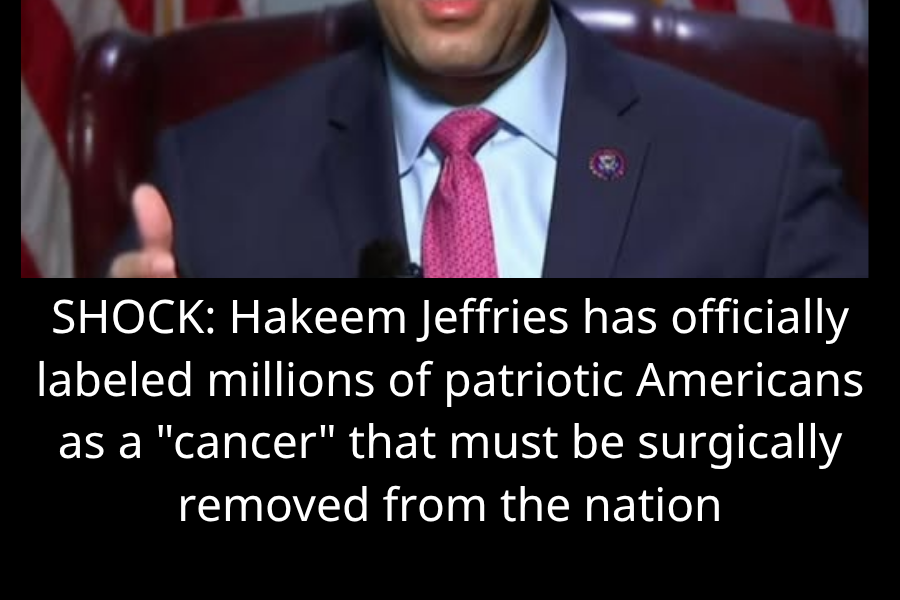
Hakeem Jeffries, the Democratic leader in the House, stood up and said that Islamophobia is a cancer. He said it must be eradicated from both Congress and the country. He said he will keep reminding people it’s a cancer until it’s cured.
It was a powerful speech. It was a necessary speech. It was the kind of speech that leaders give when they want to signal that they take a problem seriously, that they will not rest until the problem is solved, that they are committed to a cause.
But here’s the question that no one asked. Here’s the question that Jeffries did not answer. Here’s the question that hangs over every word of that speech, unanswered and unacknowledged:
What about antisemitism?
Not instead of Islamophobia. Not in competition with Islamophobia. In addition to it. Alongside it. As part of the same category of hatred that Jeffries claims to want to eradicate from Congress and the country.
Because if Islamophobia is a cancer, then so is antisemitism. If Islamophobia must be eradicated, then so must antisemitism. If Jeffries will keep reminding people about one until it is cured, why will he not say the same about the other?
The silence is deafening. The omission is glaring. And it tells you everything you need to know about the Democratic Party’s priorities, its base, and its willingness to call out hatred only when it comes from certain directions.
The Speech That Wasn’t
Jeffries gave a speech about Islamophobia. He did not give a speech about antisemitism. He did not give a speech about the wave of antisemitic incidents that have swept across college campuses, that have targeted Jewish students, that have made Jewish life on campus almost unbearable in some places. He did not give a speech about the synagogues that have been vandalized, the Jewish businesses that have been boycotted, the Jewish community centers that have been threatened.
He gave a speech about Islamophobia. That is good. That is important. Islamophobia is real. It is a problem. It deserves attention. It deserves to be called out.
But why only Islamophobia? Why not both? Why not a speech about religious hatred in all its forms? Why not a speech that says we will not tolerate bigotry against Muslims or Jews or Christians or Hindus or anyone else?
The answer is politics. The answer is the Democratic Party’s coalition. The answer is that the party has decided that some forms of hatred are acceptable to acknowledge and others are not. That some victims are worth defending and others are not. That some cancers are worth curing and others can be left to fester.
Jeffries knows this. He knows that his party has a problem with antisemitism. He knows that the progressive left has become a comfortable home for anti-Israel activists who cross the line into anti-Jewish rhetoric. He knows that Jewish students at elite universities are being harassed, intimidated, and physically threatened while administrators look the other way. He knows that the phrase “from the river to the sea” is not a call for Palestinian liberation but a call for the destruction of the only Jewish state in the world.
He knows all of this. And he said nothing. He gave a speech about Islamophobia. He called it a cancer. He promised to eradicate it. And he said nothing about the other cancer that is eating away at the Democratic Party and the country.
The Silence on Antisemitism
The silence is not accidental. It is strategic. It is the result of a calculation that the Democratic Party has made about its base, its future, and its political survival.
The party’s base includes a growing number of voters who are hostile to Israel and, increasingly, to Jews. These voters are young. They are energized. They are organized. They are a key part of the coalition that Democrats need to win elections. And they are, in many cases, antisemitic. Not all of them. Not most of them. But enough of them. Enough that the party leadership is afraid to call them out.
So they don’t. They give speeches about Islamophobia. They condemn hatred against Muslims. They promise to protect one religious minority from bigotry. And they say nothing about the hatred that is directed at another religious minority. They say nothing about the Jewish students who are afraid to walk across campus. They say nothing about the synagogues that need armed guards to protect their congregations. They say nothing about the oldest hatred, the one that has been with us for millennia, the one that is resurgent in our time.
Jeffries could have said something. He could have given a speech about all forms of religious hatred. He could have said that Islamophobia and antisemitism are both cancers. He could have promised to eradicate both. He did not. He chose not to. And that choice tells you everything you need to know about where the Democratic Party stands.
The Campus Crisis
The campus crisis is the backdrop that makes Jeffries’s silence so damning. For months, Jewish students at elite universities have been living through a nightmare. They have been harassed in their dorms. They have been intimidated in their classrooms. They have been physically threatened at protests. They have been told that Zionism is racism, that Israel is an apartheid state, that Jews have no right to self-determination.
The universities have done nothing. The faculty have participated in the harassment. The administrations have looked the other away. The police have been called in to protect Jewish students from their own classmates. And the Democratic Party, which claims to be the party of tolerance and inclusion, has said nothing.
Jeffries could have said something. He could have used his platform to condemn the antisemitism that is sweeping college campuses. He could have called on university administrators to protect Jewish students. He could have demanded that faculty who harass Jewish students be held accountable. He did not. He gave a speech about Islamophobia. And he said nothing about the Jewish students who are afraid to go to class.
The Double Standard
The double standard is impossible to ignore. When a Muslim is targeted, the Democratic Party speaks out. When a mosque is vandalized, the Democratic Party condemns it. When Islamophobia rears its head, the Democratic Party calls it a cancer and promises to eradicate it.
When a Jew is targeted, the Democratic Party is silent. When a synagogue is vandalized, the Democratic Party says nothing. When antisemitism rears its head, the Democratic Party looks the other way.
Why? Because the party’s base does not care about antisemitism. Because the party’s base is, in some cases, antisemitic. Because the party’s base has decided that Israel is the enemy and that Jews are Israel and that therefore Jews are the enemy. Because the party’s base has adopted the rhetoric of the far right and turned it against the Jewish people.
Jeffries knows this. He knows that his party has a problem. He knows that the problem is getting worse. He knows that the silence is becoming a scandal. And he knows that he could break the silence. He could stand up and say that antisemitism is also a cancer. He could stand up and say that Jewish students deserve protection. He could stand up and say that the oldest hatred has no place in the Democratic Party.
He did not. He gave a speech about Islamophobia. And he said nothing about the Jews.
The Politics of Hate
There is a politics to hate. There is a calculation that politicians make about which forms of hatred are safe to condemn and which are not. Condemning Islamophobia is safe. The Democratic Party’s base supports it. The Republican Party’s base does not object to it. The media applauds it. It costs nothing and gains everything.
Condemning antisemitism is not safe. The Democratic Party’s base does not support it. The progressive left actively opposes it. The media is complicit in it. It costs something. It gains nothing. So the politicians stay silent. They give speeches about Islamophobia. They call it a cancer. They promise to eradicate it. And they say nothing about the other cancer that is killing the Jewish community.
Jeffries made a calculation. He calculated that he could speak out against Islamophobia without losing anything. He calculated that he could not speak out against antisemitism without losing something. He calculated that the political cost of defending Jews was too high. So he said nothing. He gave his speech. He made his promises. And he left the Jews to fend for themselves.
That is the politics of hate. That is what happens when politicians choose their base over their principles. That is what happens when the Democratic Party decides that some victims are worth defending and others are not.
The Cancer That Is Not Being Cured
Jeffries said he would keep reminding people that Islamophobia is a cancer until it is cured. He did not say anything about antisemitism. He did not say he would keep reminding people about the oldest hatred. He did not say he would work to cure that cancer.
So the cancer of antisemitism will continue to spread. It will continue to infect college campuses. It will continue to poison the Democratic Party. It will continue to make Jewish students afraid to walk across campus. It will continue to make synagogues install armed guards. It will continue to make Jewish families wonder if they are safe in America.
And Jeffries will say nothing. He will give speeches about Islamophobia. He will call it a cancer. He will promise to eradicate it. And he will say nothing about the Jews. Because the politics of hate demand it. Because the Democratic Party’s base demands it. Because the calculation says that defending Jews is not worth the cost.
That is the tragedy. Not that Jeffries spoke out against Islamophobia. That is good. That is necessary. That is what leaders should do. The tragedy is that he could not speak out against both. The tragedy is that he chose one cancer to fight and left the other to fester. The tragedy is that the Democratic Party has become a place where some forms of hatred are acceptable and others are not.
The Last Word
Hakeem Jeffries gave a speech. He said Islamophobia is a cancer. He said it must be eradicated. He said he will keep reminding people until it is cured.
It was a good speech. It was a necessary speech. It was the kind of speech that leaders give when they want to show that they care about a problem.
But the silence was louder than the speech. The silence about antisemitism. The silence about the Jewish students who are afraid to walk across campus. The silence about the synagogues that need armed guards. The silence about the oldest hatred, the one that has been with us for millennia, the one that is resurgent in our time.
Jeffries chose to be silent. He chose not to mention the other cancer. He chose not to say that antisemitism is also a cancer. He chose not to promise to eradicate it. He chose not to remind people that it exists. He chose politics over principle. He chose his base over his conscience. He chose silence over courage.
And the Jewish community noticed. The Jewish community is always watching. The Jewish community has learned, over thousands of years, to watch for the signs. To notice who speaks up and who stays silent. To remember who defended them and who left them to fend for themselves.
Jeffries gave a speech. He called Islamophobia a cancer. He promised to cure it. The Jewish community is still waiting for him to say the same about antisemitism. They will keep waiting. And they will remember that he was silent when they needed him to speak.