The Burial Question: When Tradition Meets a Changing Japan
Let’s start with the statement. It is blunt. It is direct. It is the kind of thing that politicians say when they are speaking to a base that shares their views, when they are not worried about being called out by the international community, when they are willing to say what they believe without the filter of diplomatic niceties.
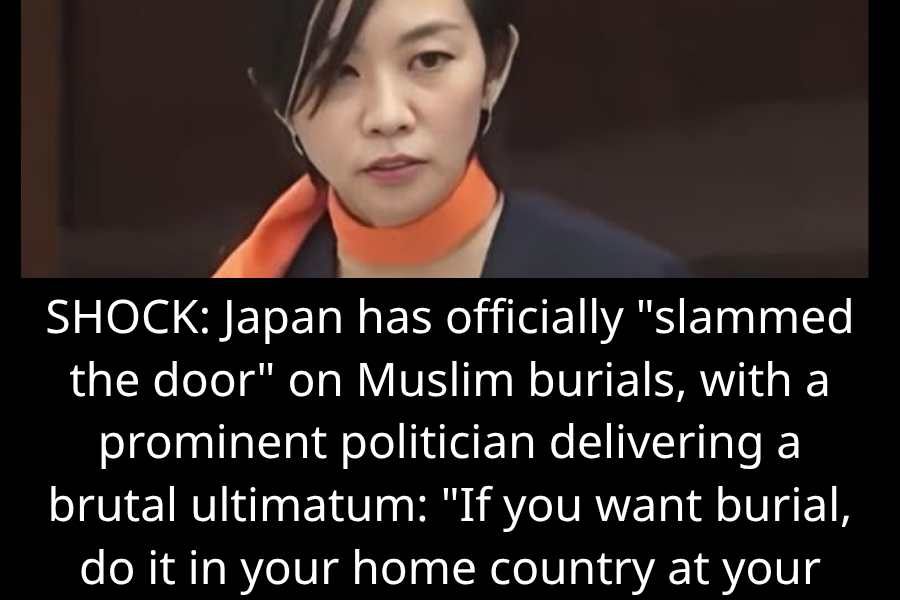
“Japan is a cremation country. Allocating land for Muslim burials is not appropriate. If they want burial, it should be done in their home countries at their own expense.”
The politician who said this is not an outlier. He is expressing a view that is widely held in Japan. A view that says Japan is for the Japanese. That says the traditions of the country should not be changed to accommodate the needs of outsiders. That says if you come to Japan, you should live by Japanese rules, die by Japanese customs, and if you do not like it, you should go home.
The Muslim community in Japan is small. A few hundred thousand people in a country of 125 million. They are immigrants, students, workers, families who have come to Japan for the same reasons people have always come to Japan: opportunity, safety, a chance to build a life. They have learned the language. They have adapted to the culture. They have become part of the fabric of Japanese society. They have also maintained their faith. And their faith requires burial.
Islam requires burial. Cremation is forbidden. When a Muslim dies, the body must be washed, wrapped in a shroud, and placed in the ground facing Mecca. There is no exception. There is no alternative. There is no compromise. For a Muslim, being cremated is not a matter of preference. It is a violation of the most fundamental teachings of the faith.
Japan cremates its dead. Nearly 100 percent of Japanese funerals involve cremation. It is the tradition. It is the law. It is the way things have been done for generations. The country is small. Land is scarce. Burial plots take up space that Japan does not have. Cremation is practical. Cremation is efficient. Cremation is Japanese.
The two traditions are in conflict. And the politician’s statement is the sound of that conflict being expressed in the bluntest possible terms.
The Practical Problem
There is a practical problem here that cannot be ignored. Japan does not have land for burials. Not for Muslims. Not for anyone. The country is mountainous, crowded, and running out of space. Cemeteries are expensive. Burial plots are rare. The cost of a grave in Tokyo can run into the tens of thousands of dollars. The waiting lists are years long.
Cremation solves this problem. It reduces the body to ashes. It takes up almost no space. It allows families to keep their loved ones close without taking land that the country cannot spare. It is the solution that Japan has chosen, and it works.
The Muslim community is asking for something that Japan does not have. They are asking for land that Japan cannot spare. They are asking for a change to a system that has been working for generations. They are asking for an exception to be made for their faith. And the politician is saying no.
He is not saying no because he hates Muslims. He is saying no because Japan does not have the land. He is saying no because the system is not designed for burial. He is saying no because the practical constraints of living on a crowded archipelago cannot be ignored. He is saying no because Japan is Japan, and Japan cremates its dead.
That is the argument. It is a practical argument. It is a logistical argument. It is not an argument about religion. It is an argument about space.
The Cultural Argument
But the politician is not making only a practical argument. He is making a cultural argument. He is saying that Japan is a cremation country. He is saying that the tradition of cremation is part of what makes Japan what it is. He is saying that changing that tradition to accommodate the needs of a small minority is not appropriate. He is saying that if Muslims want to be buried, they should go home.
This is where the argument becomes uncomfortable. Because the cultural argument is not about space. It is about identity. It is about who belongs in Japan and who does not. It is about whether Japan is willing to change to accommodate the people who have come to live there, or whether the people who come to Japan are expected to change to accommodate Japan.
The Muslim community in Japan is not going home. They are there. They are building lives. They are raising families. They are contributing to the economy. They are becoming Japanese in every way except one: they want to be buried according to the traditions of their faith.
The question for Japan is whether it is willing to make space for them. Not just space in the ground. Space in the culture. Space in the identity of the country. Space in the definition of what it means to be Japanese.
The politician is saying no. He is saying that Japan should not change. He is saying that the people who come to Japan should adapt to Japan, not the other way around. He is saying that if they cannot adapt, they should leave.
That is a position. It is a position that many Japanese people share. It is a position that is rooted in a deep sense of cultural identity, in a pride in the traditions that have made Japan what it is, in a fear that those traditions are being eroded by the forces of globalization and immigration.
It is also a position that makes it very difficult for Muslims to feel welcome in Japan.
The Muslim Experience
Imagine being a Muslim in Japan. You have come to a country that is not your own. You have learned a language that is completely different from your own. You have adapted to customs that are completely different from your own. You have worked hard. You have paid your taxes. You have raised your children to be Japanese. You have done everything that was asked of you.
And then you die. And the country where you have built your life tells you that you cannot be buried there. That there is no space for you. That your faith does not matter. That you should have stayed home.
This is not hypothetical. It is happening. Muslim communities across Japan have been struggling for years to find land for burials. They have been denied permits. They have been rejected by local governments. They have been told that their requests are not appropriate. They have been told that Japan is a cremation country.
Some have found solutions. A few cemeteries have opened sections for Muslim burials. A few local governments have made exceptions. But the process is difficult. The waiting lists are long. The costs are high. And the message from politicians like the one who made this statement is clear: you are not welcome.
The Muslim community in Japan is small. They do not have political power. They do not have a voice in the national conversation. They are dependent on the goodwill of the people who are in power. And the people who are in power are telling them, in the bluntest possible terms, that their needs do not matter.
The Global Context
This is not just a Japanese issue. It is a global issue. Countries across the world are struggling with the same questions. What does it mean to be a multicultural society? How much should the host culture change to accommodate immigrants? How much should immigrants change to accommodate the host culture? Where is the line between tolerance and assimilation?
Europe has been struggling with these questions for decades. The United States has been struggling with them since its founding. Japan is new to the conversation. For most of its history, Japan was homogenous. Immigration was minimal. The question of how to accommodate people from different cultures did not arise.
Now it is arising. Japan is getting older. Its population is shrinking. It needs workers. It needs young people. It needs immigrants. And the immigrants who are coming are not all from China and Korea. They are from Southeast Asia. They are from South Asia. They are from the Middle East. They are Muslim.
The politician’s statement is a reflection of the anxiety that this change is creating. It is the sound of a country that is not sure it wants to change. It is the sound of a country that is not sure it wants to become something it has never been before. It is the sound of a country that is trying to hold onto its identity in a world that is demanding that it let go.
The Way Forward
There is a way forward. It is not easy. It requires compromise on both sides. The Muslim community needs to understand that Japan has practical constraints. Land is scarce. Burial is expensive. The tradition of cremation is deeply embedded in Japanese culture. There will be no mass conversion to burial. There will be no sudden availability of land.
The Japanese government needs to understand that the Muslim community is not going away. They are part of Japan now. They have rights. They have needs. They have the same claim to dignity and respect as any other Japanese citizen. If Japan wants to be a country that welcomes immigrants, it has to be a country that makes space for them. Not just space in the economy. Space in the culture. Space in the ground.
There are models to follow. Other countries with limited land have found ways to accommodate Muslim burials. France. Germany. The United Kingdom. They have set aside land. They have created cemeteries. They have made exceptions. It is possible. It has been done.
The question is whether Japan is willing to do it. Whether Japan is willing to make the changes that are necessary to become a multicultural society. Whether Japan is willing to accept that its identity is not fixed, that it can change, that it can become something new without losing what it is.
The politician who made this statement is betting that Japan is not willing. He is betting that the desire to preserve tradition is stronger than the desire to accommodate change. He is betting that the Muslim community will eventually give up, go home, and leave Japan to the Japanese.
He may be right. He may be wrong. But the bet is being made. And the outcome will determine what kind of country Japan becomes.
The Last Word
The politician said what he said. He said that Japan is a cremation country. He said that allocating land for Muslim burials is not appropriate. He said that if Muslims want burial, it should be done in their home countries at their own expense.
He was speaking to a base that agrees with him. He was expressing a view that is widely held. He was giving voice to the anxiety that many Japanese feel about the changes that are happening to their country.
But he was also speaking to the Muslim community. He was telling them that they do not belong. He was telling them that their faith does not matter. He was telling them that they should go home.
The Muslim community in Japan is small. They do not have political power. They do not have a voice in the national conversation. They are dependent on the goodwill of the people who are in power.
The politician’s statement is a reminder that goodwill is in short supply. That the path to acceptance is long. That the fight for dignity is not over.
The Muslim community will keep fighting. They will keep asking for land. They will keep demanding that their needs be recognized. They will keep insisting that they belong in Japan, that they have a right to be there, that they have a right to be buried there.
And Japan will have to decide. Will it be a country that makes space for the people who have come to live there? Or will it be a country that tells them to go home?
The politician has made his choice. The rest of Japan has not. The debate is just beginning. And the outcome will shape the country for generations to come.