# The Poster That Would Change Everything
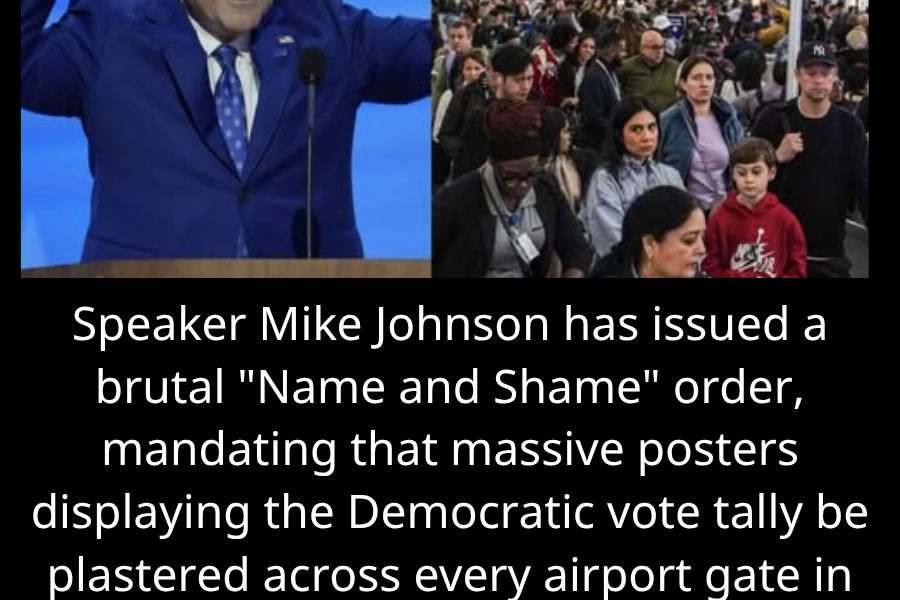
Imagine you’re standing in the line.
Not a short line. Not a “I’ll be through in twenty minutes” line. The kind of line that wraps around the terminal. The kind of line where you’ve already taken your shoes off twice because you thought you were close, and then you rounded a corner and saw another hundred people. The kind of line where the family behind you has been entertaining a toddler for an hour and the toddler has run out of patience and the parents have run out of tricks and everyone is one wrong word away from a complete meltdown.
You’re standing there. You’ve been standing there for ninety minutes. Your flight boards in twenty. You know you’re not going to make it. You’re already calculating how long you’ll have to wait for the next flight, whether there even is a next flight, what you’re going to tell the people waiting for you on the other end.
And on the wall in front of you, in letters big enough to read from the back of the line, is a poster. It doesn’t have a vacation ad. It doesn’t have a credit card offer. It doesn’t have the smiling face of some celebrity telling you to buy something you don’t need. It has a vote tally. A simple, clear, undeniable record of who voted to fund the TSA and who didn’t. Who voted to keep the lines moving and who voted to let them stretch to the breaking point. Who voted to treat the people in this line like citizens who deserve a functioning government, and who voted to treat them like chips in a political game.
Speaker Mike Johnson wants to put that poster in every airport in America. He wants the people standing in the lines to know, without spin, without cable news interpretation, without press releases, exactly who caused the line they’re standing in.
It’s a simple idea. It’s a brutal idea. It’s the kind of idea that terrifies the people who have spent years hiding behind the complexity of government, the fog of Washington, the comfortable assumption that voters will never connect the dots between a vote they cast in a committee room six months ago and the line stretching through Terminal C today.
Johnson wants to connect the dots. He wants to put them on a wall. And he wants to make sure that every traveler who misses a flight, every family whose vacation starts with four hours of frustration, every business traveler who calculates the cost of another delay, looks at that wall and knows exactly who to blame.
—
### The Accountability Machine
Let’s talk about how accountability is supposed to work in a democracy.
You elect people to represent you. They go to Washington. They make decisions. They vote on things. Those votes have consequences. When the consequences are good, you reward them with reelection. When the consequences are bad, you replace them with someone else. That’s the deal. That’s the contract. That’s the thing that makes representative government work.
But somewhere along the way, the contract broke. The consequences became too diffuse. The connection between a vote and an outcome became too complicated. The people making the decisions learned that they could hide behind process, behind procedure, behind the thousand excuses that Washington has perfected for explaining away failure.
A shutdown happens. Lines stretch for hours. TSA agents work without pay. Travelers miss flights. And the people who caused it all give speeches. They go on cable news. They blame the other side. They talk about “funding levels” and “policy disagreements” and “the need for compromise.” They say words. Lots of words. And by the time they’re done talking, the line is still there, the flights are still delayed, and no one can remember who voted for what.
Johnson wants to end that. He wants to take the words away. He wants to replace the speeches with a poster. A poster that doesn’t explain, doesn’t justify, doesn’t spin. A poster that just shows the vote. The names. The yeas. The nays. The people who voted to fund the TSA and the people who didn’t.
No interpretation needed. No talking heads required. Just the record. Just the facts. Just the thing that every traveler standing in that line has the right to know: *Who did this?*
—
### The Line That Tells the Story
The beauty of the poster is that it doesn’t have to say anything except what happened.
It doesn’t have to call anyone a name. It doesn’t have to use loaded language. It doesn’t have to make an argument. It just has to show the vote. And the vote tells the story.
You voted to fund the TSA? Your name goes in one column. You voted to defund it? Your name goes in the other. You voted to keep the lines moving? You’re on the list of people who did their job. You voted to let the shutdown drag on while TSA agents worked for free? You’re on the list of people who caused this.
Travelers standing in the line don’t need a lecture. They don’t need a political ad. They need information. They need to know, when they miss their flight, when their vacation is ruined, when their business deal falls through because they couldn’t get there on time, whose fault it is. The poster gives them that information. It gives them the power to connect the dots. It gives them the tool they need to hold the people who did this accountable.
That’s why the idea is genius. Not because it’s clever. Because it’s simple. Because it’s honest. Because it takes something that Washington has spent decades making complicated—who is responsible for the government working or not working—and makes it simple enough for anyone to understand.
You voted to fund the TSA. You voted to keep the government open. You voted to let people do their jobs. Or you didn’t. And now everyone standing in this line knows which one you chose.
—
### The Refusal to Fund
Let’s be specific about what the vote was.
The Department of Homeland Security. The agency that runs the TSA. The agency that keeps the skies safe, the borders secure, the country protected. The agency that, during a shutdown, tells its employees to keep showing up even though they’re not getting paid, because the alternative is unthinkable.
There was a vote to fund it. To give it the resources it needs. To make sure that the people who scan your bags, who guard the checkpoints, who stand between you and whatever someone might try to bring onto a plane, get paid for the work they do.
Some members of Congress voted yes. Some voted no. The ones who voted no had reasons, presumably. They had arguments. They had positions. They had something they wanted, something they were fighting for, something that was more important to them than making sure the TSA had the funding it needed to do its job.
Those reasons don’t matter in the line. The arguments don’t matter. The positions don’t matter. What matters is that they voted no. What matters is that their no contributed to the shutdown. What matters is that their no is why the TSA agents are working without pay. What matters is that their no is why the line is stretching into its fifth hour.
The poster doesn’t ask why they voted no. The poster doesn’t care why they voted no. The poster just shows that they voted no. And that’s enough. That’s all the traveler standing in the line needs to know.
—
### The Security Question
There’s another layer to this that the poster captures without saying a word.
The TSA is not just about convenience. It’s about security. The people in those uniforms, standing at those checkpoints, scanning those bags—they are the last line of defense. They are the people who stop the things that should never get on a plane. They are the people who make it possible for millions of Americans to fly every day without thinking about what might happen if they weren’t there.
When you underfund the TSA, you don’t just create longer lines. You create security risks. You burn out the people who do the work. You make it harder to recruit the next generation of people who will do the work. You send a message that the work doesn’t matter, that the people doing it don’t matter, that the safety of the flying public is something you’re willing to compromise for political advantage.
The people who voted to defund the TSA voted to compromise that safety. They voted to make the lines longer and the checkpoints weaker. They voted to tell the people who protect our skies that their work is not worth paying for.
That’s the part that should make every traveler in that line angry. Not just the inconvenience. The danger. The risk. The knowledge that the people who were supposed to keep them safe were told, by their own government, that their work doesn’t matter enough to fund.
The poster puts that vote on the wall. It doesn’t have to say “you compromised our safety.” It just has to show the names. And the travelers standing in the line can draw their own conclusions.
—
### The Fear of the Poster
Here’s why Johnson’s idea is genius, and here’s why it terrifies the people who voted no.
They know the poster will work. They know that if the American people see who voted to defund the TSA, they will remember. They know that a vote that was buried in a committee report, that was explained away in a press release, that was justified by a cable news appearance, becomes impossible to defend when it’s on a wall in an airport, in letters big enough to read from the back of the line.
They know that the traveler who missed their flight, who lost a day of vacation, who had to explain to their boss why they didn’t make the meeting, will look at that poster and see a name. Maybe their own representative’s name. Maybe a senator from their state. And they will remember. They will remember at the next election. They will remember when it’s time to fill out a ballot.
That’s accountability. That’s the thing that Washington has spent decades avoiding. That’s the thing that makes the people who voted no afraid.
They don’t want the poster. They don’t want the line to know. They don’t want the traveler who missed their flight to connect the dots between the vote they cast and the line they’re standing in. They want the line to be anonymous. They want the inconvenience to be blamed on “Washington” or “the system” or “both sides.” They want to hide behind the complexity that has always protected them.
Johnson wants to take that protection away. He wants to put the names on the wall. He wants to make sure that every traveler who walks through that terminal knows exactly who to thank for the line they just waited in—and exactly who to blame.
—
### The Permanent Display
The poster doesn’t have to be temporary. It doesn’t have to come down when the shutdown ends. It can stay up. It can be permanent. A permanent reminder of who voted to fund the agencies that keep the country safe and who voted to let them fail.
That’s the part that should worry the people who voted no. Because the poster doesn’t go away. The names don’t disappear. The record doesn’t get erased. Every day, for years, travelers will walk past that wall and see who voted to defund the TSA. Every day, they will be reminded. Every day, the connection between a vote and a consequence will be reinforced.
That’s accountability. That’s the thing that makes democracy work. That’s the thing that Washington has spent a generation trying to kill.
Johnson wants to bring it back. He wants to put it on a wall. He wants to make sure that every traveler who walks through an American airport knows exactly who is responsible for the condition of the agency that keeps them safe.
It’s a simple idea. It’s a brutal idea. It’s the kind of idea that changes things. Not overnight. Not dramatically. But slowly, steadily, inevitably. The kind of idea that makes the people who voted no think twice before they vote no again. The kind of idea that makes the people who might vote no in the future wonder if they want their name on a wall in an airport for the next decade.
—
### The Call to Action
Johnson has the idea. Now the rest of us have to make it happen.
Put the posters up. Every airport. Every terminal. Every checkpoint. In letters big enough to read from the back of the line. With the names clear enough to recognize. With the vote tally displayed without spin, without commentary, without the thousand excuses that Washington has perfected for explaining away failure.
Let the travelers see. Let them know. Let them connect the dots between the vote and the line, between the decision and the delay, between the choice and the consequence.
Then let them decide. Let them remember. Let them act on what they’ve learned.
That’s how democracy works. That’s how accountability happens. That’s how the people who made the mess are held responsible for cleaning it up.
Johnson has the right idea. Now it’s time to make it real. Put the posters up. Let the people see. And watch what happens when the line finally knows exactly who put them there.