The SAVE Act Showdown: Susan Collins and the Battle Over Voting Rights in Maine
The Vote That Defined a Career
Let’s start with what actually happened.
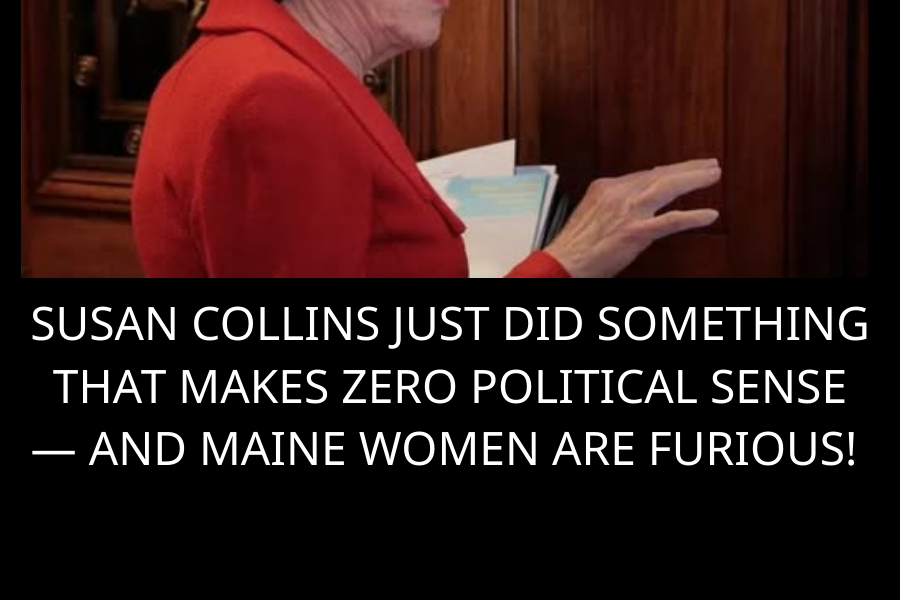
Susan Collins cast a decisive vote in favor of the SAVE Act. That’s the fact at the center of this firestorm. The SAVE Act is legislation that would, according to its critics, “strip voting access from more than 300,000 Maine women.” Its supporters call it an election integrity measure. Its opponents call it voter suppression.
Either way, Collins made her choice. And in a state where her approval ratings are already in freefall, that choice may prove to be the final straw.
The language of the attack is unsparing: “Collins has turned her back on the women of Maine. Instead of standing up for Maine families, she’s lining up with Donald Trump to support the SAVE Act.”
This is not a policy disagreement. This is an indictment of character. It’s an accusation that Collins has abandoned the very people who put her in office, that she’s more loyal to Trump than to her constituents, that she’s willing to sacrifice voting rights for political survival.
The SAVE Act: What It Actually Does
Before we can judge Collins’s vote, we need to understand what she voted for. The SAVE Act is complex, but its core provisions are straightforward:
Voter ID Requirements: The Act would require voters to present identification that meets specific federal standards. This sounds simple, but critics argue that millions of Americans—disproportionately women, minorities, and the elderly—lack the required IDs and would face significant barriers to obtaining them.
Citizenship Verification: The Act would require proof of citizenship to register to vote. Again, this sounds uncontroversial—only citizens should vote. But critics argue that the documentation requirements are onerous, that many citizens don’t have easy access to birth certificates or passports, and that the result would be thousands of eligible voters purged from the rolls.
The 300,000 Figure: The specific claim that 300,000 Maine women would lose access is based on estimates of how many voters lack the required documentation. It’s a staggering number—roughly a third of the state’s adult female population. If accurate, it represents a fundamental shift in who can participate in democracy.
The Collins Calculus: Why She Voted Yes
Collins’s supporters would argue that her vote was not a betrayal but a principled stand for election integrity. They’d point to polls showing broad public support for voter ID laws, to concerns about non-citizen voting (however rare), to the need to restore confidence in the electoral system.
They’d also note that Collins has always been a moderate on voting rights. She’s supported compromise measures before. She’s worked across the aisle. This vote, in their view, is consistent with her long-held belief that elections should be secure and accessible—both, not one or the other.
But the timing is damning. Collins is facing the worst approval ratings of her career. She’s seen as one of the most vulnerable senators in the country. Voting with Trump on a controversial voting rights bill at this moment looks less like principle and more like desperation—an attempt to shore up her right flank, to prove her conservative credentials, to survive a primary challenge from the MAGA base.
The Betrayal Narrative: Why It Lands
The attack on Collins works because it taps into a deeper narrative about who she is and who she’s become.
The Old Susan Collins: The moderate Republican who bucked her party on health care, who saved the Affordable Care Act with a single vote, who worked with Democrats on compromise legislation, who was seen as a voice of reason in an increasingly polarized Senate.
The New Susan Collins: The senator who votes with Trump most of the time, who confirmed Brett Kavanaugh and Amy Coney Barrett, who now supports voting restrictions that will hurt the very women who once believed in her.
The contrast is devastating. It suggests that Collins hasn’t just changed her votes; she’s changed her identity. She’s no longer the independent voice from Maine; she’s just another Republican, just another vote in Trump’s column.
The Women of Maine: A Constituency Abandoned?
The specific focus on women is strategic. Women have been Collins’s base—moderate Republican women, independent women, even some Democratic women who crossed party lines because they trusted her. They believed she would protect their interests, their access, their voice.
Now they’re being told that she voted to make it harder for them to vote. That she chose Trump over them. That their trust was misplaced.
The emotional weight of this is enormous. Betrayal is personal. It’s not just about policy; it’s about relationship. Collins built her career on relationships—on knowing her constituents, on being accessible, on making people feel heard. This vote suggests that those relationships were transactional, that when push came to shove, she chose power over people.
The Electoral Math: Can She Survive?
The question now is whether Collins can survive this vote. The numbers are not on her side.
Approval Ratings: She’s already underwater. More Mainers disapprove of her than approve. That’s a death sentence for an incumbent who used to be beloved.
The Trump Factor: Maine is not a Trump state. He lost it twice, and his brand is toxic to the moderate and independent voters Collins needs. By aligning with him on a controversial voting bill, she’s tying herself to a loser.
The Democratic Challenger: The Democrats will field a strong candidate, likely a woman, who will hammer this vote every day from now until November. “Susan Collins voted to make it harder for you to vote” is a simple, powerful message that resonates with swing voters.
The Turnout Problem: Even if Collins’s base turns out, it may not be enough. In a polarized environment, elections are won by turning out your coalition and suppressing the other side’s. Collins just gave Democrats a tool to turn out women against her.
The Verdict: A Gamble That May Cost Everything
Susan Collins has been counted out before. She’s survived challenges that should have ended her career. She’s proven that Maine voters see something in her that pollsters and pundits miss.
But this feels different. This vote is not just another data point; it’s a defining moment. It’s the moment when Collins chose Trump over Maine, party over people, power over principle.
The women of Maine are watching. The question is whether they’ll remember in November—and whether Collins has any path back to the trust she’s lost.
If she loses, this vote will be the reason. If she wins, it will be proof that Maine is not the state we thought it was. Either way, the SAVE Act vote will be the hinge on which her career swings.
And right now, it’s swinging toward the exit.