The Skit That Almost Became a Lawsuit: When Comedy Met the Cease and Desist
Let’s set the scene.
Somewhere in America, a comedian does what comedians do. He writes a skit. He shoots it. He posts it. People laugh. That’s the deal. That’s the contract. That’s the centuries-old understanding between the person who makes the joke and the people who receive it.
Then the letter comes.
A cease and desist. A legal document. A piece of paper that says, in the most formal language money can buy, that the joke you made is not a joke at all. It’s something else. Something actionable. Something that a lawyer can turn into a lawsuit and a lawsuit can turn into a settlement and a settlement can turn into a warning to every other comedian who might think about making jokes about people who don’t want to be joked about.
Druski got the letter. And then he did something that every comedian in America should do when they get that letter:
He laughed.
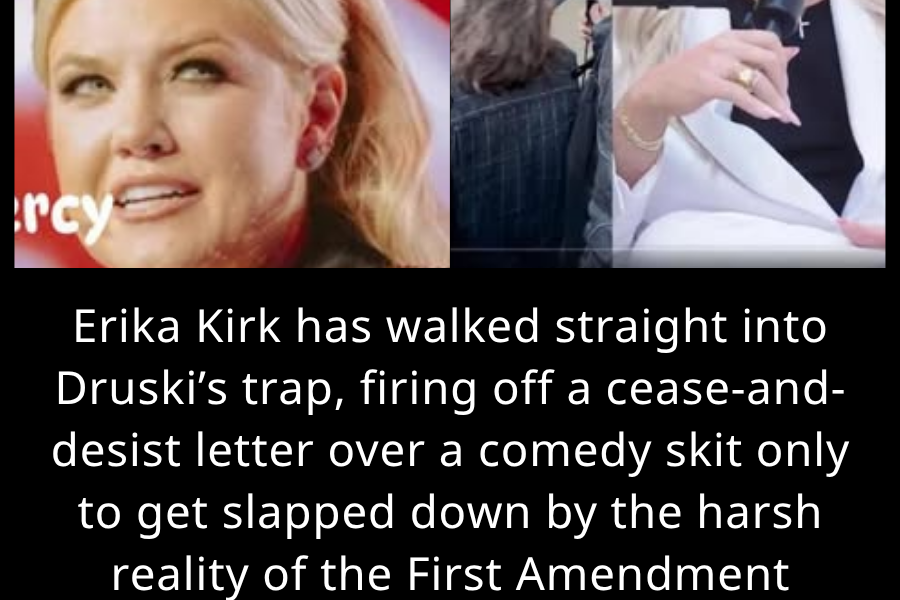
“Erika Kirk sent a cease and desist tryna sue me over a skit,” he said, with the laughing emoji, with the sunglasses, with the casual confidence of a man who knows something the lawyers apparently don’t.
“Little does she know parody is protected.”
The First Amendment and the Funny Bone
Let’s get the legal stuff out of the way first. Because it matters. Because it’s the shield that every comedian, every satirist, every person who has ever made a joke about someone who didn’t want to be joked about stands behind.
Parody is protected speech. It has been for decades. The Supreme Court has said so. The lower courts have said so. The entire architecture of American comedy is built on the understanding that you can make fun of people, even powerful people, even litigious people, even people who really, really don’t want to be made fun of.
The standard is simple: If a reasonable person would understand that the work is a joke, that it’s not meant to be taken as fact, that it’s satire or parody or comedy, then it’s protected. It doesn’t matter if the subject is offended. It doesn’t matter if the subject thinks the joke is unfair. It doesn’t matter if the subject hires a lawyer to send a scary letter.
What matters is whether the audience knows it’s a joke. And Druski’s audience? They know. They’ve always known. That’s why they came to him in the first place.
The Cease and Desist Epidemic
Here’s what’s happening in America, and Druski just put his finger on it.
There’s an epidemic of cease and desist letters. Not just for comedians. For everyone. For anyone who says something that someone doesn’t want said. For anyone who makes a joke that someone doesn’t want made. For anyone who exercises the First Amendment in a way that makes someone uncomfortable.
The letter is designed to do one thing: scare you. It’s designed to look official. To sound serious. To make you think that if you don’t take down the video, if you don’t apologize, if you don’t stop making jokes, you’re going to end up in court, in front of a judge, explaining why you thought it was funny to make fun of someone who clearly doesn’t think they’re funny at all.
Most people get the letter and they crumble. They take down the video. They issue the apology. They stop making jokes. They let the fear of the legal system silence them.
Druski didn’t crumble. He laughed. And then he told the whole world that he laughed. And in doing so, he did something that every person who gets one of these letters should do:
He called the bluff.
The Bluff Called
Here’s what Erika Kirk’s lawyers probably didn’t tell her: A cease and desist letter has no legal force. It’s not a lawsuit. It’s not a court order. It’s a letter. A strongly worded letter. A letter that costs a few hundred dollars to have a lawyer write and that relies entirely on the recipient not knowing that it’s just a letter.
If Druski had taken down the video, the letter would have worked. If he had apologized, the letter would have worked. If he had stopped making jokes, the letter would have worked. But he didn’t do any of those things. He posted the letter. He mocked it. He explained, to his millions of followers, that parody is protected and that people need to stop trying to take jokes to court.
And now the letter is the joke. The cease and desist is the punchline. The attempt to silence a comedian has become the funniest thing the comedian has posted in months.
That’s the risk of sending a cease and desist to someone who knows their rights. You don’t silence them. You make them louder. You don’t shut down the joke. You become the joke.
The Comedy Defense
Druski’s defense is simple and it’s ironclad: It’s comedy, not defamation.
Defamation is a false statement presented as fact that harms someone’s reputation. Comedy is a statement presented as a joke that makes people laugh. The two are not the same. They have never been the same. And the law has always recognized that they are not the same.
If Druski had posted a video saying “Erika Kirk committed a crime,” and he said it with a straight face, and he offered no indication that it was a joke, and people believed him, and her reputation was damaged—that would be defamation. That would be a lawsuit. That would be a problem.
But he didn’t do that. He did a skit. A comedy skit. A thing that exists in the universe of comedy, where the audience knows that what they’re watching is not meant to be taken as literal fact. That’s not defamation. That’s comedy. And comedy, in America, is protected.
The fact that Erika Kirk’s lawyers apparently didn’t know this—or thought Druski wouldn’t know this—is almost as funny as the skit itself.
The Chilling Effect
Here’s the thing about these letters. They’re not really about winning a lawsuit. They’re about something else. Something darker.
They’re about chilling speech. About making people think twice before making a joke. About creating an environment where the cost of comedy—the legal fees, the stress, the uncertainty—is higher than the reward. About slowly, quietly, turning the First Amendment into something that only rich people or very brave people can afford to exercise.
Druski is brave. Or he’s stubborn. Or he just knows his rights and doesn’t scare easily. Whatever it is, he did what most people don’t do: He stood his ground. He told the world what happened. He refused to be silenced.
And in doing so, he made it a little easier for the next comedian who gets that letter. Because now there’s a precedent. Now there’s a famous example of what happens when you send a cease and desist to someone who knows that parody is protected. Now there’s a template for the response:
Laugh. Post the letter. Remind everyone that comedy is not defamation. And move on to the next joke.
The Lawsuit That Wasn’t
Erika Kirk is not going to sue Druski. She’s not. The cease and desist was the move. The letter was the play. If she were going to sue, she would have sued. She wouldn’t have sent a letter first. She would have filed a complaint. She would have served papers. She would have started the process that ends with a judge deciding whether a skit is a skit or a defamation.
She didn’t do that. She sent a letter. Because the letter was never about winning a lawsuit. It was about winning without a lawsuit. It was about scaring a comedian into silence without ever having to prove anything in court.
It didn’t work. Druski called the bluff. And now the letter is public, and the joke is viral, and the only person who looks bad is the person who tried to turn a joke into a lawsuit.
The Bigger Picture
This isn’t just about Druski. It’s about a culture that has forgotten how to take a joke.
Somewhere along the way, we decided that being offended was the same as being harmed. That being made fun of was the same as being attacked. That the proper response to a joke you don’t like is not to laugh, or to ignore it, or to make a better joke—but to call a lawyer. To send a letter. To try to use the power of the state to silence the person who made you feel something you didn’t want to feel.
That’s not how comedy works. That’s not how free speech works. That’s not how a free society works.
In a free society, people make jokes. Some of those jokes are about you. Some of them are mean. Some of them are unfair. Some of them are just not funny. But the answer to a joke you don’t like is not a cease and desist. The answer is to ignore it, or to clap back, or to make a joke of your own.
The answer is not to try to use the legal system to silence someone who made you uncomfortable. Because when you do that, you’re not protecting your reputation. You’re attacking the thing that makes America worth living in: the right to say what you want, to joke about what you want, to make fun of people who probably deserve to be made fun of.
The Last Laugh
Druski ended his post the way he started. With a laugh. With the sunglasses. With the casual confidence of a man who knows that the law is on his side and the audience is on his side and the only person who looks ridiculous is the person who tried to sue over a skit.
“Y’all gotta stop trying to take jokes to court.”
That’s the message. That’s the lesson. That’s the thing that every celebrity, every public figure, every person who has ever been the subject of a joke they didn’t like needs to hear.
You don’t sue over jokes. You don’t send cease and desist letters over comedy. You don’t try to use the legal system to silence people who are exercising the most basic, most fundamental, most American right there is: the right to make fun of each other.
If you can’t take a joke, don’t watch the comedian. If you don’t want to be parodied, don’t be famous. If you think the answer to a skit you don’t like is a lawyer, you have misunderstood what country you live in.
Druski understood. He laughed. He posted. He moved on.
The cease and desist is now part of the joke. The letter is the punchline. And somewhere in America, a lawyer who thought they were doing their client a favor is explaining why sending a cease and desist to a comedian with millions of followers was maybe not the best career move.
That’s comedy. That’s justice. That’s America.
The joke wins. It always wins. And the people who try to take jokes to court? They become the joke.
Y’all gotta stop.