# The Words That Broke the Floor: When a Democrat Said the Quiet Part Out Loud
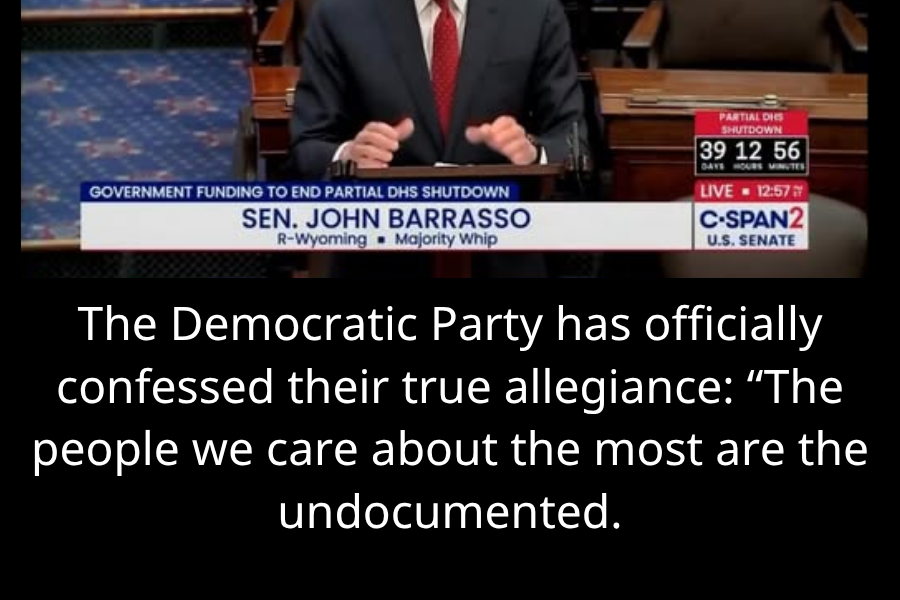
Let’s start with the sentence. The one that’s going to be in every campaign ad, every attack commercial, every mailer from now until the next election. The one that a Democrat—an actual United States senator, a person elected to represent the people of their state—stood on the floor of the United States Senate and said out loud:
*”The people we care about the most are the undocumented.”*
Read that again. Slowly. Let it land.
*The people we care about the most. Are the undocumented.*
Not the citizens who elected them. Not the taxpayers who fund the government. Not the veterans who served the country. Not the workers who keep the economy moving. Not the families struggling to pay rent, to afford groceries, to keep the lights on. Not the people who have spent their entire lives in this country, who pay taxes, who follow the law, who show up every day and do their jobs and ask only that their government do its job in return.
The undocumented. The people who are in this country without legal status. The people who, by definition, are not supposed to be here. The people who broke the law to get here or stayed after their permission expired. Those are the people, according to a sitting Democratic senator, that his party cares about the most.
John Barrasso heard it. He was sitting there, on the Senate floor, probably half-listening to another floor speech, another round of the same arguments that have been made a hundred times before. And then he heard those words. And he did what any normal person would do when they hear a sitting senator admit that his party prioritizes people who are in the country illegally over the people who elected him:
He went off.
—
### The Confession That Wasn’t Supposed to Happen
Here’s the thing about the quiet part: It’s not supposed to be said out loud.
The Democratic Party has spent years building a careful, calibrated message on immigration. They talk about “dreamers.” They talk about “families.” They talk about “humanity.” They talk about “comprehensive reform.” They talk about everything except the one thing that is actually true: that they have made a strategic calculation that the undocumented—and the people who support open borders—are a more important constituency than the American citizens who are asking them to enforce the law.
They don’t say it. They can’t say it. Because if they said it, the whole thing would collapse. The voters who still believe that Democrats care about them, that Democrats represent their interests, that Democrats are the party of working people—those voters would see the truth. They would see that the party has made a choice. A deliberate, conscious choice. And they are not on the winning side of that choice.
But sometimes, the mask slips. Sometimes, in the middle of a floor speech, in the middle of an argument about funding, in the middle of a debate that no one is watching, someone forgets to be careful. Someone says what they actually believe. Someone lets the truth escape.
That’s what happened. A Democrat—the reports don’t name him, but the words are on the record—stood up and said that the people his party cares about the most are the undocumented. He didn’t say “we also care about citizens.” He didn’t say “we care about everyone equally.” He said the people they care about the most are the people who are in this country illegally.
Barrasso heard it. He grabbed it. And he held it up for the whole country to see.
—
### The Whip Who Wouldn’t Let It Go
John Barrasso is the Senate Majority Whip. His job is to count votes, to keep the party together, to make sure the legislative agenda moves forward. He’s not usually the guy who goes viral. He’s not usually the guy who makes the speech that gets played on every news channel for the next 72 hours. He’s the behind-the-scenes guy. The mechanic. The guy who makes the trains run on time.
But when he heard that sentence, something changed. The whip became the hammer. The mechanic became the prosecutor. And he stood on the Senate floor and did what needed to be done: He called it out. He named it. He refused to let it be buried in the normal flow of Senate business.
He said the words again, so everyone could hear them. He said them slowly, so everyone could understand them. He said them with the kind of controlled fury that comes from someone who has been watching this happen for years and finally has the evidence he needs to prove what he’s been saying all along.
*”The people we care about the most are the undocumented.”*
That’s not a policy disagreement. That’s not a difference of opinion on border security. That’s not a debate about the finer points of immigration law. That’s a confession. A revelation. A window into the soul of a party that has been telling the American people one thing while doing another.
Barrasso held the window open. He made sure everyone could see inside. And he made sure that no one who heard those words would ever be able to forget them.
—
### The Care Hierarchy
Let’s unpack what that sentence actually means.
*”The people we care about the most…”* There’s a hierarchy implied in those words. A ranking. A list of who matters more and who matters less. The people we care about the most are at the top. The people we care about less are somewhere below. And the people we don’t care about at all—well, they’re not even on the list.
Who is at the top, according to this senator? The undocumented. The people who entered the country illegally or overstayed their visas. The people who, by any objective measure, have less claim on the resources and attention of the United States government than the citizens who elected that government.
Who is below them? Everyone else. The citizens who pay taxes. The citizens who vote. The citizens who serve in the military. The citizens who show up to work every day and ask only that their government do the same. They are not at the top. They are not the people this senator cares about the most. They are somewhere down the list, behind the people who broke the law to be here.
That’s the revelation. That’s the thing that Barrasso is holding up for the country to see. Not that Democrats support immigration. Not that Democrats want to help people who are struggling. Not that Democrats have a different vision for border policy. But that there is a ranking. A hierarchy. A list of who matters. And on that list, the people who are here illegally come before the people who are here legally.
That’s not compassion. That’s not humanity. That’s abandonment. It’s a party that has decided that its future depends on a coalition that includes people who have no legal right to be in the country, and that the citizens who built that country are expendable.
—
### The Betrayal Question
Barrasso used a word that will stick. He said the Democrat Party is run by traitors. That’s strong language. That’s the kind of language that gets you in trouble. That’s the kind of language that the media will use to say he’s being divisive, that he’s inflaming tensions, that he’s engaging in the kind of rhetoric that makes it harder to get things done.
But let’s think about what “traitor” means. It means someone who betrays their country. It means someone who puts the interests of another group ahead of the interests of the people they swore to serve. It means someone who has forgotten, or never cared, that they were elected to represent the citizens of the United States, not the people who are here in violation of its laws.
If a senator stands on the floor of the United States Senate and says that his party cares more about people who are in the country illegally than about the citizens who elected him, is that a betrayal? Is that a violation of the trust that was placed in him when he took the oath of office? Is that the kind of statement that should make every American who voted for him wonder whether they made a mistake?
Barrasso thinks it is. And he’s not alone. The people watching that floor speech, the people who have been waiting in TSA lines, the people who have been watching their taxes go up while services go down, the people who have been told that their concerns about the border are racist, that their desire for law enforcement is xenophobic, that their frustration with a government that seems to care more about people who aren’t supposed to be here than about people who are—those people heard that sentence. And they understood exactly what it meant.
—
### The Undocumented Constituency
Here’s the thing that the senator who said those words probably didn’t think through: The undocumented can’t vote.
They can’t vote for him. They can’t vote against him. They can’t contribute to his campaign. They can’t show up at his town halls. They can’t call his office and demand action. They have no political power, no electoral leverage, no way to reward him for saying that he cares about them more than anyone else.
So why would a senator say that? Why would he stand on the floor and declare that his party’s primary loyalty is to a group of people who have no ability to hold him accountable, no way to thank him, no way to return the favor?
Because the coalition that cares about the undocumented—the activists, the donors, the advocacy groups, the media voices who have made open borders a litmus test for progressive purity—can vote. They can donate. They can organize. They can primary a senator who doesn’t pass their tests. They can make his life miserable if he doesn’t say the right things, vote the right way, prioritize the right people.
That’s the hierarchy. Not citizens first. Not taxpayers first. Not veterans first. The people who can hurt you first. The people who can end your career first. The people who have made it clear that if you don’t put the undocumented at the top of your priority list, they will find someone who will.
The senator who said those words wasn’t talking about his heart. He was talking about his politics. He was saying, out loud, that his party has made a calculation. And the calculation is that the people who care about the undocumented matter more than the people who are citizens.
—
### The Americans Who Come Last
If the undocumented are the people Democrats care about the most, then who comes last?
That’s the question Barrasso is asking. That’s the question that every American who hears that sentence is asking. If there’s a hierarchy, if there’s a list, if some people matter more and some people matter less, where do the citizens fall? Where do the taxpayers fall? Where do the people who have spent their entire lives in this country, who have followed the law, who have raised their families here, who have served their country, who have done everything that was asked of them—where do they fall?
The answer, according to the senator who spoke those words, is somewhere below the undocumented. Somewhere down the list. Somewhere behind people who broke the law to be here. Somewhere in the space where Democrats put the people they care about less.
That’s the betrayal. That’s the thing that Barrasso is holding up for the country to see. Not a policy difference. Not a disagreement about the border. A fundamental reorientation of what government is for. A government that was created by citizens, for citizens, to serve the interests of citizens, has been hijacked by a party that openly admits it cares more about people who have no legal right to be here than about the people who do.
That’s not a political mistake. That’s not a gaffe. That’s a window into a worldview. And Barrasso is making sure everyone sees it.
—
### The Campaign Ad That Writes Itself
Every Democratic senator who was on the floor that day—every one of them who heard those words and said nothing, who let them pass without objection, who allowed them to go into the Congressional Record without a word of correction—will have to answer for them.
The ad writes itself. The screen goes dark. The words appear: *”The people we care about the most are the undocumented.”* The voiceover: “Your senator heard these words. They did not object. They did not correct. They did not stand up for you. Because this is what they believe. This is what they voted for. This is who they care about more than you.”
It’s devastating. It’s unanswerable. Because you can’t walk back “the people we care about the most.” You can’t explain away a ranking. You can’t say “what I meant was” when what you said was a clear, unambiguous declaration of priority.
The senator who said it probably regrets it now. He probably wishes he could take it back. He probably thought he was in a safe space, among friends, saying something that everyone in the room already believed. He forgot that the cameras were on. He forgot that the words would be preserved. He forgot that the people who elected him would one day hear what he really thinks about them.
Barrasso didn’t forget. He was there. He heard it. He preserved it. And he’s going to make sure that every American who cares about whether their government puts them first hears it too.
—
### The Last Question
Here’s the question that every voter should ask every Democratic candidate between now and the next election:
*Who do you care about the most?*
It’s a simple question. It’s a fair question. It’s the question that gets to the heart of what a representative democracy is supposed to be. Do you care about the people who elected you? Do you care about the citizens who pay your salary, who fund the government you run, who depend on you to put their interests first? Or do you care about someone else more? Someone who isn’t a citizen? Someone who broke the law to be here?
The senator who spoke those words answered that question. He answered it clearly. He answered it on the record. He answered it in a way that can never be unsaid.
Now the rest of his party has to answer it too. And every American who hears that sentence—who hears a sitting senator say that his party cares more about the undocumented than about the people who elected him—will be listening for the answer.
Barrasso held the floor. He held the moment. He held the words up for everyone to see. Now it’s up to the voters to decide what to do with them.
The people we care about the most. Those words will echo through every campaign, every debate, every conversation between now and the next election. And the party that spoke them will have to answer for them.
There’s no spin that can cover it. There’s no explanation that can undo it. There’s no way to say “what I meant was” when what you said was the truth you weren’t supposed to say out loud.
Barrasso made sure everyone heard it. Now the rest of us have to decide what it means.