The Predator and the Sanctuary: A Standoff Over Safety in Virginia
The Case That Has Everyone Talking
Let’s start with the facts, because they’re not in dispute.
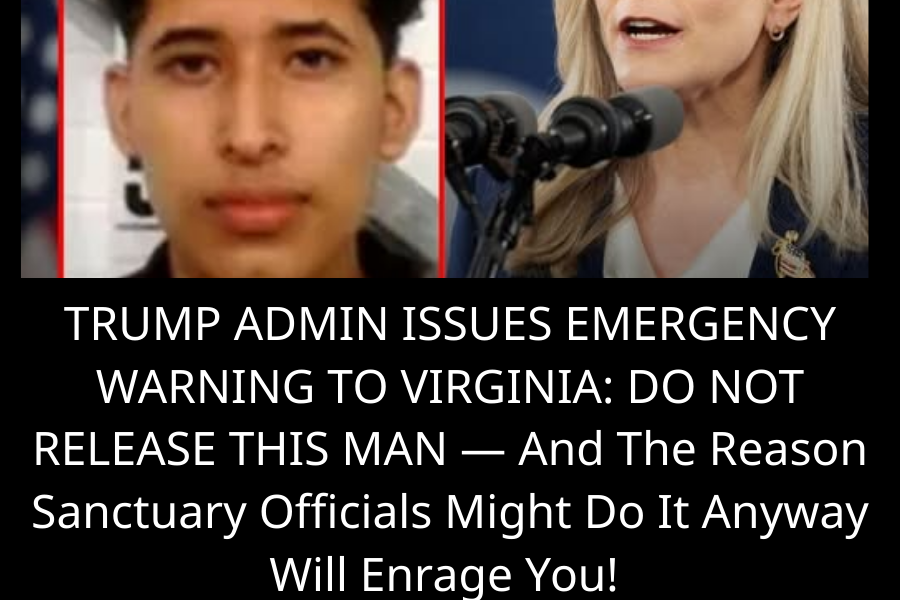
Israel Flores Ortiz, 19, is an illegal immigrant currently in custody in Fairfax County, Virginia. He faces nine counts of assault and battery for allegedly groping high school girls. The details are as disturbing as you’d imagine: a pattern of predatory behavior targeting teenage students, allegedly committed by someone who should never have been in the country in the first place.
Now the Trump administration is sounding the alarm. The Department of Homeland Security is calling on Virginia’s Democratic Governor Abigail Spanberger and local officials to keep Flores Ortiz in custody. Their message is simple and urgent: don’t release this predator back into communities where he can assault more young women.
DHS Deputy Assistant Secretary Lauren Bis put it bluntly: “We are calling on Fairfax County sanctuary politicians to NOT release this predator from jail back into our communities to assault more teenage women.”
This is not a policy debate. This is a safety issue with a human face—actually, with multiple faces: the teenage girls who were allegedly assaulted, the parents who are terrified, the community that doesn’t want a predator walking free.
The Sanctuary Question: What Does It Mean?
Fairfax County, like many jurisdictions across the country, has sanctuary policies that limit cooperation between local law enforcement and federal immigration authorities. The rationale is to build trust with immigrant communities, to encourage reporting of crimes without fear of deportation, to ensure that local resources aren’t diverted to federal enforcement.
But there’s a dark side to these policies, and Flores Ortiz is its poster child.
Here’s the scenario that has parents furious: a man is accused of repeatedly groping teenage girls. He’s in local custody. Federal immigration authorities have a detainer—a request to hold him so they can take him into custody for deportation proceedings. But sanctuary policies often prohibit local officials from honoring those detainers unless there’s a court order or the individual has been convicted of a serious crime.
Flores Ortiz has been charged. He hasn’t been convicted. Under many sanctuary policies, that means local officials may be required to release him—or at least, they’re prohibited from holding him for ICE.
The Trump administration is saying: don’t do it. Don’t let policy get in the way of public safety. Don’t release a predator because of a technicality. Use your discretion. Protect your community.
The Politics: Spanberger in the Crosshairs
Governor Abigail Spanberger is a Democrat in a purple state. She’s also a former CIA officer and a moderate who has tried to walk the line between her party’s progressive wing and the state’s more conservative voters. This case puts her in an impossible position.
If she intervenes to keep Flores Ortiz in custody, she’ll be praised by the right but attacked by her left flank for caving to Trump. If she lets the sanctuary policies run their course—if Flores Ortiz is released—she’ll be hammered by the administration and by every parent in Fairfax County who fears for their daughters.
The administration knows this. That’s why they’re making such a public spectacle of the case. They’re not just trying to keep one predator locked up; they’re trying to force Spanberger to choose sides in a way that will alienate someone no matter what she does.
The Victims: The Girls No One Is Talking About
In all the political crossfire, it’s easy to lose sight of the actual human beings at the center of this story.
Teenage girls. High school students. Allegedly groped by a grown man who should never have been in a position to access them. Their trauma is real. Their fear is real. Their parents’ rage is real.
And yet the debate has become about sanctuary policies, about federal versus local authority, about political posturing. The girls themselves have become footnotes in a larger argument.
This is the tragedy of the immigration debate in America. Every case becomes a symbol. Every victim becomes a talking point. Every perpetrator becomes a weapon in someone’s political arsenal.
The Legal Reality: What Happens Next?
Legally, the situation is complicated. Flores Ortiz has been charged but not convicted. Under American law, he is presumed innocent. He has a right to due process. He cannot be held indefinitely without trial.
But he’s also here illegally. That means, regardless of the outcome of the criminal case, he’s subject to deportation. The question is whether he’ll be deported after serving any sentence, or whether he’ll be released back into the community in the meantime.
The administration wants him held for ICE immediately—before any trial, before any conviction. That’s a significant expansion of federal power, and it’s exactly what sanctuary policies were designed to prevent.
Fairfax County officials will have to decide whether to honor the ICE detainer or follow their local policies. If they release him and he reoffends, the political consequences will be catastrophic. If they hold him and get sued, they’ll be defending their actions in court for years.
The Verdict: A Case That Defines the Debate
Israel Flores Ortiz is not just one man accused of terrible crimes. He’s a symbol of everything the immigration debate has become.
For the right, he’s proof that sanctuary policies endanger Americans. For the left, he’s proof that the immigration enforcement system is broken—that we treat people as criminals before they’re convicted, that we prioritize deportation over due process.
For the girls he allegedly assaulted, he’s just a predator who should be locked up. For their parents, he’s a nightmare made real.
The standoff between the Trump administration and Virginia officials will continue. The politics will get uglier. The rhetoric will get hotter. But somewhere in Fairfax County, there are teenage girls who just want to feel safe in their own school.
That’s what this is really about. Everything else is noise.