The Public Option Grocery Store: When the Government Decides It Knows Better Than the Market
The Proposal: Seattle’s Answer to Empty Shelves
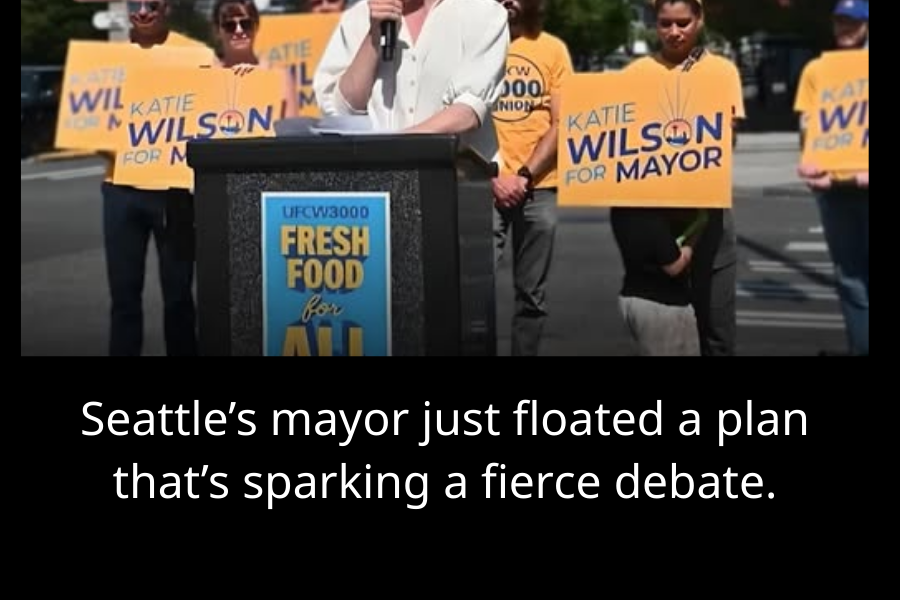
Let’s start with what Seattle’s Mayor Katie Wilson is actually proposing.
The problem she identifies is real: grocery chains closing stores in certain neighborhoods, leaving residents without access to fresh, affordable food. These “food deserts” are a genuine issue, particularly in low-income areas where the economics of traditional grocery retail don’t pencil out. When the last supermarket closes, residents are left with convenience stores, fast food, and overpriced, low-nutrition options.
Wilson’s solution? Public option grocery stores. Government-run markets that would fill the gaps left by private industry. Backed by the United Food and Commercial Workers union, the idea is simple: if private companies won’t serve these communities, the government will.
It sounds compassionate. It sounds proactive. It sounds like government stepping up where the market has failed.
It also sounds like every other government-run enterprise that has ever existed—which is to say, a disaster waiting to happen.
The Hodgetwins Reaction: Profits, Crime, and Reality
The Hodgetwins, never ones for subtlety, cut straight to the core of the problem:
“If a corporation can’t turn a profit in your crime infested Democrat city there is no way the government can do it either. These government ran stores fail every time!”
Let’s unpack that, because it’s not just red meat for the base—it’s a legitimate economic argument.
The Profit Problem: Grocery stores operate on razor-thin margins. The average supermarket nets about 1-2% profit on each dollar of sales. That means a store needs massive volume, efficient operations, and low costs to survive. When a chain closes a location, it’s not because they’re evil; it’s because the math doesn’t work. Theft is too high. Sales are too low. The numbers don’t add up.
If the math doesn’t work for a private company with decades of experience, why would it work for the government? The government doesn’t have a magic wand that makes theft disappear or forces people to buy groceries they don’t want. It has the same costs, the same customers, the same challenges—plus the added burden of bureaucracy, political interference, and the complete absence of profit motive.
The Crime Problem: The Hodgetwins mention “crime infested Democrat city” not as an insult but as a factual observation. High-crime areas have higher retail losses. They have higher insurance costs. They have customers who are afraid to shop after dark. These are not environmental factors that government ownership can fix. A public store in a high-crime area faces the same risks as a private one—except the losses are now covered by taxpayers.
The Track Record: Government-run enterprises have a consistent history of failure. From public housing to the Post Office to Amtrak, government operations are characterized by inefficiency, poor service, and massive subsidies. The idea that grocery stores—a notoriously difficult, low-margin business—would be the exception is wishful thinking at best.
The Union Factor: Following the Money
Wilson’s announcement mentions the UFCW specifically, and that’s worth noting. The United Food and Commercial Workers union represents grocery workers. A government-run grocery store means unionized workers, union wages, union benefits, union work rules.
None of this is inherently bad. Workers deserve fair compensation. But it adds costs that private stores already struggle to bear. A public store with union wages and benefits, operating in a marginal neighborhood, with all the inefficiencies of government management? The subsidies required would be enormous.
This isn’t about feeding people. It’s about creating government jobs under the guise of public service.
The Ideological Divide: Two Views of Failure
This proposal perfectly illustrates the fundamental divide in American politics.
The Progressive View: When private industry fails to provide a necessary service, government should step in. Grocery stores are essential. If the market won’t serve everyone, the government will. The cost is worth it because access to food is a basic right.
The Conservative View: Private industry fails for a reason. Government cannot magically solve problems that make business unviable. Public stores will lose money, provide poor service, and ultimately fail—but only after wasting millions in taxpayer dollars. The solution isn’t government competition; it’s addressing the underlying conditions (crime, poverty, regulation) that make private investment impossible.
Wilson sees a gap and wants to fill it with government. Her critics see a gap and want to understand why it exists—and fix that instead.
The Food Desert Reality: What Actually Works
The uncomfortable truth is that food deserts exist for reasons that government stores cannot fix. They exist because:
-
Population density is too low to support a full-service grocery.
-
Income levels are too low to generate sufficient sales.
-
Crime and theft make operations unprofitable.
-
Regulatory costs (minimum wage, paid leave, etc.) make thin margins even thinner.
-
Transportation patterns mean residents shop elsewhere anyway.
Government stores don’t change any of these factors. They just subsidize the losses—which means taxpayers in other neighborhoods pay for groceries in neighborhoods where the math doesn’t work.
What does work? A combination of approaches:
-
Crime reduction that makes retail viable.
-
Economic development that raises incomes and increases local spending.
-
Regulatory reform that reduces costs for businesses willing to take a chance.
-
Transportation solutions that connect residents to existing grocery options.
-
Smaller formats (bodegas, corner stores) that can operate with lower overhead.
None of these are as dramatic as “public option grocery stores.” None of them make for good headlines. But they have something the government store doesn’t: a track record of actually working.
The Verdict: A Solution in Search of a Problem
Seattle’s public option grocery store proposal is classic progressive governance: identify a problem, propose a government solution, and ignore the reasons the problem exists in the first place.
The grocery chains aren’t closing stores because they hate poor people. They’re closing stores because they can’t make money. Government ownership doesn’t change the underlying economics; it just shifts the losses from shareholders to taxpayers.
If Mayor Wilson really wants to solve food deserts, she should focus on making her city safe enough, affordable enough, and business-friendly enough that grocery chains want to operate there. That’s hard work. It requires confronting uncomfortable truths about crime, regulation, and economic reality.
Or she could just open a government store, watch it fail, and blame someone else when it does.
Given the track record of progressive governance, we all know which one is more likely.