The Candidate Who Said the Unsayable: When Campaigning Becomes a Firebomb
Let’s start with the reaction. Because the reaction is the whole story. The gasps. The denunciations. The headlines that write themselves. The carefully worded statements from party leaders who suddenly remember that they have principles. The ritualistic condemnation that follows every time someone decides that the only way to break through the noise is to say something that no one else will say.
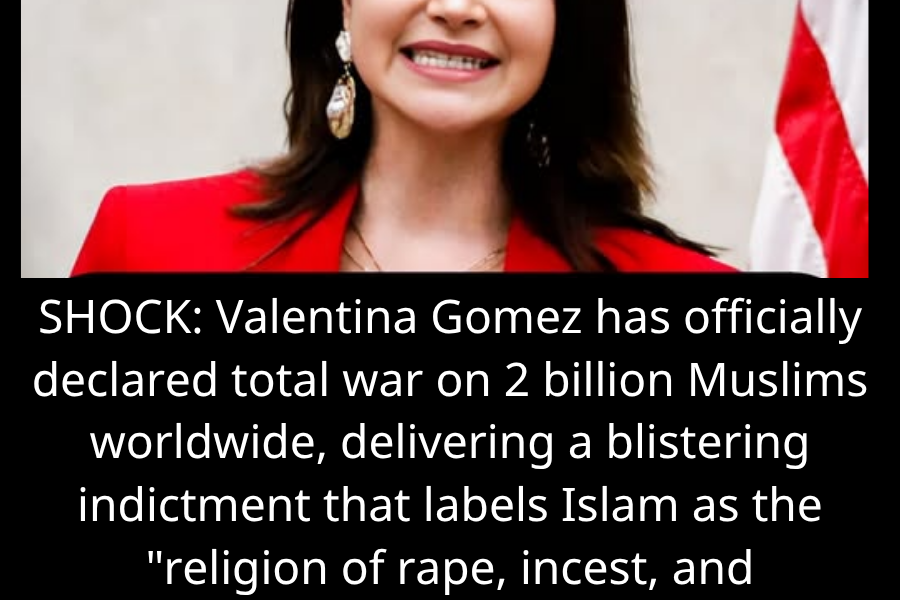
She said it. She said something about Islam that made the room go quiet. Something that, in any other era, would have ended a political career before it began. Something that was designed to do exactly what it did: provoke, inflame, dominate the news cycle, and remind everyone that there is a segment of the electorate that has been waiting for someone to say the quiet part out loud.
The critics are furious. They call it hate speech. They call it Islamophobia. They call it disqualifying. They say that no one who holds such views should be allowed anywhere near public office. They say that this is not who we are. They say that this is not what America stands for.
And they are right. About all of it. It is hate speech. It is Islamophobia. It is disqualifying. It is not who we are. It is not what America stands for.
But here is the question that no one wants to ask: Why does it keep working?
The Politics of Provocation
There is a formula. It has been perfected over decades. It goes like this: say something that everyone knows is beyond the pale. Wait for the outrage. Watch as the media amplifies your message by condemning it. Watch as your opponents tie themselves in knots trying to distance themselves from you while also acknowledging that you are saying what some of their voters are thinking. Watch as the donations pour in from people who have been waiting for someone to finally say it.
It works because the outrage is predictable. It works because the condemnations are automatic. It works because the people who are supposed to defend the boundaries of acceptable discourse have no answer for someone who simply refuses to respect those boundaries. They can denounce. They can distance. They can deplore. They cannot make the words unsaid.
The candidate who said what she said about Islam knew exactly what she was doing. She knew that the headlines would write themselves. She knew that the cable news shows would play the clip over and over. She knew that her name would be on everyone’s lips. She knew that the people who have been waiting for someone to say what they are thinking would see her as a hero.
And she was right. Because the formula works. It has always worked. It will always work until someone figures out how to break the cycle.
The Religion Question
Islam is a religion of 1.8 billion people. It is the second-largest religion in the world. It is practiced in dozens of countries, across continents, in cultures that have nothing in common except a shared tradition that dates back fourteen centuries. It is the faith of doctors and engineers, of poets and philosophers, of mothers and fathers, of children who are learning to pray.
To reduce it to a caricature is to ignore everything that makes it what it is. To define it by the actions of those who have twisted its teachings is to make the same mistake that has been made about every religion that has ever existed. To speak about it the way this candidate spoke is to reveal not something about Islam, but something about the speaker.
The critics are right about that. They are right to be outraged. They are right to denounce. They are right to say that this is not who we are.
But they are missing something. They are missing the fact that there are millions of Americans who believe exactly what she said. Not because they have studied Islam. Not because they have met Muslims. Not because they have any basis for their beliefs except the stories they have heard and the fears they have nurtured. They believe it because they have been told it for years. They believe it because no one has ever given them a reason to believe otherwise. They believe it because the people who are supposed to be shaping their understanding of the world have failed them.
The candidate is not creating these beliefs. She is channeling them. She is giving voice to something that was already there. And that is why the outrage, no matter how loud, will not make her go away.
The Boundaries of Discourse
There used to be boundaries. There used to be things that you could not say in public, no matter how much you believed them. There used to be a consensus that certain kinds of speech were beyond the pale, that they disqualified you from public life, that they made you unfit for office.
Those boundaries are gone. They have been eroding for years, worn away by a thousand small transgressions that seemed inconsequential at the time. Each time someone said something that crossed the line and survived, the line moved. Each time someone was denounced and then elected anyway, the denunciations lost their power. Each time the outrage machine fired up and the target survived, the machine looked a little more ridiculous.
We are living in the world that was created by that erosion. A world where the boundaries are gone. A world where anything can be said. A world where the only question is whether it will work.
The candidate who spoke about Islam is testing those boundaries. She is seeing how far she can go. She is finding out whether there is any line that cannot be crossed. And if she succeeds—if she wins her primary, if she wins her election, if she becomes a national figure—she will have answered that question for everyone who comes after her.
The Double Standard
There is a double standard in how these things are treated. It is not the same to speak about Islam as it is to speak about other religions. It is not the same to attack Muslims as it is to attack Christians or Jews. There is a history. There is a context. There is a political moment.
The candidate knows this. That is why she chose her target carefully. She did not attack a religion that is protected by powerful constituencies. She did not attack a faith that has the resources to fight back. She attacked the faith that has become the acceptable target in American politics. The one that can be attacked without consequence. The one that the media will condemn and then move on. The one that no one will defend with the same ferocity that they would defend others.
That is not an accident. It is a choice. A choice that reveals something about the state of American politics. A choice that says some people are protected and others are not. A choice that says some forms of bigotry are tolerated while others are condemned.
The critics are right to be outraged. But they should ask themselves why it is so much easier to be outraged about attacks on some religions than on others. They should ask themselves why the same people who rush to defend one group are silent when another is attacked. They should ask themselves whether they have contributed to the very double standard that makes this kind of speech possible.
The Audience
The candidate is not talking to the people who are outraged. She is talking to the people who have been waiting for someone to say what she said. The people who have felt that their concerns are ignored, their fears dismissed, their anxieties patronized. The people who have been told that they are bigots for having questions, that they are racists for having doubts, that they are Islamophobes for being afraid.
She is telling them that they are not alone. She is telling them that their fears are justified. She is telling them that the people who have been dismissing them are the enemy. She is giving them permission to feel what they feel, to say what they think, to vote for someone who speaks their language.
That is why the outrage will not work. That is why the denunciations will not matter. That is why the candidate will survive, and maybe even thrive. Because she is speaking to an audience that has been waiting for her. An audience that has been told for years that their concerns do not matter. An audience that has learned to ignore the outrage, to dismiss the denunciations, to see the condemnations as proof that they are on the right side.
The critics are talking to themselves. The candidate is talking to her voters. And her voters are listening.
The Last Word
The candidate said something about Islam that will define her campaign. It will be the thing she is known for. It will be the thing that her supporters love and her opponents hate. It will be the thing that determines whether she wins or loses.
She knew what she was doing. She knew the risks. She knew that the outrage would be loud, that the denunciations would be fierce, that the headlines would be brutal. She did it anyway. Because she believes that the rewards outweigh the risks. Because she believes that there are enough people who agree with her to make her a winner. Because she believes that the boundaries that used to exist no longer matter.
She might be right. She might be wrong. We will find out on election day.
But whatever happens, the words have been spoken. They cannot be unspoken. The damage has been done. It cannot be undone. The line has been crossed. It cannot be uncrossed.
We are living in a world where anything can be said. Where the boundaries are gone. Where the only question is whether it works.
The candidate is testing that world. She is seeing how far she can go. She is finding out whether there is any line that cannot be crossed.
We will know soon enough. And whatever the answer, we will have to live with it.