(The legal document meets the culture war. The battlefield is no longer the border, but the deed to a piece of Texas soil. The target is not a person, but an idea, given institutional form.)
The Proclamation and The Lawsuit: Inside Texas’s Frontier War on a “Foreign” Idea
This isn’t about land. Not really. Land is just the tangible asset, the legal choke point. This is about sovereignty, identity, and the power to name your enemy.
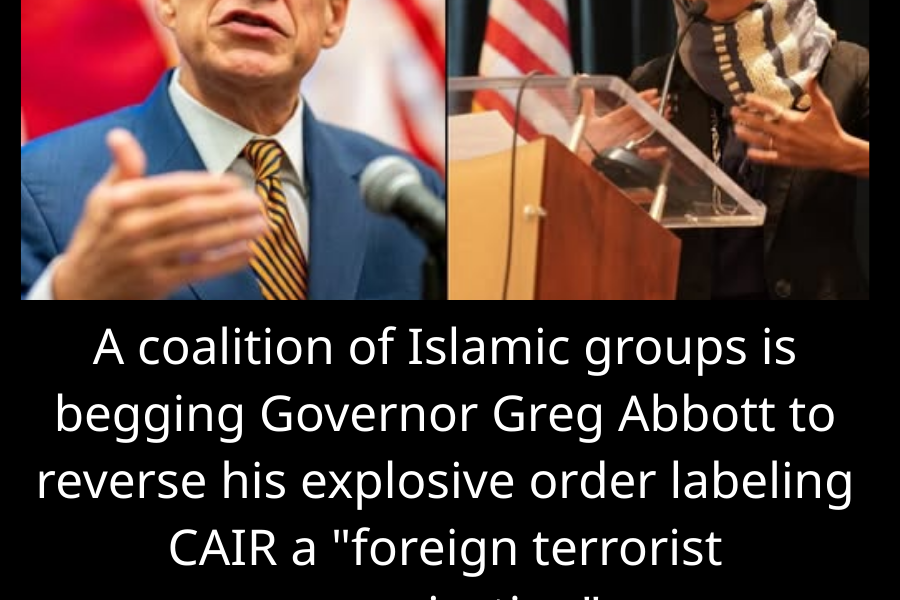
Governor Greg Abbott didn’t issue a regulation or sign a bill. He issued a proclamation. The language matters. A proclamation is a declaration from the sovereign, a statement of principle given the force of law. In this one, he performed a breathtaking act of state-level geopolitical will: he labeled the Council on American-Islamic Relations (CAIR) and the Muslim Brotherhood as “foreign terrorist organizations.”
The consequences are not symbolic. They are material and chilling:
- Barred from buying land in Texas. A physical, economic quarantine.
- Authorization for state enforcement against the group. Turning state troopers and attorneys into a domestic counter-terrorism arm targeting a civil rights nonprofit.
The response was a symphony of American dissent: public condemnation from coalitions, and a federal lawsuit. This is the collision. Let’s map the fault lines.
Part 1: The Texas Gambit – State Sovereignty as a Cudgel
Abbott’s move is a radical assertion of state power in a domain reserved for the federal government. Terrorism designations are, constitutionally and practically, a federal matter, managed by the Secretary of State and the Department of Justice. They involve classified intelligence, diplomatic ramifications, and a defined legal process.
By bypassing this, Abbott is making several declarations:
- The Federal Government is Failed or Compromised: The underlying message is that Washington is either too weak or too politically correct to name the true threat. Texas must defend itself.
- Ideology as Geography: The term “foreign” is doing immense work here. It is not strictly a legal designation of incorporation (CAIR is a U.S.-based 501(c)(3)). It is a philosophical branding. It frames certain political and religious ideologies—specifically politicized Islamism, as interpreted by Abbott—as inherently alien, as invasive species to the Texas body politic.
- The New Enemy: The order conflates CAIR, a domestic civil rights organization that engages in litigation, advocacy, and media relations, with the transnational Muslim Brotherhood, treating them as a single, monolithic threat. This is the conspiracy theory made law. It says the lawsuit-filing attorneys in CAIR’s offices are the legal wing of a foreign terrorist enterprise.
The land ban is the perfect, visceral enforcement tool. In Texas, land is identity, legacy, and power. Denying the right to hold property is a fundamental denial of belonging. It says: You cannot put down roots here. You cannot become part of the fabric of this place. You are a transient threat, to be contained.
Part 2: The Coalition’s Cry – “Defamatory” and “Without Basis”
The coalition’s letter is a masterclass in appealing to American institutional pride. They don’t just call it wrong; they call it “defamatory” and note it “lacks legal or factual basis.”
This is a deliberate framing. They are arguing Abbott has broken the rules of the game—both the legal rules and the rules of evidence-based governance. They are painting the proclamation as an act of reckless libel against an entire community, arguing it will inevitably fuel discrimination and violence against American Muslims by sanctioning their premier civil rights defender as a terrorist group.
They are speaking the language of civic harm and institutional integrity to counter Abbott’s language of existential threat and sovereign defense.
Part 3: CAIR’s Lawsuit – The Constitutional Artillery
CAIR’s federal lawsuit is where the abstract conflict hits the concrete of the U.S. Code. It’s not a press release; it’s a legal missile aimed at the heart of the proclamation’s legitimacy. Their arguments form a powerful trifecta:
- First Amendment (Free Speech & Association): The designation effectively blacklists them. It punishes them for their advocacy, their lawsuits against government policies, their protected political speech. It chills the association of anyone who might work with or donate to them. This is viewpoint discrimination dressed up as national security.
- First Amendment (Free Exercise of Religion): By targeting a group that defends Muslims against discrimination, the order places an official, punitive state stigma on the religious community they serve. It sends a message that the state views the mainstream institutional representation of American Muslims as inherently suspect, even terrorist-adjacent.
- Fourteenth Amendment (Due Process): This is the procedural dagger. The state of Texas has, without a hearing, without presenting evidence, without a trial, declared a U.S. organization a terrorist entity and stripped it of rights. This is “bill of attainder” territory—legislative punishment of a specific group without judicial process. It is the antithesis of due process.
The lawsuit forces the question: Can a state governor, by proclamation, create his own terrorist list and unleash state power against U.S. citizens based on it?
The Grand Narrative: The New Domestic Frontier
This isn’t an isolated skirmish. It’s the logical extension of the doctrines we’ve traced.
We’ve moved from:
- Controlling physical entry (Travel bans, border walls).
- To policing internal belonging (Citizenship revocation, benefit purges).
- To now: Declaring ideological purges against domestic groups deemed ideologically “foreign.”
Abbott’s proclamation treats Texas not just as a state within a union, but as a sovereign frontier fortress in a civilizational struggle. The “foreign terrorist” isn’t always someone who crosses the Rio Grande; it can be an idea that takes root in a nonprofit office in Dallas or Houston. The land ban is a new form of ideological zoning.
The coalition and the lawsuit represent the other America: the one that believes in federal supremacy, due process, and the radical, messy idea that even those you vehemently disagree with have constitutional rights that cannot be erased by a governor’s pen.
The verdict won’t just come from a judge. It will come from the political atmosphere this creates. Does this action legitimize the view that mainstream Muslim advocacy is a fifth column? Or does it ultimately backfire, being struck down as an overreach that reinforces the very constitutional protections CAIR exists to defend?
One thing is certain: Greg Abbott hasn’t just banned a group from buying land. He’s planted a flag on a new, volatile frontier in America’s culture war—a frontier that runs straight through the First Amendment.
The soil of Texas is now contested ground in a battle over the soul of American pluralism. ⚖️🤠