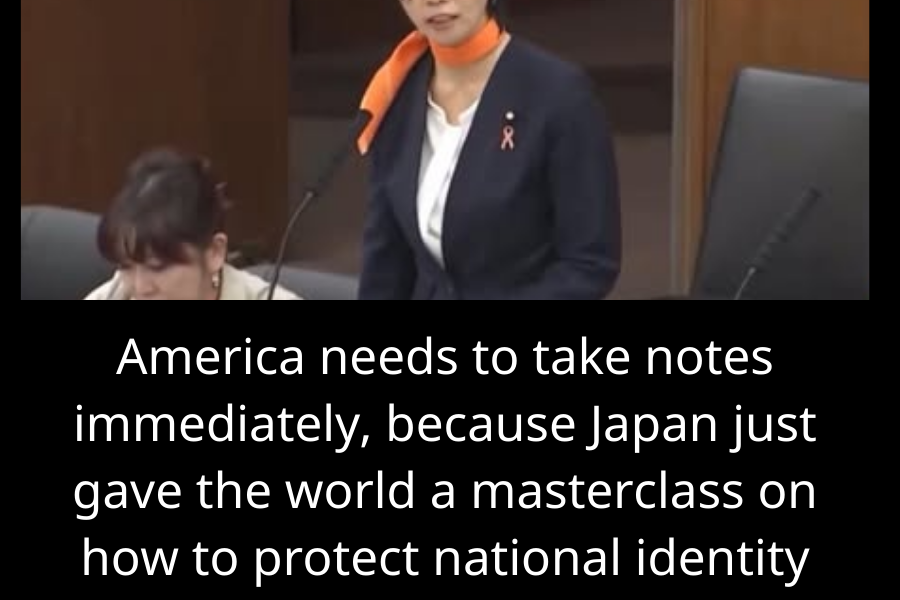
The recent stance taken by Japan regarding burial customs has ignited a complex debate about national sovereignty, cultural assimilation, and immigration policy—a debate with significant implications for Western nations.
Japan’s decision to uphold its long-standing cremation standard and deny requests for Muslim-only cemeteries is a clear assertion of national identity and self-determination. The policy is rooted in a combination of practical considerations—limited land—and a deep-seated cultural tradition. The directive that remains should be returned to their country of origin for burial is a stark reflection of Japan’s homogeneous society and its unwavering commitment to preserving its cultural norms.
This approach stands in sharp contrast to the multicultural models prevalent in many Western countries, including the United States. The Japanese model prioritizes social cohesion and the preservation of its established customs above accommodating diverse religious or cultural practices that conflict with those norms.
The argument that “America could stand to learn something” from this points to a growing sentiment among some observers who believe that the U.S. has, at times, prioritized multicultural accommodation at the expense of its own national confidence and core principles. They see Japan’s firmness as a model of maintaining clear, consistent rules without apology.
Conversely, critics would argue that such policies are insular and fail to respect the religious freedoms of minority groups. The requirement for cremation, for instance, is in direct conflict with Islamic burial rites, which forbid it.
Ultimately, Japan’s position serves as a powerful case study in a nation defining its own rules and upholding its traditions without bending to external pressure. It forces a difficult question: In an era of globalization, to what extent should a nation modify its long-standing customs to accommodate new populations, and where should the line be drawn to protect its national and cultural identity?