
First came the bungled cases, then the backlash — and now, a public ultimatum from one of Trump’s most loyal generals. Michael Flynn is no longer hinting; he’s demanding that Trump rip Pam Bondi out of the attorney general’s chair and put Sidney Powell in her place, framing it as the only way to stop a “business as usual” DOJ from letting Trump’s enemies skate yet again. To Bondi’s camp, it’s an unfair hit job that ignores quiet wins and complex realities. To Flynn’s supporters, it’s long-overdue accountability for a Justice Department that keeps promising big things and delivering embarrassing headlines instead. Somewhere in the middle is a president who hates looking weak, a base that’s running out of patience, and a choice that could either calm the storm — or prove every critic right about how politicized law enforcement has become on his watch.
👇 The key rulings, power players, and pressure points shaping Flynn’s demand — all waiting in the comments.

Flynn’s demand opens a new front in the war over Trump’s Justice Department.
Retired Lt. Gen. Michael Flynn is publicly urging President Donald Trump to fire Attorney General Pam Bondi and immediately nominate Sidney Powell to run the Department of Justice, a move that would dramatically escalate an already raging fight over how aggressively the administration should pursue Trump’s political enemies. Flynn’s call, shared across right-wing media, X posts, and grassroots channels, comes just days after a federal judge threw out high-profile criminal cases against former FBI Director James Comey and New York Attorney General Letitia James, a rebuke that many in Trump’s base blame squarely on Bondi’s leadership.
A humiliating courtroom defeat for Bondi triggered the backlash.
The immediate spark for Flynn’s intervention was the collapse of the Justice Department’s prosecutions of Comey and James, which were central to Trump’s promise to “hold the deep state accountable.” A federal judge ruled that Lindsey Halligan, the interim U.S. attorney who signed the indictments, had been unlawfully installed at Bondi’s direction, meaning she had no legal authority to bring the charges at all. With that single finding, the court wiped out months of work, voided both indictments, and handed Comey and James an undeniable legal victory—at least for now.

The Halligan fiasco magnified concerns about competence inside Trump’s DOJ.
In the judge’s telling, the problem wasn’t just paperwork; it was basic rule-of-law procedure. Halligan, a former Trump lawyer with no prosecutorial experience, was installed in a way that sidestepped normal confirmation processes and left her standing on shaky legal ground from day one. The court also flagged other missteps, including mishandling grand-jury practice and attempts to retroactively fix the appointment once it was challenged. Taken together, the ruling fed a narrative that Trump’s Justice Department, under Bondi, had chased headline-grabbing cases without doing the legal homework necessary to make them stick.
Flynn casts his attack on Bondi as the product of hard-earned experience with DOJ abuse.
For Flynn, the controversy is personal as well as political. Trump’s first national security adviser, he was prosecuted in the Russia investigation, later recanted his guilty plea, and ultimately received a presidential pardon after a years-long legal war that made him a folk hero to the MAGA base. Flynn has long argued that his own case exposed deep corruption and double standards inside the FBI and DOJ. Now he’s using that history to bolster his credibility as an internal critic, insisting that his demand to replace Bondi with Powell is “not an opinion” but rather the logical conclusion of what he sees as persistent institutional failure—most recently on display in the bungled Comey and James prosecutions.
On the right, Bondi’s image has curdled from “fighter” to “dead weight” for many Trump loyalists.
Bondi entered office in February 2025 as a Trump loyalist with strong conservative credentials: former Florida attorney general, impeachment-trial defender, and fixture on right-leaning cable news. But less than a year into her tenure, she is facing a wave of anger from the very movement that cheered her appointment. The aborted “Epstein files” release—heavily redacted, light on new information, and quickly mocked across the spectrum—fed a sense among grassroots activists that Bondi is more interested in PR than prosecutions. Critics complain that there have been no marquee arrests of elite targets, despite Trump’s repeated vows to go after what he calls the “corrupt cartel” in Washington. In this telling, the Comey and James debacle simply confirmed what they already suspected: that Bondi talks tough but can’t close.
Bondi’s allies insist she is quietly advancing Trump’s agenda even as the base fumes.
Inside the administration, Bondi’s defenders argue that the picture is more complicated than talk-radio callers and viral memes suggest. They point to her aggressive moves to unwind “deep state” priorities—shutting down certain foreign-influence and oligarch-tracking task forces, reorienting DOJ resources toward issues prized by Trump’s coalition, and launching new initiatives like a task force focused on the October 7 attacks on Israel. More recently, Bondi has spotlighted actions against foreign adversaries, including a high-profile bounty on Venezuelan president Nicolás Maduro, as proof that the department is hardly asleep at the wheel. They also note that the Comey and James cases were dismissed “without prejudice,” meaning DOJ could, in theory, refile them—if it gets its house in order.
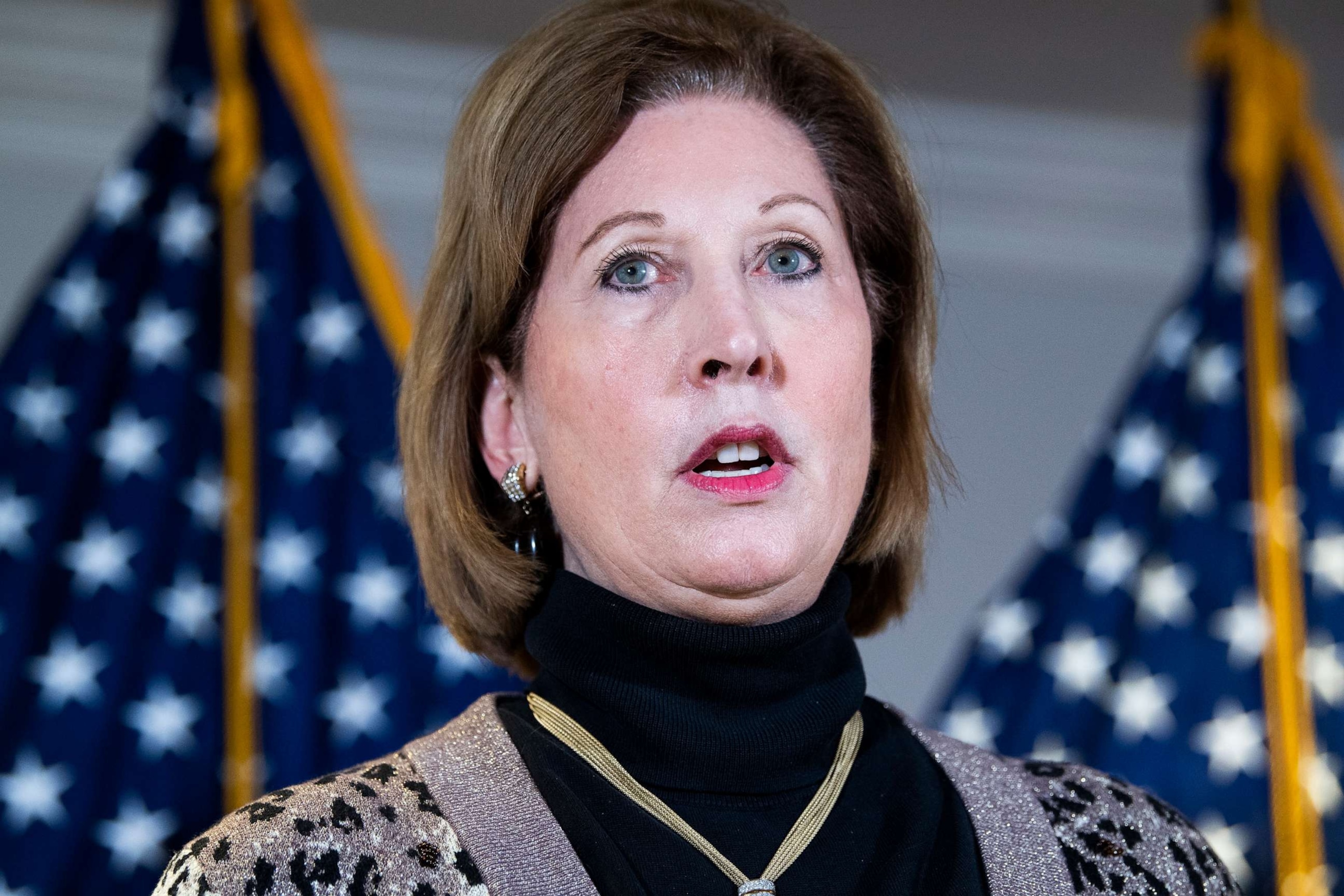
Sidney Powell’s backers see her as the hard-charging outsider who actually delivered for Flynn.
To the MAGA faithful rallying behind Flynn, Sidney Powell is the anti-Bondi: a lawyer who doesn’t just talk about DOJ abuse but has spent decades fighting it. A former federal prosecutor turned appellate specialist, Powell has handled hundreds of federal appeals and became known in conservative legal circles for exposing misconduct in Enron-related prosecutions and in the case of the late Sen. Ted Stevens—stories she chronicled in her 2014 book “Licensed to Lie: Exposing Corruption in the Department of Justice.” More recently, she took over Flynn’s defense, filed blistering motions alleging Brady violations and doctored FBI notes, and helped drive a pressure campaign that culminated in DOJ moving to drop his case before Trump ultimately pardoned him. For Flynn and many of his supporters, that track record proves she has both the toughness and the scars to overhaul a department they view as hopelessly compromised.
But Powell’s election-fraud crusades and criminal case make her one of the most polarizing lawyers in America.
Any case for Powell as attorney general has to grapple with the enormous baggage she brings from the 2020 election. After Trump’s defeat, she became the public face of the so-called “Kraken” lawsuits, filing sprawling complaints in multiple swing states that courts repeatedly found to be riddled with errors and unsupported claims. She was sanctioned by federal judges, referred for possible discipline, and later pleaded guilty in Georgia to misdemeanor charges related to efforts to interfere with election administration, receiving probation and agreeing to testify against co-defendants. Just weeks ago, Trump granted Powell a sweeping federal pardon tied to her role in the fake-electors scheme, a move that drew fierce criticism from legal scholars who say it rewards those who tried to overturn a certified election. For her critics, elevating Powell to the top of DOJ would validate those tactics and further erode public trust in non-partisan law enforcement.
Flynn’s push taps into a broader MAGA revolt against what they see as “DOJ business as usual.”
Flynn is hardly alone in targeting Bondi. A growing chorus of pro-Trump commentators, influencers, and grassroots activists now paints her as a “TV attorney general” who delivers fiery press conferences but few tangible wins against the enemies Trump has promised to punish. Online, some of the movement’s loudest voices have branded her “useless” or “100% incompetent,” accusing her of “riding scared” and “running out the clock” with investigations that never seem to end in actual prison time. The failed Comey and James cases have become Exhibit A in that indictment. At the same time, Powell’s name is being floated not just by Flynn but by other high-profile allies as the person who could “shake things up” and finally deliver the retributive justice many in the base feel they were promised in 2016.
Replacing Bondi with Powell would be legally straightforward—but politically explosive.
On paper, the president has wide latitude to fire an attorney general and nominate someone new, subject to Senate confirmation. Trump has never been shy about cycling through top law-enforcement officials he views as insufficiently loyal. But doing so again, less than a year into Bondi’s tenure and in direct response to pressure from his most hard-line supporters, would send shockwaves through Washington. It would signal that even cabinet-level officials are dispensable if they fail to deliver quick, headline-grabbing wins against Trump’s enemies. It would also trigger a bruising confirmation fight over Powell’s record on the 2020 election, her criminal plea, and the broader question of whether someone so closely associated with efforts to overturn a past result should oversee the machinery of federal law enforcement going into future cycles.
:max_bytes(150000):strip_icc():focal(999x0:1001x2)/pam-bondi-confirmation-hearing-011525-8b4b59d6e383490380d76cd29f6ec1c5.jpg)
The Bondi-versus-Powell debate is really a proxy fight over what Americans want the Justice Department to be.
Pull back from the personalities and a deeper question comes into focus: Should DOJ act more like an apolitical institution that slowly grinds through cases, or like a political weapon aimed squarely at perceived enemies of the president? Critics of Trump’s current approach argue that the failed Comey and James prosecutions, along with other controversial cases against figures like John Bolton and Senator Adam Schiff, show the dangers of treating law enforcement as a tool of retribution; they point to judges’ growing resistance as proof that the system still has guardrails. Flynn and his allies, by contrast, insist that anything less than a full-scale, scorched-earth campaign from DOJ amounts to surrender in a war they believe the “deep state” started years ago. To them, Bondi’s careful calculations look like cowardice, while Powell’s willingness to cross lines is precisely the point.
For now, Flynn’s demand is a warning shot that will shape the next phase of Trump’s second term.
There is no sign yet that Trump is ready to dump Bondi, and the White House has publicly backed her decision to appeal the Comey and James rulings. At the same time, the president is acutely sensitive to signals from figures like Flynn, who retain enormous influence with the grassroots. Even if Powell never becomes attorney general, the pressure campaign is already reshaping the conversation inside Trump world, narrowing the space for institutional caution and rewarding those who promise faster, more aggressive action. Whether Americans see that as overdue accountability or a further slide into politicized justice may depend less on the legal details than on which narrative they already believe about the FBI, the DOJ, and the 2020 election. What’s clear is that the fight Flynn just picked with Bondi is about far more than one job—it’s about who controls the most powerful law-enforcement apparatus in the country, and what they plan to do with it.