Title: The Kamala Harris “Price Gouging” Showdown: When Economics Turns into a Political Circus
In what may be the most chaotic TV moment of the election cycle so far, Fox News’ The Five and conservative commentators erupted this week after Vice President Kamala Harris unveiled her economic plan targeting “price gouging.” What started as a policy discussion quickly devolved into a televised shouting match — one that says more about America’s deep divisions than it does about economics.
At the heart of the controversy is Harris’s call for a federal ban on price gouging, a move she argues will protect consumers from corporate greed. Her critics — both inside and outside Fox News — see it as political theater, a desperate bid to win votes in the middle of an inflation crisis the administration hasn’t fixed.
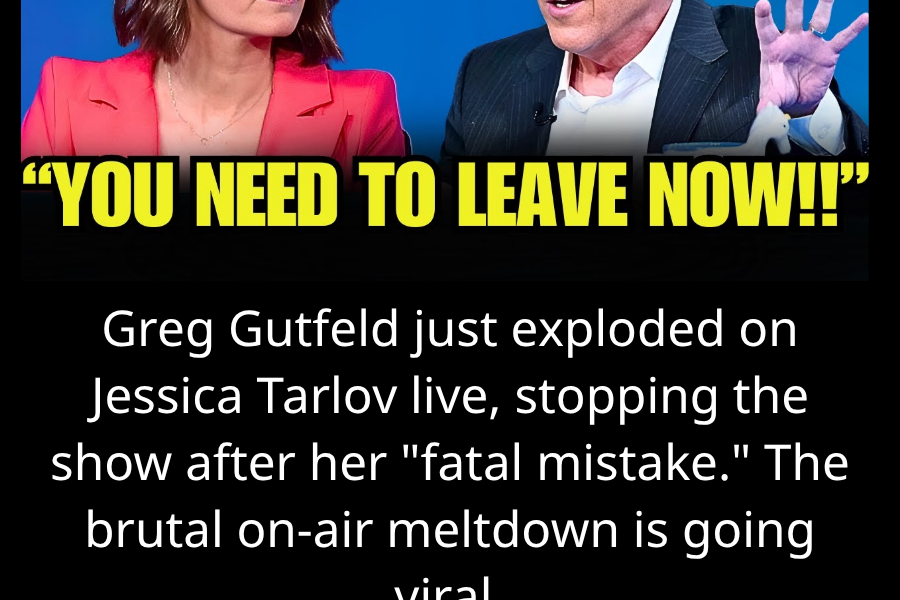
Fox host Greg Gutfeld didn’t hold back. “I’d rather listen to somebody who began as a millionaire and became a billionaire than somebody who doesn’t have a damn clue about economics,” he snapped, comparing Trump’s business background to Harris’s middle-class story. He accused Harris of treating “the American public like idiots,” arguing that her plan is “half an equation — the first half is what sounds nice, the second half, who pays for it, is missing.”
Even more cutting was his line that has since gone viral:
“Nothing is free. And the sooner you figure that out, the better off you’ll be.”
Meanwhile, Democratic commentator Jessica Tarlov attempted to defend Harris, citing an FTC report that found companies like Walmart, Kroger, and Tyson reaping profits far above normal margins during the pandemic. Tarlov argued that Harris’s plan could be viewed as antitrust enforcement rather than strict price controls — a distinction that matters for economists but was instantly drowned out by the noise.
That didn’t stop Gutfeld or the show’s audience from pouncing. “Price gouging is a weak phrase directed at weaker minds,” he declared, while other panelists accused Harris of “pretending to be the savior” for problems she’s had four years to solve. The conservative host ridiculed her middle-class appeal, claiming she’s “campaigning better for Trump than Trump is.”
The video clip — which has since exploded across YouTube and Facebook — sparked a social media storm. Conservative creators blasted Harris as “clueless,” accusing her of weaponizing empathy to mask incompetence. One viral reaction video summed it up bluntly:
“These people can’t tell time. It’s been four years, she hasn’t done anything — and people still live paycheck to paycheck. How is that Trump’s fault?”
Progressive accounts, meanwhile, clapped back. They accused Fox News of deliberately misrepresenting Harris’s plan and ignoring corporate profiteering. “Kamala Harris is literally trying to make food and medicine affordable, and these guys are mad about it,” one tweet read.
But underneath the partisan noise lies a deeper, more uncomfortable question: has America lost the ability to discuss policy without turning it into a tribal war?
The Harris-Gutfeld clash wasn’t really about price gouging, inflation, or even economic theory. It was about identity — about who you trust to tell you what’s true. On one side, a vice president who wants to be seen as a champion for working families; on the other, a network that thrives on painting her as a radical socialist threat.
In the end, no one won the argument — but everyone got what they wanted. Harris got airtime as the “fighter for the people.” Gutfeld got his viral moment, complete with thunderous applause and a hundred new soundbites for conservative media. And the audience? They got outrage — the new currency of American politics.
Whether or not Harris’s proposal ever becomes law, the exchange proved one thing: in 2025, policy isn’t about numbers anymore — it’s about narrative.
And the narrative war just keeps getting louder.