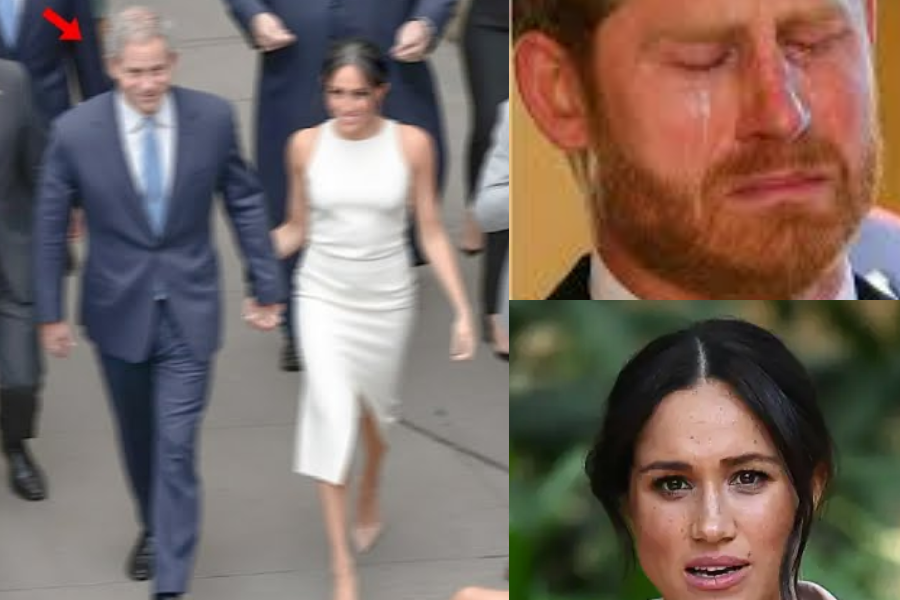
Harry and Meghan once sold us a fairy tale. The dazzling couple who walked away from the palace yet somehow seemed untouchable, basking in the glow of Netflix spotlights, lucrative speaking tours, and glossy magazine spreads.

They were modern royalty rebranded for the American dream. But every story has its turning point, and sometimes it comes not with a scandal but with something far quieter: a glance, a pause, a missed gesture. One such moment recently cracked open their carefully curated image—and it happened live, where no edit button could rescue them.
The stage was set at a high-profile charity fundraiser. For Harry, this should have been routine—another chance to play the approachable prince with the weight of duty softened by charm. He strode forward confidently, smile flashing, the crowd cheering as if on cue. For a split second, it looked like the Harry everyone expects: warm, princely, polished. And then came Meghan. Unexpected, unannounced, stepping into the spotlight at his side.
Harry’s face told the story first. Surprise flickered across his features, quickly masked by the polite half-smile of someone who knows the cameras are watching. But it was too late; the instinctive reaction had already escaped. He didn’t place a hand on her back, didn’t introduce her to the crowd, didn’t even nod in acknowledgment. He simply carried on, greeting the audience with his trademark “Hi everybody,” while Meghan hovered at his side—visible, yet curiously invisible.
What happened next sealed the whispers into full-blown speculation.

Meghan leaned subtly toward the microphone, as though ready to share in the speech. Harry didn’t shift. He didn’t offer the mic, didn’t pause for her to speak. Instead, he pressed on, his tone smooth and firm, as though reclaiming the spotlight for himself. Meghan retreated, smiling but visibly unsettled, slipping off to the side in what looked like frustration disguised as composure.
It wasn’t explosive. No words were exchanged. But that silence—the absence of acknowledgment—was deafening. For a couple whose entire brand hinges on being a united front, this was a rare moment of dissonance. And dissonance, when magnified by cameras and replayed endlessly online, becomes more than just an awkward slip. It becomes a symbol.
Why does this matter?
Because public perception is the currency of the Sussexes. Their Netflix deals, their podcasts, their speaking tours—all depend on the image of Harry and Meghan as a packaged rebellion against the monarchy. The exiled royals who embody love, modernity, and defiance together. If unity falters, so does the brand.
The contrast with William and Catherine only sharpens the edges. The Prince and Princess of Wales move as if choreographed: a glance exchanged, a hand placed lightly at the right moment, each reinforcing the other’s presence. They embody seamless partnership, a living advertisement for continuity and discipline. Harry and Meghan, on that stage, looked like two people reading from different scripts. He, the prince rediscovering his solo rhythm; she, the actress unwilling to fade into the supporting role.
This wouldn’t be noteworthy if it stood alone. Couples have awkward moments all the time. But framed against their recent struggles—the collapse of Spotify deals, fading Hollywood interest, mounting criticism from both British tabloids and American media—it feels less like an accident and more like a symptom. Harry’s causes, from veterans’ issues to mental health, still carry weight. Meghan’s projects, meanwhile, often stumble under accusations of opportunism and overexposure. The imbalance is clear, and the fundraiser moment seemed to act it out in real time.
Royal watchers argue it’s not just about marriage dynamics—it’s about identity. Harry may be carving a path back toward legitimacy, eager to be seen as more than “the spare who left.” Meghan, on the other hand, remains locked in a battle to stay relevant, fighting not to become a footnote. When she reached for that microphone, it wasn’t just for the crowd’s attention—it was for her place in the story.
And then there’s the monarchy itself, watching from a distance.
While William sits in long strategy talks with Charles at Balmoral, shaping the future of the crown, Harry secures only brief, carefully managed meetings. The message is implicit: the monarchy moves forward with or without him. In that context, Harry’s subtle reassertion of independence on stage feels telling, almost inevitable.
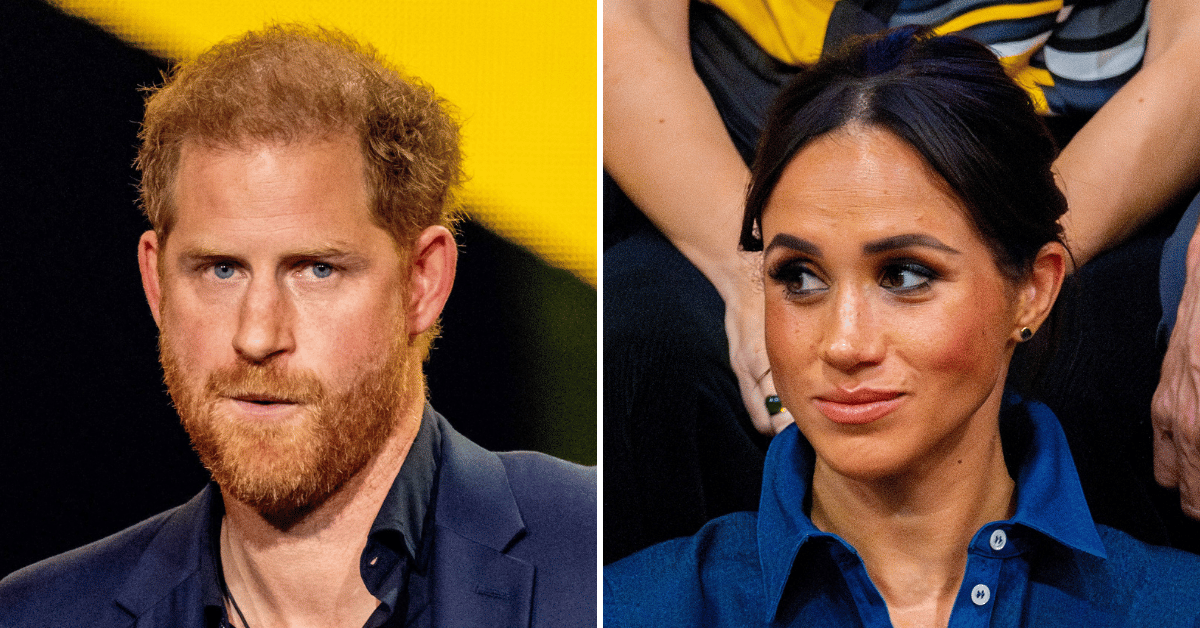
The fundraiser clip may look like a blip, but blips reveal more than they hide. Once you’ve seen the hesitation in Harry’s eyes, Meghan’s faltering smile, the silent gap where acknowledgment should have been—it’s hard to unsee. Fairy tales, after all, only sparkle until the cracks catch the light. And right now, the cracks in the Sussex story are beginning to outshine the gloss.