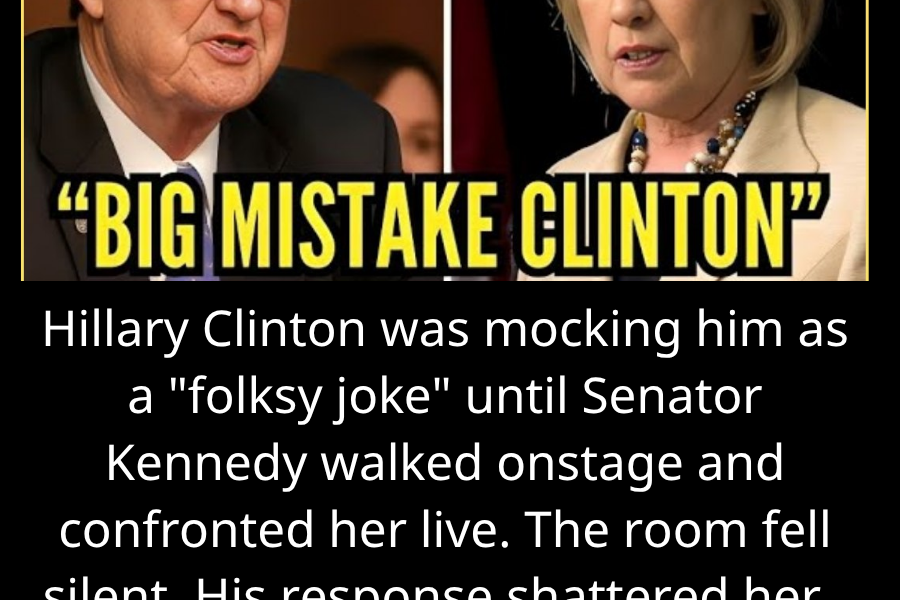
The air at the Baton Rouge fairgrounds was thick and humid, charged with the electric buzz of a high-profile political forum. Red, white, and blue signs waved through the crowd. Locals, from farmers in worn jeans to young professionals clutching smartphones, filled the seats, drawn to the spectacle. It was a festive atmosphere, but the anticipation was palpable. Then, Hillary Clinton took the podium.
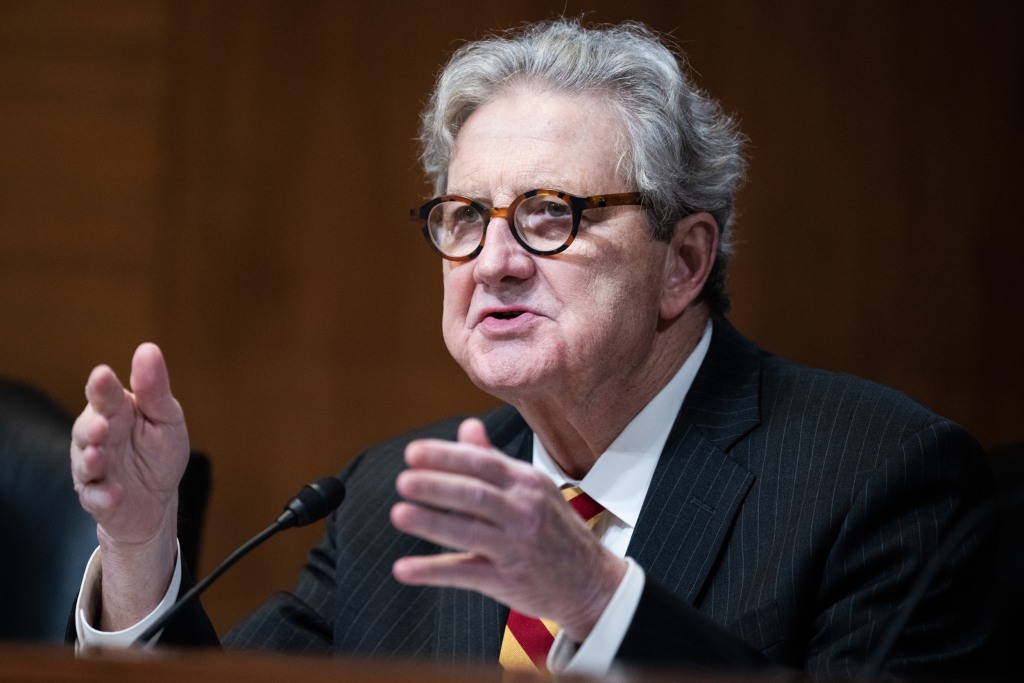
Flashing a confident smile, she leaned into the microphone. The crowd’s cheers quieted. “You know,” she said, stretching the words, “some folks think Senator John Neely Kennedy is the people’s champion.” She paused, letting the chuckles rise before delivering the punchline with a sharp, mocking laugh. “I mean, his talk on cutting taxes and regulations, it’s like a broken record from the bayou. Big promises, no results.”
The crowd erupted. Her supporters laughed wildly, fueled by the biting, sarcastic jab. Clinton savored the moment, waving dismissively. “The man thinks he’s saving America with his folksy speeches, but he’s just stalling progress.”
Phones shot up, cameras flashed, and the amusement swelled. Clinton was in complete control, her opponent miles away, unable to defend himself from the ridicule.
But then, something changed.
A stir rippled through the crowd near the stage. Heads turned. Murmurs grew into a soft chant: “Kennedy… Kennedy… Kennedy.”
Almost unbelievably, Senator John Neely Kennedy, in a simple suit, was striding toward the stage. He was unannounced, uninvited, and utterly composed. The vibe shifted instantly. Half the crowd gasped; the other half looked stunned. The energy seemed to drain from the space, sucked into the vacuum of the unfolding drama.
Clinton’s smile flickered. She covered it with a nervous chuckle as Kennedy reached the steps, nodded politely to security, and climbed up. He didn’t grab the microphone. He didn’t rush. He simply looked at Clinton, gave a slight nod, and waited.
The silence was heavy.
Clinton broke it first, her voice straining for levity. “Well, look who’s crashing the party. Didn’t know you were invited, Senator.”
Kennedy tilted his head, his eyes steady. His calm, firm voice cut through the tension. “I wasn’t. But since you’re talking about my work for Louisiana, I figured I’d hear it myself.”
Gasps swept the crowd. Reporters scrambled. This was no longer a routine forum; it was a historic, unscripted showdown.
Clinton tried to regain her footing, falling back on her attack. “Oh, perfect. The guy who’s all talk on fiscal responsibility. Tell us, John, how’s that working out? Not much to show, is there?”
This was the moment. The crowd braced for a shouting match, for insults to be traded. Kennedy didn’t flinch. He leaned into the mic, his voice even. “Hillary, the people of Louisiana can decide that. They know where we started and where we are. But I don’t tear others down to feel better.”
The crowd stirred, a mix of cheers and jeers. But the dynamic was set. Even Clinton’s strongest supporters could see the stark contrast: her sharp mockery versus his steady resolve.
Kennedy pressed his advantage, not by raising his voice, but by reframing the entire debate. “Laugh at my policies if you want. That’s politics. But when you mock the families who’ve gained from tax cuts, the workers with new jobs… you’re not mocking me. You’re mocking them.”
The words hit hard. The laughter that had filled the fairgrounds just moments before faded. A woman in the front row lowered her phone, her grin softening. Kennedy had masterfully turned her personal attack into an insult against the very voters she was trying to win.
Clinton, forcing a laugh, tried to brush it off. “See, folks? This is his trick. Folksy talk that sounds nice but means nothing. Just words.”
“Sometimes, Hillary,” Kennedy replied simply, “words rooted in truth outweigh sarcasm.”
The hush was palpable. Then, a new wave of applause began—not the raucous cheer for Clinton’s jokes, but a genuine swell of support for Kennedy. The night had been flipped upside down.
What followed was a masterclass in political jiu-jitsu. Kennedy changed the rhythm of the entire event, transforming the stage from a platform for mockery into an intimate town hall. As Clinton paced, gesturing broadly and growing visibly “rattled,” Kennedy stood “like a rooted oak,” his calm becoming his greatest weapon.
He pivoted from defense to deep, personal connection. He began to tell stories. He spoke of traveling the “back roads of Louisiana,” naming towns like Nachitoches, Opelousas, and Franklin. He talked about the people he’d met, painting a vivid picture of the lives Clinton had dismissed.
“I’ve sat with shrimpers in Grand Isle who were worried about regulations choking their family businesses,” he said, his tone warming. “Teachers in Monroe stretching paper-thin budgets… veterans in Alexandria searching for work.”
He looked out at the crowd, his voice resonating with sincerity. “Those stories aren’t punchlines to be mocked. They’re the heartbeat of what drives me.”
Clinton tried to interrupt, “Here’s the preacher act again! Nice tales, Senator, but where are the real solutions?” Her jibe sounded forced, out of step.
Kennedy pressed on, bringing abstract policy to life. “When you mock tax cuts… you’re mocking the small businesses in Slidell that are hiring more workers… families in Covington who are keeping more of their hard-earned paychecks. That’s not a joke… that’s the heart of America.”
The cheers surged, broader and louder than before. The online reaction was exploding. Clips of the exchange went viral, with hashtags like #KennedyCalm and #LouisianaStrong trending. Kennedy’s quiet strength was resonating far beyond the fairgrounds.
Clinton, sensing the crowd slipping away, made a final, desperate play. She pointed her finger, her voice sharp with anger. “Look at him, folks, acting like he’s above it all! He doesn’t truly understand what real Americans go through. He’s been in that Senate bubble… for far too long!”
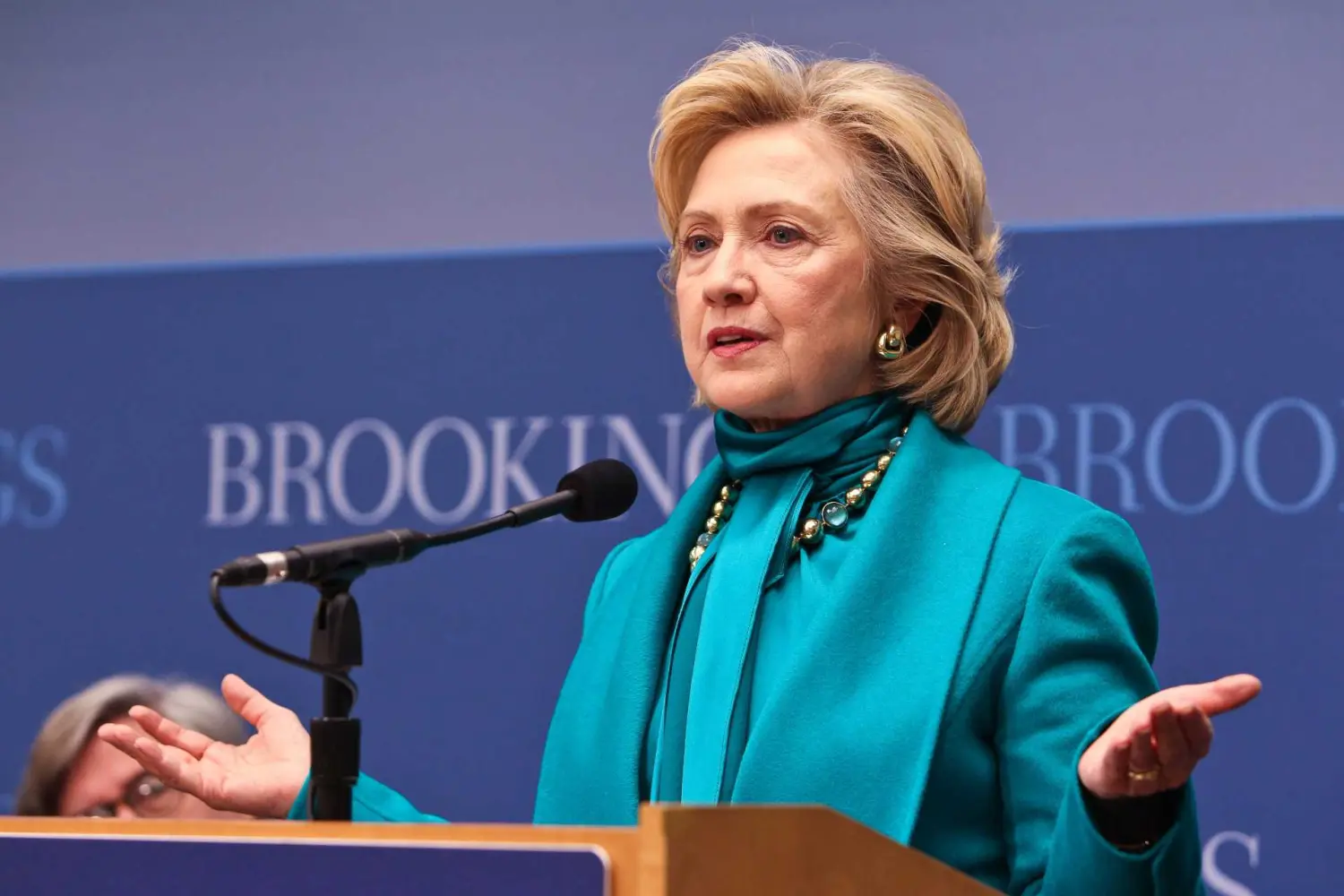
It was the opening Kennedy was waiting for. He leaned in, his gaze steady and unflustered. “Hillary, I didn’t grow up in any kind of bubble. I came up through hard work, knowing the struggles of folks just like those here tonight. People who get up before dawn… and pray their kids get a better shot at life.”
He paused, then delivered the final, defining lines of the night, turning the question back on the audience.
“I carry those stories with me every day. And that’s who I fight for… not power, not ego, but the people of Louisiana.”
The roar from the crowd was thunderous, the tide now decisively turned.
“Ask yourselves this,” Kennedy concluded, his voice ringing with quiet conviction. “Do you want leadership that mocks and divides, or leadership that listens and unites? Do you want jokes at others’ expense, or results that lift communities up? That choice isn’t mine. It’s yours.”
The applause was overwhelming. Clinton’s final attempts to speak were drowned out. She had walked on stage the confident headliner, a political heavyweight ready to land a few punches. She was left standing next to a man who, without raising his voice, had taken the entire stage, the crowd, and the night from her. He hadn’t just won an argument; he had demonstrated that in a world of noise, true strength is often calm, steady, and rooted in the people you serve.