(The script flips. The accuser becomes the accused. The battlefield isn’t a foreign desert, but the digital and political terrain of Washington. The charge: “War Criminal.”)
The Geometry of a Grenade: Ilhan Omar, the “War Crime” Label, and the New Rules of Political Warfare
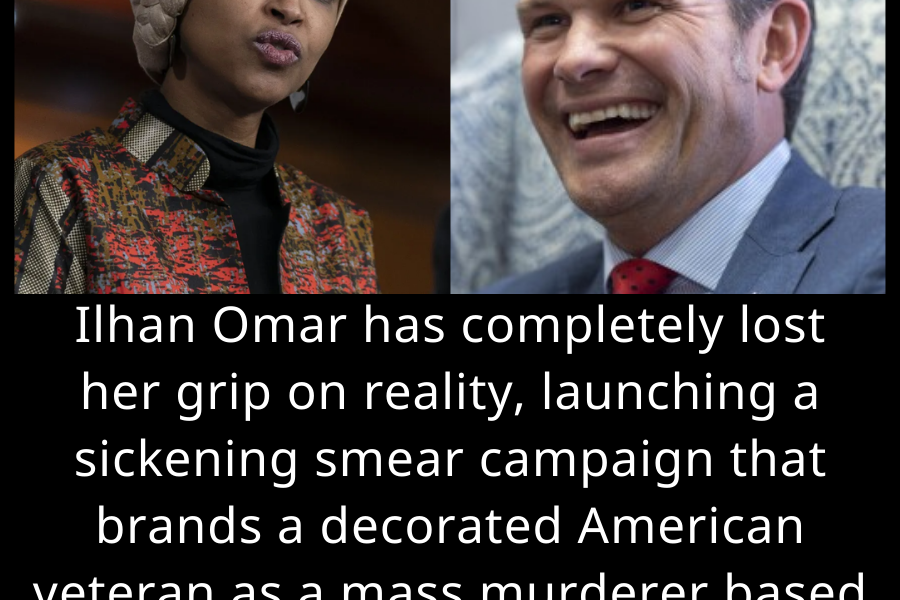
Congresswoman Ilhan Omar didn’t just level a criticism. She didn’t just say “I disagree.” She launched a verbal Hellfire missile, calibrated for maximum structural damage:
“It should shake every one of us to read that the Secretary of Defense may have ordered the killing of unarmed survivors. This dangerous overreach has led to a war crime.”
The target: Pete Hegseth. The payload: a term that carries the moral weight of Nuremberg, The Hague, and history’s darkest chapters.
This isn’t partisan sniping. This is strategic escalation. And to understand its power, you have to understand the new, fractured geometry of American political conflict.
Part 1: The Charge – “War Crime” as a Political Atom Bomb
First, let’s acknowledge the gravity of the term. “War crime” is not mere hyperbole. In the legal and moral lexicon, it sits alongside “genocide” and “crimes against humanity.” It implies a violation of the Geneva Conventions, the laws of armed conflict, the fundamental rules that separate combat from slaughter.
By applying it to a sitting U.S. Secretary of Defense—a decorated veteran, a political appointee, a symbol of the military establishment—Omar is doing several things at once:
- Shifting the Frame: She moves the debate from policy effectiveness or tactical mistakes to the realm of international law and mortal sin. A “bad strike” is an error. A “war crime” is an atrocity. This re-frames supporters of the action from political allies to potential apologists for atrocity.
- Claiming the Moral High Ground: The statement begins, “It should shake every one of us…” This is an invocation of universal humanity, not partisan identity. It’s an attempt to build a coalition of the horrified that transcends left and right. She is painting the issue not as “Democrats vs. Republicans,” but as “humanity vs. criminality.”
- Weaponizing Procedure: She directly links the charge to her legislative action: “These strikes are exactly the kind of unchecked military actions I moved to block through a War Powers Resolution.” This transforms the accusation from mere rhetoric into a retroactive justification for political conduct. It says: I saw this coming. I tried to stop it. Now you see why.
Part 2: The Target – Why Pete Hegseth? Why Now?
The choice of target is not incidental. Pete Hegseth isn’t just any cabinet secretary. He is a cultural avatar. A former Fox News personality, a vocal critic of what he termed “woke military” weakness, a figure who embodies a specific, aggressive vision of American power: unapologetic, kinetic, and disdainful of what he sees as hand-wringing over rules of engagement.
Accusing him of a war crime is the most direct possible assault on that entire worldview. It is the ultimate “check your privilege” aimed at the architecture of militant nationalism. It screams: Your strength is not vigilance; it’s barbarism. Your patriotism is not defense; it’s criminality.
The timing, tied to a POLITICO report, is also key. It’s reactive, but it’s reaction with a doctrinal purpose. It seizes a moment of alleged revelation to cement a pre-existing narrative: that this administration’s foreign policy is inherently lawless, and its champions are not patriots, but potential defendants.
Part 3: The Blowback – “She’s Lost It” and the Discounting Playbook
The immediate counter-narrative—“Ilhan Omar has completely lost it”—is the predictable and essential response. It’s a playbook move: when the charge is too grave to engage on substance, attack the credibility and sanity of the accuser.
This seeks to achieve several goals:
- Personalize: Shift focus from the act (a possible unlawful strike) to the person (Omar’s history of controversial statements).
- Pathologize: Frame her accusation not as a serious legal/political argument, but as hysterical, unhinged rhetoric. “Lost it” implies a break from reality, a disqualifying emotionalism.
- Tribalize: For those already predisposed to view Omar as a radical outsider, it confirms their bias. It allows her opponents to dismiss the underlying report (from POLITICO, a mainstream outlet) without engaging its contents, because it is now tainted by her “crazy” delivery.
This creates the dizzying, modern standoff:
- Side A sees a brave legislator naming a grave crime, using the strongest possible language to shock a complacent system.
- Side B sees an unhinged partisan exploiting a tragedy to smear a hero, degrading the serious concept of war crimes for political points.
The Underlying Fault Line: Two Irreconcilable Concepts of American Power
Beneath the fury lies the real, unresolved schism.
Omar’s worldview (and that of the progressive left she represents) is increasingly cosmopolitan and legalistic. It views U.S. military action through the prism of international law, accountability, and a deep skepticism of executive overreach. In this view, calling a potential war crime a “war crime” is a moral and civic duty, however uncomfortable.
Hegseth’s worldview (and that of the nationalist right he represents) is sovereigntist and outcome-oriented. It views international law as often a fetter on necessary action, prioritizes American security above all, and sees accusations of war crimes as weapons used by bad-faith actors and globalist institutions to tie America’s hands.
When Omar says “war crime,” she is speaking the language of The Hague.
When her detractors say “she’s lost it,” they are speaking the language of political warfare.
They are not having the same argument. They are operating in different moral universes, using the same event as proof of their pre-existing, diametrically opposed truths.
The verdict? Ilhan Omar hasn’t “lost it.” She has chosen her weapon. In a political environment where norms of restraint have shattered, she has matched the escalatory rhetoric coming from the other side with an escalation of her own—one that reaches for the highest possible moral stakes.
Whether this is a tragic degradation of discourse or a necessary confrontation with hard truths depends entirely on which side of the schism you stand.
The charge has been filed. Not in a court of law, but in the court of public opinion, where the gavel is never finally swung. ⚖️💥