(The subtext here is a generational earthquake. It’s not about TikTok. It’s about the collapse of a monopoly on the narrative.)
The Curriculum vs. The Feed: How Hillary Clinton Diagnosed a Power Transfer She Can’t Reverse
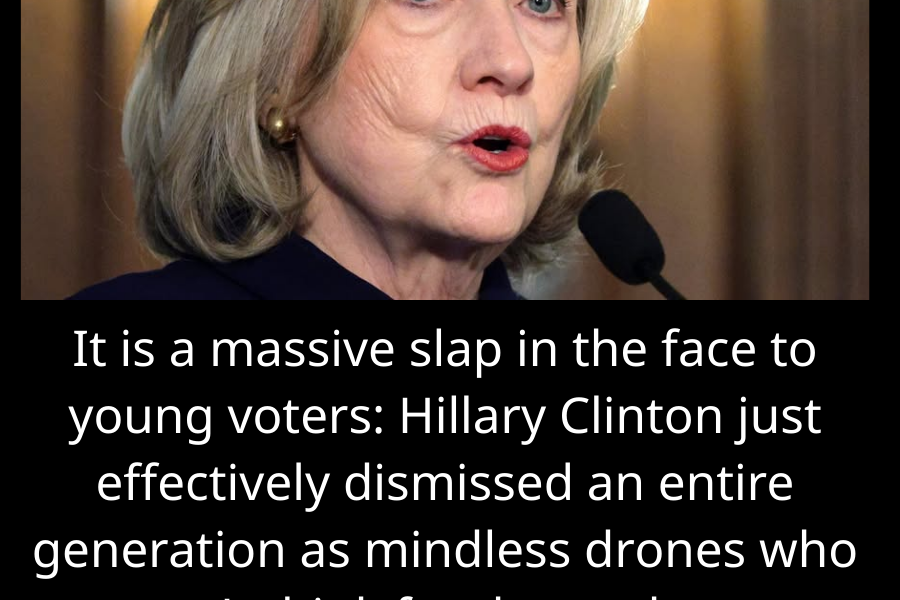
Let’s be clear. This isn’t a story about “misinformation.” That’s the surface-level complaint, the respectable frame. This is a story about the collapse of gatekeeping. What Hillary Clinton described at that summit isn’t a technical glitch in media consumption. It’s a fundamental transfer of narrative power from her generation’s institutions to a platform her generation doesn’t control, speaking in a language it doesn’t understand.
Her words are a map of that disorientation.
Part 1: The “Serious Problem” – When the Lectern Loses to the Algorithm
Clinton’s concern is layered, and each layer reveals a deeper anxiety.
Layer 1: The Platform Anxiety. “More than 50% of young people in America get their news from social media.”
The shock here isn’t that the news is on social media; it’s that it’s not coming through the curated, hierarchical channels she recognizes as legitimate. The editorial board, the seasoned foreign correspondent, the State Department briefing, the Council on Foreign Relations report—these are the sanctioned pipelines of “context.” TikTok, Instagram Reels, YouTube shorts? These are the unregulated aquifers, and everyone is drinking from them.
Layer 2: The Format Anxiety. “They are seeing short-form videos… some of them totally made up.”
The “short-form video” is the antithesis of the policy whitepaper, the diplomatic cable, the hour-long Sunday show interview. It is visceral, emotional, and narrative-driven. It shows airstrikes in real-time, not as a strategic briefing. It shows the rubble of a Gazan home before a spokesperson can explain the military necessity. It privileges testimony over **testimony*. It’s a raw, unfiltered feed of consequence, and it bypasses the traditional filters of “expert analysis” that often sanitize or delay the horror.
To call this “misinformation” is to miss the point. The power of the video isn’t in its factual purity; it’s in its emotional authenticity. A generation raised on this format has developed a profound, instinctive distrust of polished, official narratives that feel disconnected from the raw footage in their palms.
Layer 3: The Historical Anxiety. “They did not know history. They had very little context.”
This is the core of the clash. For Clinton, “history” and “context” are the curated, established diplomatic and historical record—the Oslo Accords, the Camp David summits, the U.S.-Israel “special relationship.” It’s a history of processes, negotiations, and state actors.
For the generation on TikTok, “history” and “context” look different. It’s the continuous, unedited footage of the occupation itself. It’s the 75-year timeline of displacement, the side-by-side maps of shrinking Palestinian land, the firsthand accounts of checkpoints and settlements. This isn’t a lack of context; it’s a different context, one built from a ground-up, often Palestinian-centric narrative that has been systematically excluded from mainstream American discourse for decades.
When Clinton says they don’t know history, what she might mean is: They don’t know MY history. They don’t accept the framework in which my policies were made.
Part 2: The “Shocking” Realignment – When Your Team’s Children Defect
The most telling part of her remarks is the note of genuine, bewildered betrayal.
“a lot of young Jewish Americans” don’t “understand” the historical context.
This isn’t just about “the usual suspects” on the left. This is about her own assumed constituency. The liberal, educated, Jewish American community that was a bedrock of Democratic and pro-Israel policy for generations is fracturing from within. Their children are looking at the same TikTok videos, hearing the same testimonies, and applying a 21st-century lens of social justice, anti-colonialism, and human rights to a conflict their parents viewed through the lenses of Holocaust memory, Cold War alliances, and bipartisan consensus.
This isn’t a failure of education. It’s a success of a counter-education. The “propaganda” she fears is, to them, the unlearning of propaganda they now believe they were fed. The curated “context” has been replaced by the visceral “content.”
Part 3: The “Serious Problem for Democracy” – A Fear of the Unmediated Polis
Finally, let’s decode her ultimate worry: “It’s a serious problem for democracy.”
From her perspective, it is. Democracy, in the 20th-century liberal playbook, relies on a informed citizenry getting its information from responsible, fact-checked institutions. It’s a top-down model: experts inform journalists, who inform the public, who then vote.
The social media model is a lateral, peer-to-peer, emotionally networked system. It’s a messy, democratic (small ‘d’) cacophony. It empowers the witness over the analyst. It can spread lies with terrifying speed, yes. But it can also break a consensus with devastating efficiency, as the Pew data shows.
The “serious problem” is that this new model is making the old foreign policy consensus—one Clinton helped build and embody—electorally unsustainable. The shift in public opinion isn’t happening in op-eds; it’s happening in the comments section, in shared Reels, in DMs. The gatekeepers have been laid off. The walls are down.
The Verdict: The Library is on Fire, and Everyone Has a Livestream
Hillary Clinton is not wrong that misinformation floods these platforms. She is not wrong that history is complex.
But she is diagnosing a fever while missing the disease. The disease is a profound crisis of legitimacy in the institutions she represents. Young people aren’t turning to TikTok despite it being unreliable; they are turning to it because the sources they’re told to trust have, in their view, been reliably misleading on this issue for their entire lives.
The “smart, well-educated young people” she worries about are using their education precisely as they were taught: to question power, to center marginalized voices, to demand consistency in moral principles. They are just applying those tools to a sacred cow of American foreign policy, using evidence (“short-form videos” of actual violence) that the old guard dismisses as “propaganda.”
Her speech wasn’t a solution. It was an elegy. An elegy for a time when the narrative could be managed, when context came with a moderator, and when the smart, well-educated young people learned their history from syllabi, not algorithms.
That time is over. The curriculum has been hacked. The students are teaching each other in the courtyard, and the dean doesn’t speak their language.
The problem isn’t that they don’t know history. The problem, for some, is that they’re writing a new one.