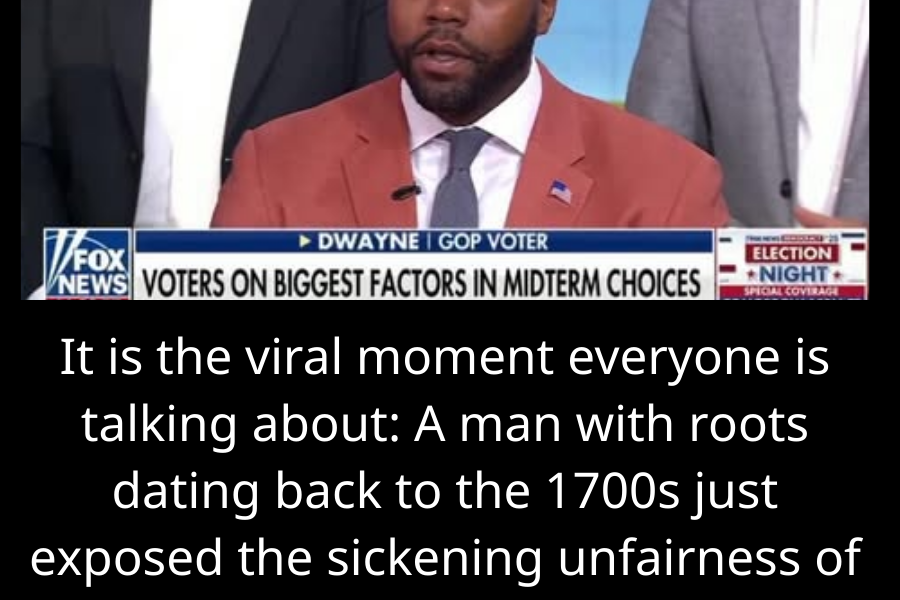
(The political discourse just got a dose of what feels like a rare superpower these days: calm, measured, and utterly conviction-filled common sense. No algorithms, no rage-bait, just a mic-drop moment that’s ricocheting across the internet.)
The Civility Code: How a “Mic Drop” Moment Cuts Through the Immigration Noise
Let’s be real. The immigration debate is a screaming match. It’s a torrent of cable news graphics, viral border videos, and politicians talking at each other from fortified ideological trenches. Then, out of nowhere, comes a voice that doesn’t scream. It explains. And in doing so, it dismantles the entire “us vs. them” framework with a simple, powerful, and almost theological logic.
This guy’s monologue isn’t just a political take; it’s a cultural artifact. It’s the quiet argument that speaks louder than a million angry tweets. Let’s break down why it’s so phenomenally effective.
1. The “Kindness vs. Respect” Framework: A Philosophical Gut-Punch
He doesn’t start with borders or numbers. He starts with kindness. And more importantly, he redefines it.
“The difference between being kind, and to me in my faith is, one thing is being nice to people from different lands, but they also have to be respectful of our laws.”
Boom. In one sentence, he flips the script. He takes the progressive mantra of “kindness” and reframes it not as a one-way street, but as a reciprocal contract. In his view, true kindness isn’t unconditional; it’s built on a foundation of mutual respect. You respect our laws, we respect your journey. It’s a profound shift from charity to covenant. He’s not arguing against compassion; he’s arguing for a structured compassion that doesn’t erode the host.
This isn’t nativism; it’s a plea for order. And order, for most people, is the bedrock of a functioning society.
2. The Ancestral Receipts: “We Had to Work for It”
Then, he pulls out the ultimate trump card: his own family’s history. And he does it without an ounce of aristocratic pride, but with the gritty authenticity of earned success.
“My family has been here since at least the 1700s. There’s no one that’s gave us a free $1,400 debit card, no one gave us a free apartment, no one gave us anything free, we had to work for it.”
This is the part that hits different. It’s not “I got mine, screw you.” It’s “We built this through sacrifice, and the rules of building it should matter.” He’s invoking the spirit of the American contract—the promise that hard work and playing by the rules leads to prosperity. The mention of specific benefits ($1,400 debit cards, free apartments) directly targets the visceral frustration over perceived inequity, the feeling that newcomers are being given a shortcut that generations of Americans never got.
It’s a powerful, emotionally resonant argument that data points can’t easily counter.
3. The Common Sense Calculus: “How Much is Too Much?”
Finally, he lands the plane with a question that the current administration struggles to answer convincingly: “How much is too much?”
“We allowed 20 million immigrants in here legally since 2000. How much is too much, and how much are we going to put the burden on the taxpayers because the money has to come from somewhere? It’s just common sense.”
He cites a number—20 million—that is intended to shock the system. Legal or not, the figure is meant to convey a sense of scale, of a system being overwhelmed. And then he pivots to the most universal language of all: accounting. The money has to come from somewhere. It’s a nod to every taxpayer who looks at their paycheck and wonders where it’s going.
He’s not arguing for zero immigration. He’s arguing for a managed process. He’s pointing to the legal immigration system as proof that America is generous, while simultaneously questioning the sustainability of its current strain.
The Verdict: Why This Resonates Beyond the Base
This wasn’t a speech for a political rally. This was a conversation at a kitchen table that just happened to go viral. Its power lies in what it’s not.
It’s not angry. It’s firm.
It’s not hateful. It’s principled.
It’s not abstract. It’s personal.
He successfully articulates a conservative worldview not as a rejection of others, but as a desire to preserve the foundational contract of American life: law, order, reciprocity, and earned success. For the millions of Americans who feel shouted down as “bigots” for wanting secure borders, this monologue is a validation. It gives them a calm, logical, and morally grounded script to explain a position that is often caricatured.
The left faces a real challenge with this: how do you argue against “common sense” and “respect for the law” without sounding like you’re against both?
He didn’t just drop the mic. He handed a blueprint to a silent majority that’s been searching for the words.
The echo you hear isn’t just applause. It’s the sound of a narrative shifting. 🎤