The Pen and the Privilege: JK Rowling’s Masterclass in Exposing the Celebrity Activist Bubble
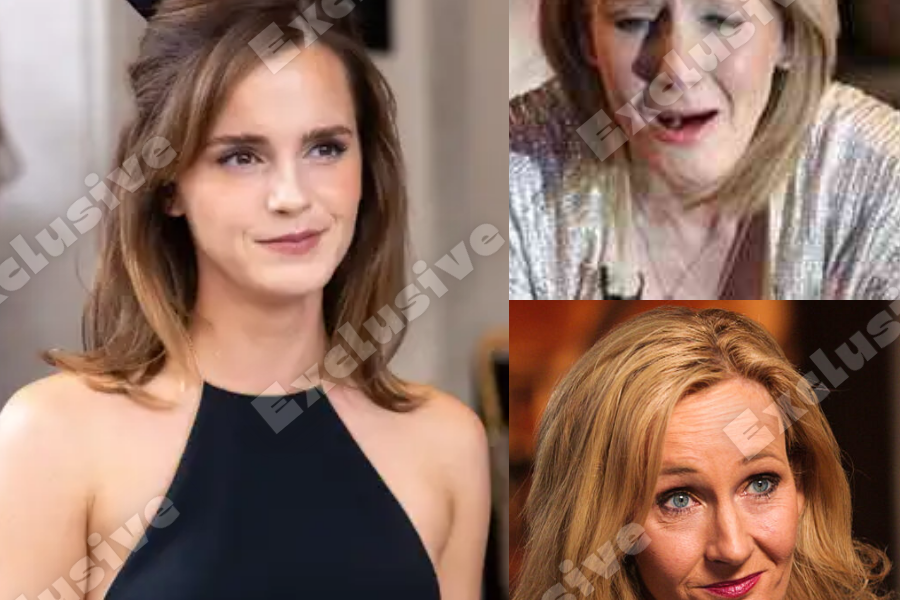
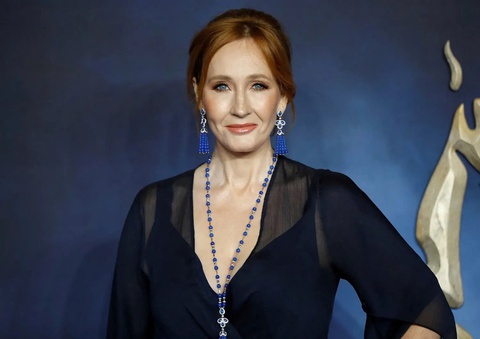
In the long-running cultural war over gender ideology, a ceasefire was never likely. But few could have predicted the sheer, surgical precision with which JK Rowling would finally detonate the bridge between herself and the stars she made. For years, she endured the public critiques from Emma Watson and Daniel Radcliffe, the faces of her magical world, as they positioned themselves as spokespeople for a cause that vilifies her. She held her tongue, exercising a protectiveness forged from knowing them since they were children. But that silence is now broken, and the result is a devastating critique not just of Watson, but of an entire class of celebrity activists utterly divorced from reality.
Rowling’s statement, a masterclass in rhetorical evisceration, moves beyond the simple “cancel culture” narrative. It zeroes in on the profound disconnect between the wealthy, cosseted lives of the activists and the brutal, material consequences of the policies they champion.

The core of her argument is a stark contrast in lived experience. She contrasts Watson’s life—”uncushioned by wealth and fame,” where her public bathrooms are “single occupancy and come with a security man standing guard”—with the grim realities facing ordinary women and girls. Rowling forces us to ask the questions Watson will never have to confront:
Has she had to strip off in a newly mixed-sex changing room at a council-run swimming pool?
Is she ever likely to need a state-run rape crisis centre that refuses to guarantee an all-female service?
Will she ever find herself sharing a prison cell with a male rapist who’s identified into the women’s prison?
The power of these questions lies in their concrete, tangible nature. They move the debate away from abstract “inclusion” and into the realm of female safety, dignity, and survival. Rowling, who famously lived in poverty while writing the book that made Watson a multi-millionaire as a teen, grounds her stance in a reality Watson can only theorize about from a position of absolute safety.
The most cutting revelation, however, is one of personal betrayal. Rowling discloses that at the peak of the death and rape threats against her—threats amplified by the very movement Watson was cheering on—the actress sent her a handwritten note. It contained a single, patronizing line: “I’m so sorry for what you’re going through.”
The audacity of this gesture is breathtaking. It reveals a psyche so insulated, so ignorant of genuine human conflict, that it believed a one-line apology could absolve her of publicly pouring “petrol on the flames” that were threatening a former friend’s life. This wasn’t empathy; it was a performance of conscience, a box-ticking exercise that allowed Watson to feel like a “good person” while actively contributing to the crisis.
This gets to a deeper, more disturbing truth that many have long suspected: much of this performative activism is not driven by genuine belief, but by social obligation. As one commentator noted, it’s the modern equivalent of posting a black square on Instagram—a signal of tribal allegiance rather than a deeply held conviction. How many of these celebrities, in their private moments, truly believe a person can change their sex with words? It requires a belief in magic as potent as anything in Hogwarts, yet they espouse it as settled science to remain on the “right side” of a fleeting cultural trend.
:max_bytes(150000):strip_icc():focal(749x0:751x2)/JK-Rowling-Emma-Watson-093025-90febad842384c0aa4e0e2ebc75f8f9d.jpg)
Rowling’s “mic drop” moment was not triggered by the initial criticism, but by Watson’s recent attempt to publicly declare her “love” for the author—a cynical, face-saving maneuver now that full-throated condemnation of Rowling is no longer fashionable. This calculated shift exposed the hollow core of the performance. Rowling’s response is a reclamation of her narrative and a powerful assertion that adults cannot “cozy up to an activist movement that regularly calls for a friend’s assassination, then assert their right to the former friend’s love.”
The greatest irony is that the creator of Harry Potter, a story about courage, loyalty, and standing against dark forces, has been forced to become the story’s real-life protagonist. She is the one who stood on principle, while those who played the heroes on screen fell silent or joined the mob. In the end, Rowling’s pen proved mightier than any wand. She didn’t just defend her views; she exposed the vast, unbridgeable chasm between the privileged world of the celebrity activist and the hard, material truths of the world they so glibly seek to change.