The Fortress and the Field: On Trump, Persecution Narratives, and the Battle for American Identity
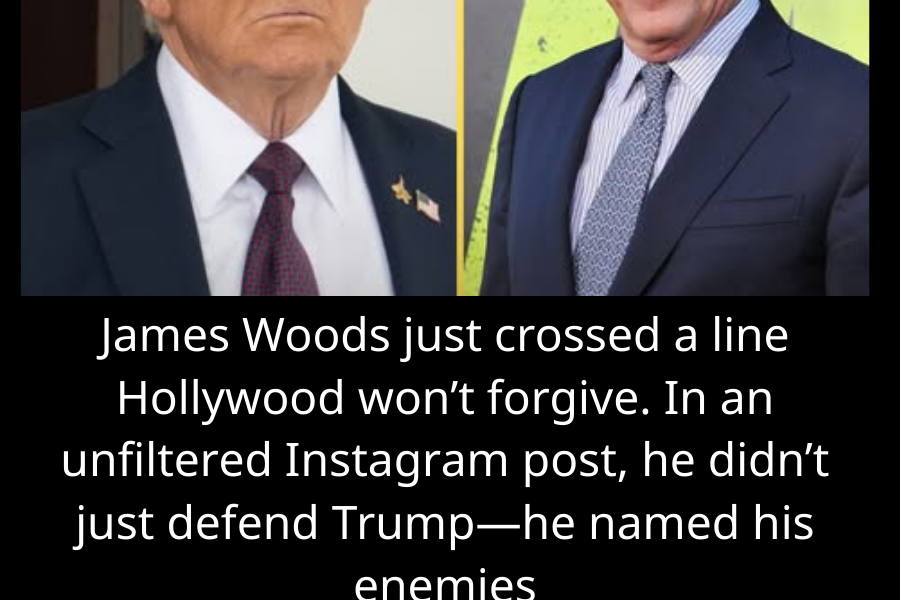
NEW YORK / WASHINGTON — The imagery is potent, almost mythic: a solitary lion, regal and unbowed, encircled by a snapping pack of jackals. This is the picture painted by actor James Woods and echoed in the core narrative of the Trump movement—a story not of politics, but of epic struggle. It is a narrative where Donald Trump is not merely a president, but a besieged champion, standing against a corrupt establishment to defend the “real America.”
This worldview is not a simple political opinion; it is a complete moral and historical framework. To understand its power is to understand the central political story of the last decade.
Deconstructing the “Lion vs. Jackals” Mythos
The narrative rests on several interlocking pillars:
-
The Innocent Outsider: Trump entered Washington not as a politician, but as a disruptor-savior. His lack of political pedigree is framed not as inexperience, but as purity—an immunity to the “swamp’s” corruption.
-
The Persecution Engine: Every investigation (Russia, impeachment, January 6th, the current cases), every critical headline, every leaked quote from an anonymous official is not scrutinized on its merits. It is categorized as proof. Proof of the “deep state,” the “fake news media,” and the “radical left” coordinating a relentless, illegitimate campaign to destroy him because he threatens their power.
-
The Moral Transference: By framing all opposition as malicious and corrupt, Trump’s own actions—insults, norm-breaking, inflammatory rhetoric, legal troubles—are reframed as necessary weapons in this existential war. His defiance becomes valor. His controversies become evidence of the system’s desperation to stop him.
-
The Symbolic Stand-In: In this story, Trump ceases to be an individual. He becomes the avatar for his supporters. An attack on him is an attack on them, on their values, on their vision of America. When Woods says, “He stands for every American,” he is articulating this profound identification. To criticize Trump is to criticize the “deplorables,” the “forgotten men and women.”
This is why facts often fail to dent the narrative. You are not arguing over events; you are assaulting a foundational myth of identity and belonging.
“This is the politics of narrative sovereignty,” explains Dr. Maya Radhakrishnan, a scholar of political rhetoric. “The Trump movement has mastered the art of inverting power dynamics. The most powerful man in the world is framed as the ultimate victim. The established institutions of journalism and justice are framed as predatory mobs. This inversion is incredibly potent. It turns electoral loss into ‘theft,’ legal accountability into ‘persecution,’ and political opposition into ‘treason.’ The ‘lion’ narrative provides a heroic, emotionally satisfying structure for his supporters to process a chaotic and hostile political environment.”
The View from Outside the Fortress
To those who do not subscribe to this narrative, the “lion” imagery appears as a profound and dangerous self-justification mechanism.
-
The Unanswered Questions: Critics ask: If he is a lion for freedom, why the attempts to overturn a certified election? If he stands for every American, why the rhetoric that consistently divides and demeans? If he is fighting a corrupt system, why the allegations of using the presidency for personal financial and political gain?
-
The Redefinition of “Values”: The claim that opponents are tearing down “the values the nation was built on” is the crux of the conflict. Which values? For his supporters, it is sovereignty, law and order, traditionalism, and unfettered capitalism. For his critics, the nation’s founding values are equality, pluralistic democracy, free press, and the rule of law—values they believe he has systematically undermined.
-
The “Swarm” as Democracy: From this outside perspective, the “swarm of opponents” isn’t a nefarious cabal. It is democracy itself, working messily: courts judging, Congress investigating, journalists reporting, protesters dissenting, voters rejecting. It looks less like jackals attacking a lion, and more like a system of checks and balances straining against a force it perceives as authoritarian.
The Enduring Power: Why This Narrative Resonates
Its resilience stems from deep wells of cultural and economic anxiety:
-
Cultural Displacement: For many, Trump is the last wall against rapid demographic and cultural change.
-
Institutional Distrust: He channels a pre-existing, rampant distrust of media, academia, and government into a personal crusade.
-
Economic Grievance: He embodies a backlash against globalization and the professional class that benefited from it.
The narrative offers clarity in chaos, purpose in grievance, and dignity in struggle. It transforms political support into a form of righteous defiance.
The Final Analysis
The James Woods quote is not a political assessment. It is a piece of hagiography, a devotional text for a movement that sees itself in an existential holy war.
The “lion” will not be dislodged by facts that its believers see as fabricated by the “jackals.” It can only be countered by a more compelling, unifying narrative—one that acknowledges the pain and alienation his supporters feel, but offers a different path to national strength that doesn’t rely on perpetual conflict and the cult of a single, besieged leader.
The battle for 2024 is not just a contest of policies. It is a contest of stories. One story is of a lion, protecting his realm from beasts within. The other story remains to be fully written. But until it is, the lion’s roar will continue to drown out almost everything else.