(The political war room just got a new case file. And it’s a explosive one.)
The Ghost of Withdrawal: A Terror Charge, a Political Blame Game, and the Unending Aftershocks of Afghanistan
Here’s the script: An Afghan national, vetted and admitted into the United States under one of the most chaotic and emotionally charged humanitarian efforts in modern history—Operation Allies Welcome—is now charged with making a terroristic threat.
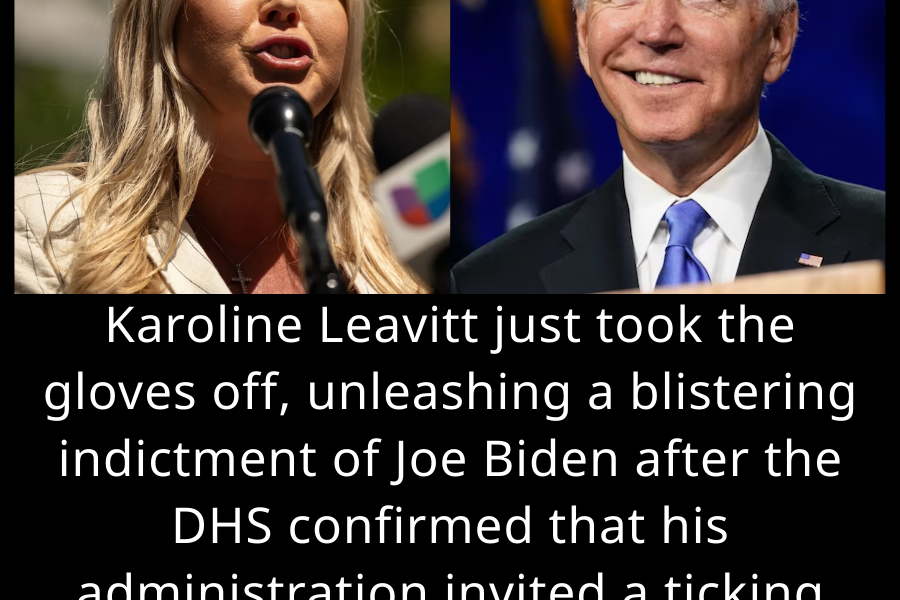
Cue the political response. White House Press Secretary Karoline Leavitt doesn’t just comment on the case; she detonates a rhetorical bomb, framing it not as an isolated incident, but as the inevitable symptom of a “national security crisis Joe Biden unleashed.”
And just like that, a local criminal charge is instantly weaponized into a national indictment. This isn’t just about one man; it’s about the unhealed wound of the Afghan withdrawal, and the battle to define its legacy.
1. Operation Allies Welcome: Humanitarian Shield or Security Roulette?
First, let’s rewind to the brutal calculus of August 2021. The images are seared into our collective memory: desperate faces at the Kabul airport, babies handed over barbed wire, the haunting final plane lifting off.
In the midst of that chaos, Operation Allies Welcome was launched. Its mission: to evacuate and resettle tens of thousands of Afghans who aided the U.S. war effort—interpreters, contractors, their families—people whose lives were forfeit if left behind. It was portrayed as a moral imperative, a promise to those who stood with America.
But the operational reality was a nightmare. The vetting process, conducted in the middle of a collapse, was necessarily imperfect. It was a choice between two bad options: leave allies to almost certain death, or accept a degree of risk in bringing them to the U.S.
The current administration’s framing uses this inherent risk as its core argument. A single charge becomes proof positive that the entire operation was a catastrophic failure of security. It simplifies a complex, tragic dilemma into a simple soundbite: Biden let a threat in.
2. The “Terroristic Threat” Charge: A Legal Chameleon
Now, let’s zoom in on the actual charge. “Making a terroristic threat” is a serious allegation, but its legal meaning varies wildly by jurisdiction. It can encompass everything from a direct, credible plot to commit mass violence to a generalized, heated statement made in anger or under duress.
We have a critical information vacuum:
- What, specifically, was the alleged threat?
- Was it directed at a public place, an individual, or made online?
- Was there any tangible evidence of planning or capability?
Without these details, the charge becomes a political Rorschach test. For those predisposed to see a security crisis, it confirms their fears. For others, it raises questions about whether this is a case of a troubled individual making stupid comments versus a genuine, planned terrorist act.
The political strategy is clear: Amplify the fear, obscure the specifics. The charge itself, regardless of its eventual legal merit, is all the proof needed to validate a pre-existing narrative.
3. The Unforgiving Politics of Blame
This incident is a perfect storm in the ongoing culture war over immigration and security. It connects three potent political currents:
- The Legacy of Afghanistan: A deeply unpopular and traumatic withdrawal that remains a potent symbol of failure for the right.
- The Border Crisis: The ability to tie this isolated case to the broader, relentless narrative of an “open border” and lost control.
- The 2024 Election: The imperative to keep Biden’s perceived weaknesses—on competence and security—at the forefront of voters’ minds.
Leavitt’s statement, “the magnitude… cannot be overstated,” is a masterclass in this. It takes a single data point and extrapolates it into a universal truth about an entire presidency. The goal is not just to criticize a policy, but to paint an administration as fundamentally incapable of fulfilling the government’s most basic duty: protecting its citizens.
The Verdict: Security vs. Sanctuary in a Post-Withdrawal World
So, where does this leave us? Stuck in the same painful, unresolved argument that began when the last plane left Kabul.
This case forces us to confront the brutal, unanswered questions of that time:
- What is the acceptable level of risk in a humanitarian crisis?
- Can we ever truly vet anyone in the midst of a governmental collapse?
- Is one alleged bad actor enough to taint the entire effort to save tens of thousands of allies?
There are no clean answers. There is only the messy, painful trade-off between a nation’s compassion and its security. The Biden administration bet on compassion during a moment of extreme chaos. The political opposition is now using the inevitable, statistical risk of that bet as a cudgel.
This isn’t just about one Afghan national. It’s about the ghost of a war that America can’t seem to leave behind. The withdrawal ended the fighting, but it guaranteed that the political and moral battles would rage on, forever looking for a new face, a new name, a new case to keep the war alive.
The courtroom is in America. But the trial is still about Afghanistan.
The gavel won’t fall on this one for a very, very long time. ⚖️