The Fighter in the Arena: How Markwayne Mullin Embodies the New Republican Archetype
The Man Who Brings a Different Kind of Resume to the Floor
Let’s paint the portrait, because the details matter.
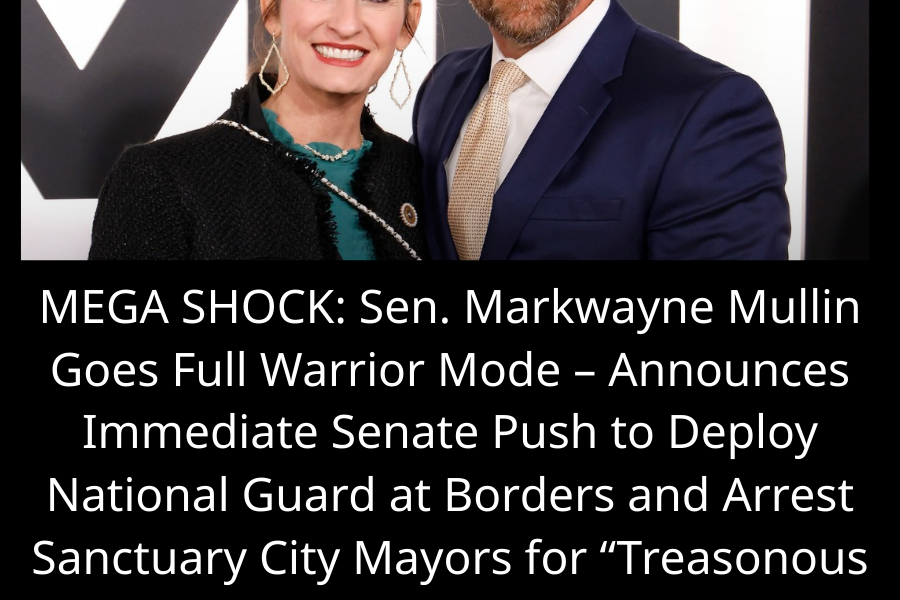
Markwayne Mullin. Forty-eight years old. Husband. Father of six. Before he swore to defend the Constitution, he made his living in a cage, bleeding for a paycheck as an undefeated professional MMA fighter. Then came a decade in the House, a Senate seat in 2023, and now, a starring role in the most consequential immigration battle of the 21st century.
When Donald Trump calls you a “MAGA Warrior,” it’s not just a compliment. It’s a branding. It’s an acknowledgment that you belong to a new breed of Republican—one that doesn’t just debate policy, but physically embodies the combative ethos of the movement. Mullin doesn’t just talk about “protecting the homeland.” He looks like he could, if necessary, physically do it.
His quote is deceptively simple: “I’m going to enforce the policies and the laws that Congress has passed, and we’re going to protect the homeland.”
Strip away the rhetoric, and what’s left is a foundational assertion of constitutional duty. But in the current climate, delivered by this man, it lands like a glove slap. It’s a promise of action in an era of endless talk. It’s the voice of the executive branch’s enforcer, speaking in the language of the legislative branch’s authorizer.
The Mullin Archetype: Why He Matters Beyond the Vote
Mullin isn’t just another Senate Republican. He represents a cultural and political shift in how the party projects strength.
1. The Physical Credential: In a chamber historically dominated by lawyers, lifelong bureaucrats, and millionaires who’ve never broken a sweat, Mullin brings a different legitimacy. His MMA background isn’t a hobby; it’s a core part of his identity. When he speaks about “enforcement,” there’s an unspoken subtext: I’ve been in physical confrontations. I understand the stakes of a real fight. This resonates with a voter base exhausted by intellectualism and hungry for visceral, tangible toughness. He’s not just saying he’ll protect the homeland; his biography suggests he has the instincts to do so.
2. The Trumpian Seal: Trump’s endorsement quote is a miniature masterpiece of political packaging. It layers the key terms: “MAGA Warrior” (tribal loyalty), “undefeated professional MMA fighter” (personal strength), “gets along well with people” (emotional intelligence), and “Wisdom and Courage” (classical virtue). The message is that Mullin is the complete package—a man who can navigate the backrooms of the Senate while being ready for the front lines of the cultural war.
3. The Everyman With Power: Father of six. Small business owner (before politics). These details ground him. He’s not a coastal elite; he’s a guy who understands payroll, discipline, and the chaos of a large family. His toughness is relatable, not alienating. He’s the guy you’d want next to you in a bar fight, but also the guy who could explain the tax code. This is a potent, rare combination.
Deconstructing the Quote: The Power of Simplicity
“I’m going to enforce the policies and the laws that Congress has passed, and we’re going to protect the homeland.”
This isn’t soaring oratory. It’s a mission statement. And its power lies in its refusal to engage in the moral complexity that Hakeem Jeffries and others demand.
-
No Apology: There’s no acknowledgment of “collateral damage,” no nod to the Renee Goods or Alex Prettis of the world. The law is the law. Enforcement is enforcement. The human cost, in this framework, is the price of order.
-
No Nuance: It doesn’t distinguish between “violent felons” and “law-abiding families.” The law applies to all who are present unlawfully. The distinction is a political construct, not a legal one.
-
No Negotiation: The statement is declarative, not conditional. It doesn’t say, “I’ll try to enforce” or “I’ll work with states.” It says, “I’m going to.” It’s the voice of finality.
In a single sentence, Mullin aligns himself with the purest form of the Trump-era immigration argument: the executive’s duty is execution, not interpretation. Congress passed the laws. His job is to make them real.
The Contrast With Jeffries: Two Speeches, Two Americas
Placed side-by-side with Hakeem Jeffries’ impassioned demand for apologies and structural reform, Mullin’s statement is a study in opposition.
| Hakeem Jeffries | Markwayne Mullin |
|---|---|
| “They lied.” | “I’m going to enforce.” |
| “ICE is out of control.” | “Protect the homeland.” |
| Demand for apology and prosecution. | No acknowledgment of wrongdoing. |
| Call for state/local oversight of federal agents. | Assertion of federal duty. |
| Specific policy demands (body cams, warrants, etc.). | Broad, principled declaration. |
Jeffries speaks to those who see the enforcement as a brutal overreach. Mullin speaks to those who see it as a long-overdue restoration of order. One demands that the enforcers be held accountable. The other is the enforcer, and he’s not looking for permission.
The Verdict: The Face of a New Washington
Markwayne Mullin is not a transitional figure. He is likely a prototype for the future of the Republican party. As the old guard of country-club moderates fades, the new faces are veterans, business owners, and yes, former fighters. They bring a combative worldview forged in arenas far removed from the committee room.
His statement on immigration is deceptively simple because it reflects a worldview that is, at its core, simple: The law exists. It must be enforced. The homeland must be protected. The complexities, the tragedies, the political blowback—these are variables to be managed, not reasons to stop.
Whether you view him as a reassuring figure of strength or a chilling symbol of an enforcement regime devoid of mercy depends entirely on which America you inhabit. But one thing is certain: when he speaks, he is not negotiating. He is stating facts. And in a capital city drowning in spin and equivocation, that directness is its own kind of power.
The cage fighter is now in the Senate. And the fight, as he sees it, has only just begun.