The Pillow, the Pulpit, and the Politician: Mike Lindell’s Unlikely Run for Governor
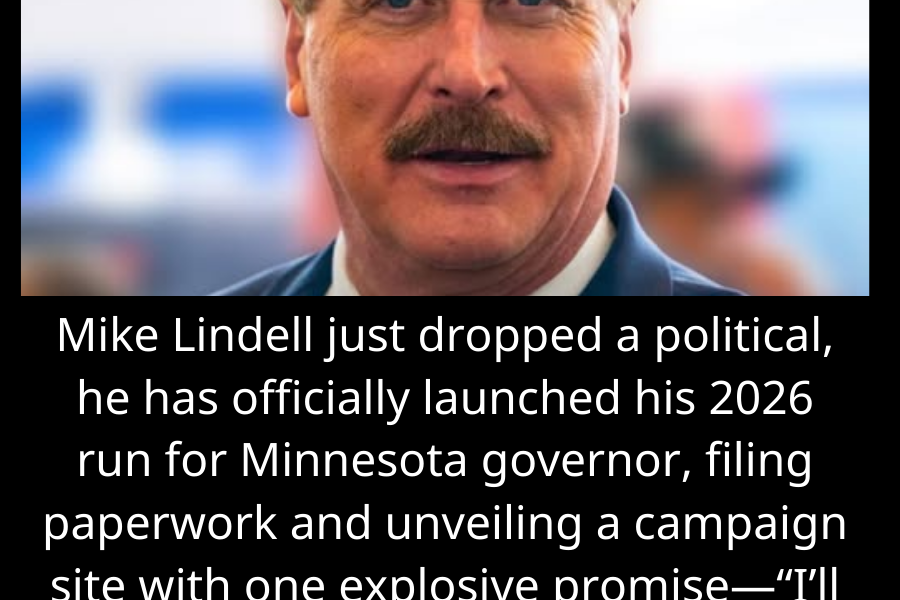
ST. PAUL, Minnesota — The political stage in Minnesota was already crowded. Then, a new player walked on, not with a policy whitepaper, but with a pillow and a conspiracy theory. Mike Lindell, the MyPillow CEO turned election-denier evangelist, has officially filed to run for governor in 2026, setting up a battle that is less about left versus right and more about the soul of the Republican Party in a critical swing state.
Lindell’s announcement isn’t a surprise; it’s a culmination. He has transformed from an infomercial salesman into a martyr-prophet of the Trumpist right, burning through his personal fortune to fund a crusade against electronic voting machines. Now, he’s seeking to translate that fervent, niche following into statewide political power.
His platform is a direct reflection of his personal journey: Election integrity (his defining obsession), deporting illegal immigrants (a core MAGA pillar), failing schools (a classic conservative rallying point), and lower property taxes (the pocketbook issue). It’s a platform that speaks less to traditional Minnesota pragmatism and more to the grievance and revival energy of the national GOP base.
The Lindell Thesis: From Conspiracy to Campaign
Lindell’s candidacy is built on a singular, unshakable belief: that the 2020 election was stolen, and that this “crime” is the root of all other problems. For his supporters, this isn’t a policy position; it’s a worldview and a litmus test. A candidate who prioritizes it is seen as authentic, brave, and untainted by a corrupt system.
This presents a unique challenge for the Minnesota GOP. The party establishment is likely scrambling, caught between two perils:
-
Embracing Lindell: This could energize the base in a primary but risks alienating the suburban, independent voters necessary to defeat a popular incumbent like Tim Walz. It would cement the party’s image as one of conspiracy over governance.
-
Rejecting Lindell: This could spark a bitter civil war, with Lindell painting the establishment as part of the “uniparty” swamp he’s running against. It could depress base turnout in a general election.
“Lindell isn’t running a political campaign; he’s leading a movement extension,” says Dr. Anya Petrova, a political scientist who studies populist movements. “His candidacy is a vehicle for his crusade. He’s not trying to win over undecideds with nuanced tax plans. He’s offering his followers a chance to vote for the narrative itself—to make the governor’s office a megaphone for election denialism. His viability hinges entirely on whether that single issue can overpower every other concern in a GOP primary.”
The Crowded Field and the Trump Factor
Lindell enters a GOP field already full of contenders with more conventional political resumes. This sets up a classic outsider-versus-establishment brawl, but with a twist: the “outsider” is a nationally famous, financially depleted, and legally embattled celebrity.
The Trump endorsement will be the gravitational force in this race. If Trump throws his weight behind Lindell, it could instantly clear the field and make him the presumptive nominee. If he remains neutral or backs another candidate, it will reveal a fascinating split between the Trump persona and the Trump political machine, which may prefer a candidate with a clearer path to victory.
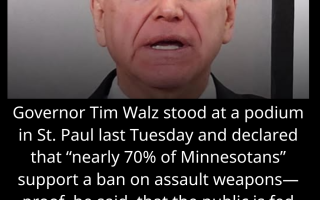
Governor Tim Walz, a Democrat, must be watching with a mix of apprehension and opportunity. A Lindell nomination would make Walz the defender of normalcy and sane governance, a potent position in a state that has rejected far-right candidates in recent cycles (see the 2022 gubernatorial and secretary of state races). But it also guarantees a campaign fought on the most polarized, nationalized, and vitriolic terrain imaginable.
The Priorities: A Platform Built on Grievance
Let’s dissect his stated priorities:
-
Election Fraud: This is the sun around which his campaign orbits. Expect promises to decertify voting machines, enact forensic audits, and pass stringent voter ID laws. It’s a base-motivating issue with limited appeal beyond it.
-
Deporting Illegal Immigrants: A standard, hardline MAGA position that will play well in greater Minnesota but could hurt in the Twin Cities metro.
-
Failing Schools: Likely to focus on “parental rights,” curriculum battles (CRT, LGBTQ+ materials), and school choice—aligning with the national conservative education offensive.
-
Lower Property Taxes: The most traditional and broadly popular plank, but one that will be scrutinized for lack of detail and potential conflict with funding essential services.
The platform is less a governing blueprint and more a checklist of cultural and political grievances. It asks voters to view the governor’s office not as a managerial position, but as a bulwark against perceived national decline.
The Businessman’s Myth and the Legal Reality
Lindell will run on his story as a successful American businessman who built a company from the ground up. This narrative is now deeply complicated. MyPillow is facing plummeting sales, costly litigation from voting machine companies (Dominion and Smartmatic), and Lindell himself is battling a federal lawsuit over his alleged role in a plot to seize voting data.
His campaign will be a test: Can the folk hero image of a man fighting the “deep state” for truth overcome the real-world image of a businessman facing severe financial and legal peril?
The Bottom Line for Minnesota
Mike Lindell’s gubernatorial run is the latest experiment in whether a personality-driven, single-issue movement can conquer a major-party apparatus and win a statewide election in a purple state.
It ensures the 2026 race will be a referendum on more than Walz’s tenure. It will be a referendum on:
-
The enduring power of the 2020 election narrative.
-
The direction of the Minnesota Republican Party: pragmatic conservatism or populist insurgency.
-
The state’s political identity itself: will it remain a Midwestern bellwether of pragmatism, or will it become a new frontline in the national culture war?
Lindell isn’t just running for governor. He’s trying to turn Minnesota into MyPillow Country. And whether that’s a comforting thought or a nightmare scenario will be the question every voter in the Land of 10,000 Lakes will have to answer.